

Material Science and System Specifications
Understanding how EPDM roofing membranes are constructed helps property managers, building owners, and roofing specifiers evaluate why this synthetic rubber compound has dominated the low-slope commercial roofing market for more than half a century.
Manufacturing Process and Key Ingredients
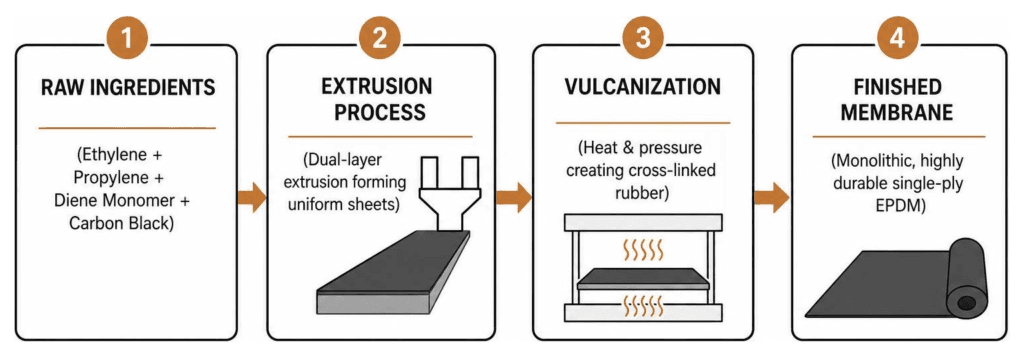
EPDM is an acronym for ethylene propylene diene terpolymer (commonly referred to as monomer). The primary ingredients—ethylene and propylene—are synthesized from oil and natural gas derivatives. A third component, a diene monomer, introduces reactive double bonds that allow the material to undergo sulfur or peroxide cross-linking during vulcanization.
To manufacture high-grade single-ply rubber sheets, manufacturers use a fully extruded process. Extrusion forces the raw polymer compound through high-precision dies, resulting in consistent sheet thickness and significantly fewer internal air voids than older calendered production methods.
- Compounding: Ethylene, propylene, and diene polymers are blended with carbon black (which gives standard EPDM its rich dark color and exceptional UV protection), processing oils, flame retardants, and anti-degradants.
- Dual-Layer Extrusion: Two layers of the uncured elastomer compound are continuously extruded simultaneously to ensure a uniform membrane structure.
- Vulcanization: Under controlled thermal pressure, the dual layers undergo vulcanization—a chemical process that transforms the separate layers into a single, monolithic, fully cross-linked sheet.
The resulting membrane possesses impressive mechanical metrics. Before aging, typical non-reinforced EPDM exhibits a tensile strength exceeding 1,425 psi to 1,686 psi (well above the ASTM D412 baseline requirement of 1,305 psi) and an ultimate elongation capacity over 450%. Fully cured sheets conform to rigorous industry guidelines, such as ASTM D4637 Type I for non-reinforced single-ply membranes. For deeper technical specifications, you can consult the official JM EPDM NR 90 mil Data Sheet.
Sizing and Color Variations for EPDM Roofing Membranes
EPDM roofing membranes are produced in a versatile array of thicknesses, sheet dimensions, and aesthetic tones to accommodate varied architectural requirements across Missouri:
- Thickness Options: Standard commercial thicknesses include 45 mil (0.045 inches, roughly the thickness of a dime), 60 mil (0.060 inches), and heavy-duty 90 mil (0.090 inches). Standard material weights scale predictably with thickness: 45 mil membrane weighs approximately 0.29 lb/ft², 60 mil weighs around 0.40 lb/ft², and 90 mil increases to roughly 0.63 lb/ft².
- Roll Sizes: Continuous sheet widths range from 7.5 feet up to 50 feet wide, with standard roll lengths stretching from 25 feet to 100 feet (providing single-sheet coverage up to 4,700 to 5,000 square feet). Utilizing large continuous sheets minimizes the total number of field seams, significantly lowering potential leak risks over open commercial expanses.
- Color Selection:
- Black EPDM: The traditional choice across the Midwest. Black EPDM exhibits a low initial solar reflectivity of 0.06 and an emissivity of 0.88 (per ASTM C1549 and C1371). It naturally absorbs solar heat, aiding in rapid winter frost, snow, and ice melting.
- White EPDM: Formulated with titanium dioxide compounds to deliver impressive reflective performance. Initial solar reflectance measures up to 0.787 with a thermal emittance of 0.90, translating to a high initial Solar Reflectance Index (SRI) of 98. Learn more from the RS-1767 JM White EPDM NR 90 mil Data Sheet.
Reinforced vs. Non-Reinforced EPDM Roofing Membranes
Specifiers must choose between non-reinforced and fabric-reinforced EPDM membranes based on expected rooftop stress, wind loads, and building usage.
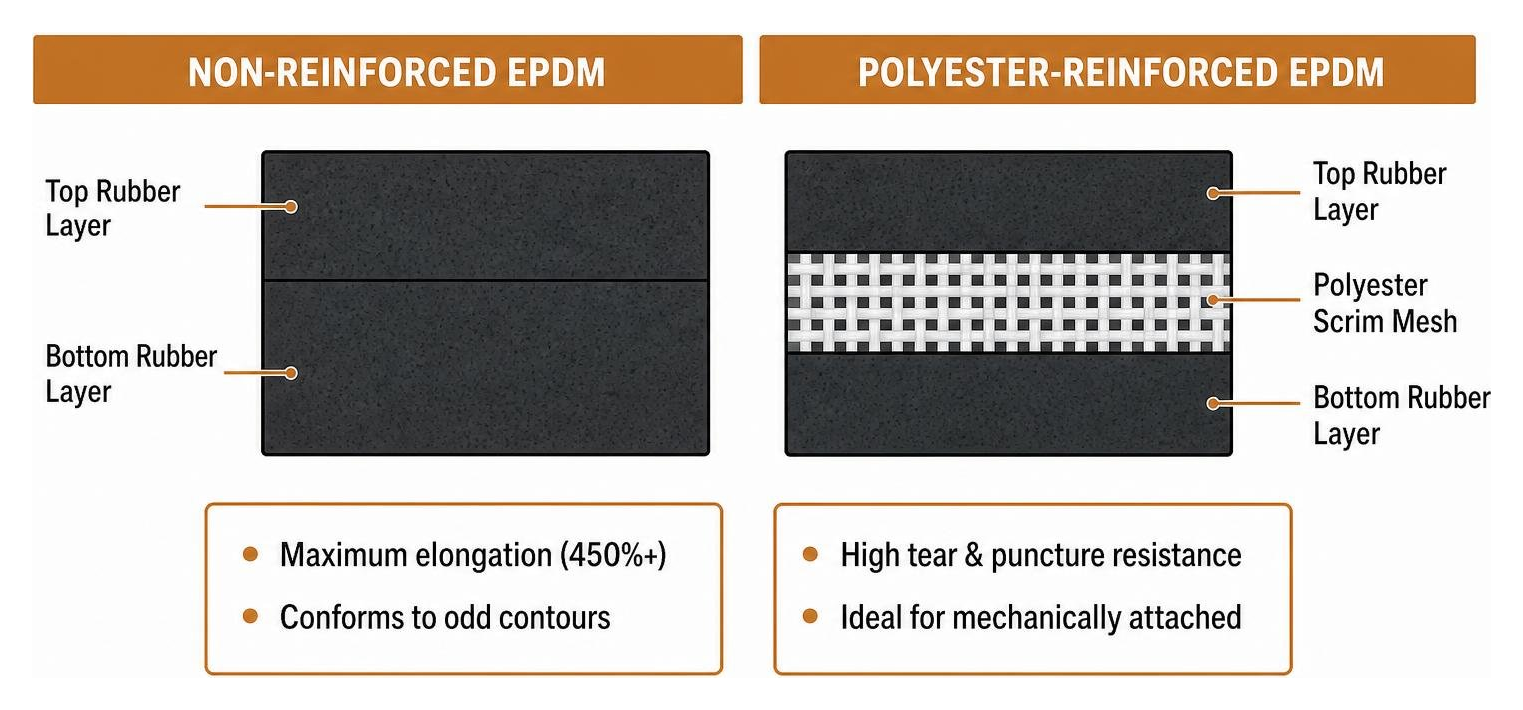
Non-reinforced membranes are solid, homogeneous sheets of vulcanized rubber. They provide maximum flexibility, expanding and contracting dynamically with structural movement without rupturing. They excel in fully adhered and ballasted application designs where complex roof contours require maximum stretch.
Reinforced EPDM membranes incorporate a tough internal core of woven polyester scrim encapsulated between two vulcanized rubber plies. This structural reinforcement significantly elevates tear resistance, dynamic puncture tolerance, and wind uplift resistance. Reinforced sheets are the preferred specification for mechanically attached systems, high-wind hazard areas, or facilities subject to heavier foot traffic. Review detailed testing criteria in the Carlisle Sure-White Reinforced Membrane Data Sheet.
Performance Characteristics of EPDM Roofing Membranes
Whether installed on a commercial facility in Kansas City or a municipal property in St. Joseph, EPDM roofing membranes offer proven long-term protection against the central Midwest’s volatile weather.
Durability, Elongation, and Severe Weather Resistance
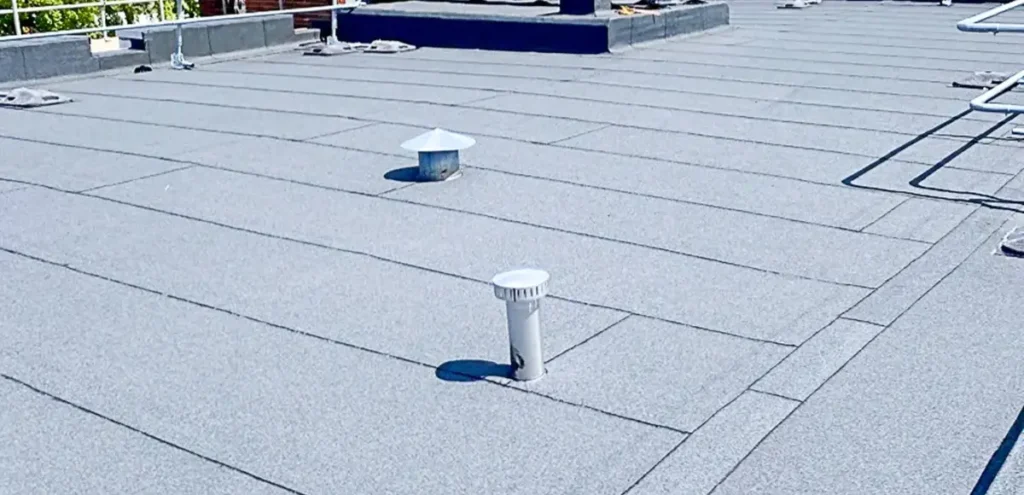
The primary factor driving EPDM’s longevity—often documented exceeding 50 years in real-world roofing installations—is its cross-linked molecular structure. Unreinforced membranes deliver up to 465% ultimate elongation, allowing the material to absorb thermal shocks and violent hail impacts without micro-cracking or fracturing.
In laboratory accelerated weathering tests, high-grade EPDM resists up to 41,580 kJ/m² of total radiant exposure without showing signs of surface crazing, cracking, or erosion. This resistance directly protects commercial assets against severe Midwestern hail events. Building owners seeking reliable roof replacements can review our dedicated EPDM Roofing Systems options to explore custom protection strategies.
Cold-Weather Flexibility and Thermal Performance
Winter temperatures across Clay County routinely plunge below freezing, causing rigid roof coverings to split or shatter under stress. EPDM maintains extreme low-temperature elasticity down to a brittleness threshold of -63°F (-53°C) and remains completely flexible in operational field conditions at -40°F.
Furthermore, black EPDM acts as an effective active heating asset during chilly northern Missouri winters. Absorbing radiation helps clear rooftop snow accumulation, lowers dangerous structural load buildup, and mitigates interior condensation risks caused by cold-deck temperature differentials. To explore tailored solutions for your building, check out our full line of Commercial Roofing Systems.
Environmental Impact and Lifecycle Assessment
When evaluated through standardized Life Cycle Assessment (LCA) tools like the EPA’s TRACI (Tool for the Reduction and Assessment of Chemical and Other Environmental Impacts) model, EPDM demonstrates outstanding environmental efficiency:
- Global Warming Potential: Outperforms alternative single-ply systems like TPO and PVC due to lower energy demands during initial chemical synthesis.
- Acid Rain & Smog Contribution: Generates lower overall lifecycle emissions during production and transportation.
- Recyclability & Permeability: Features a perm rating of 1.0 or less, acting as an absolute vapor and moisture barrier.
Property owners weighing EPDM against reflective thermoplastics can review our guide on TPO Roofing Options to evaluate thermal profiles and lifecycle energy costs.
System Attachment Methods and Seaming Technologies
Proper system selection and flawless seam execution dictate whether an EPDM roof reaches its multi-decade service potential.
Fully Adhered, Mechanically Attached, and Ballasted Assemblies
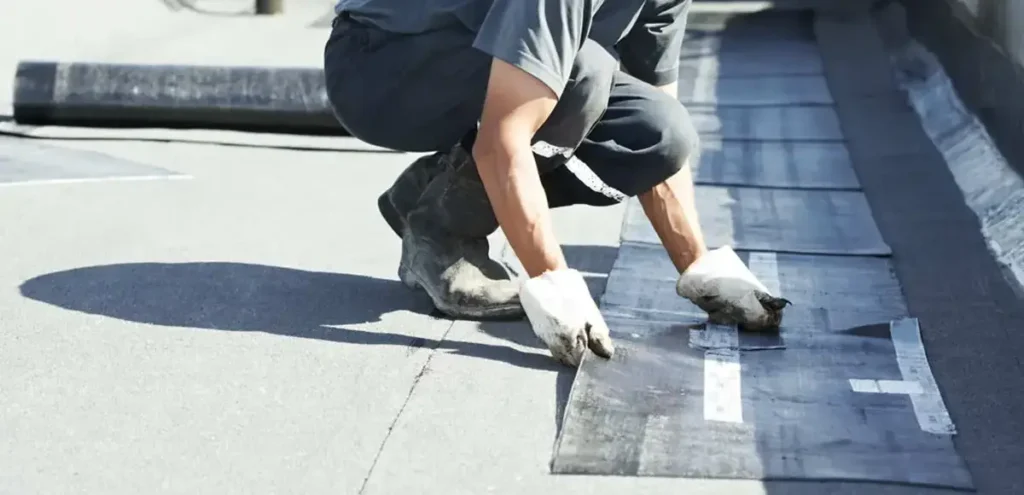
EPDM single-ply assemblies are installed using three main attachment methods:
| System Type | Primary Attachment Mechanism | Advantages | Key Limitations |
|---|---|---|---|
| Fully Adhered | Solvents or water-based bonding adhesives contact-bonded to underlying insulation/cover board | Highest wind uplift protection; eliminates membrane billowing; ideal for contoured roofs | Higher labor costs; temperature limits during adhesive application |
| Mechanically Attached | Heavy-duty fasteners and seam plates or batten bars anchored into structural deck | Fast installation; cost-effective for medium-to-large decks | Requires reinforced sheet; subject to wind fluttering and stress points |
| Ballasted | Loose-laid over substrate and secured with smooth stone ballast (10-12 lbs/sq ft) or concrete pavers | Fast coverage; lowest material installation cost; high fire resistance | Heavy weight load on structure; limited to slopes ≤ 2:12; leak tracking can be difficult |
For specialized structural conditions, vent-secured (suction-activated) assemblies utilize roof vents that harness atmospheric pressure differentials, creating localized vacuum suction that secures loose-laid sheets tighter during high-wind events. To assess which installation method fits your structural budget and engineering requirements, consult our experts in Commercial Roofing Installation.
Field Seaming: Liquid Adhesives vs. Factory Inseam Tape
Historically, field seams were bonded using liquid neoprene splice contact cements. However, field experience showed that liquid contact adhesives were sensitive to installation humidity, inconsistent application thickness, and surface contamination, often causing watertight seam defects within the first three years.
Modern installations rely almost exclusively on double-sided, uncured synthetic butyl rubber seam tapes or Factory Inseam Tape (FIT) technology:
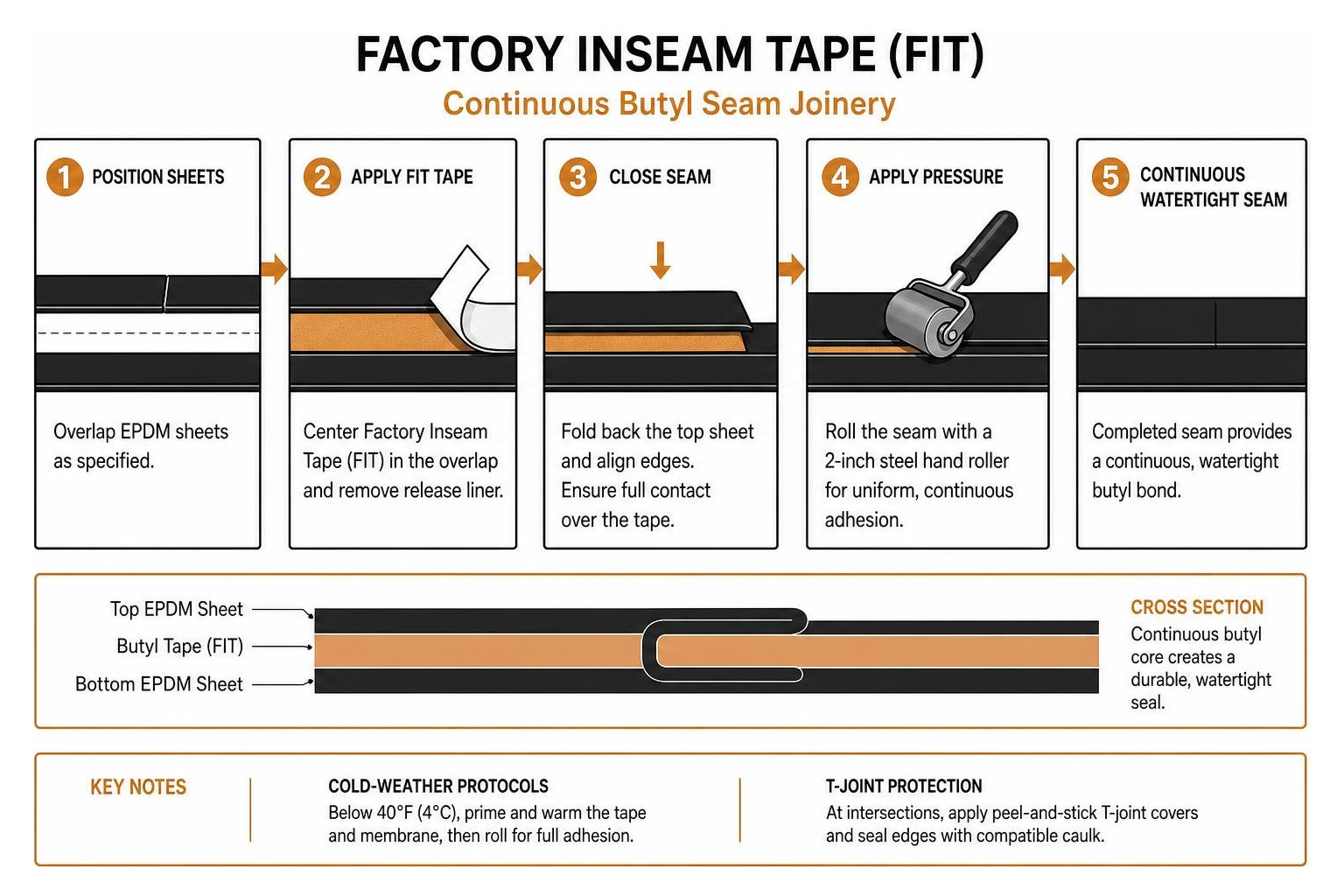
Factory Inseam Tape technology utilizes a 100% solids, partially cured butyl polymer base that provides uniform adhesive thickness, high cross-link stability, and labor efficiency.
- Cold-Weather Splicing Protocols: When ambient temperatures drop below 40°F (4°C), installers must prime the substrate and use hot-air warming devices on both the tape and membrane interface before pressing the seam together with a heavy 2-inch steel hand roller.
- T-Joint Protection: At seam intersections where three or more field plies overlap, specialized peel-and-stick T-joint covers sealed with edge caulking are applied to prevent capillary water intrusion along steps in the material.
To review physical test data for factory-taped systems, see the RS-3064 JM EPDM NR 90 MIL – FIT Data Sheet.
Failure Analysis, Maintenance, and Inspection Guidelines
Routine roof maintenance and systematic inspections help identify minor defects before they evolve into costly active building leaks.
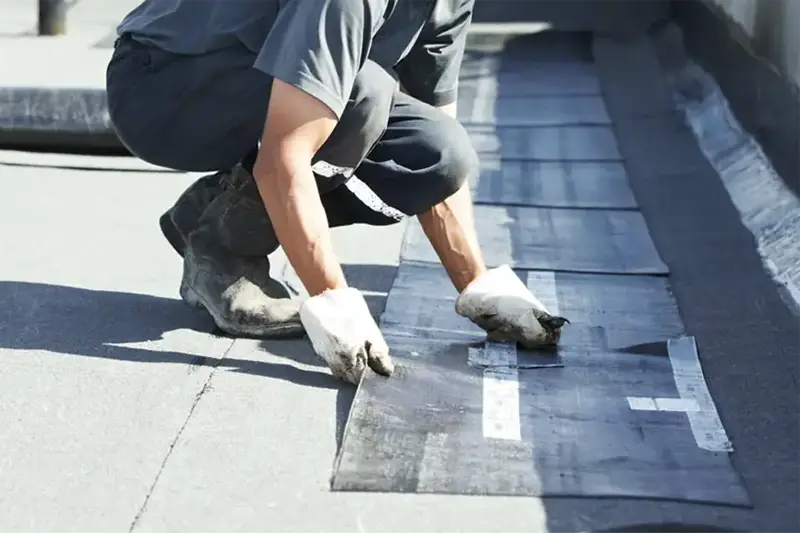
Common Issues: Seam Defects, Shrinkage, and Chemical Degradation
During scheduled roof surveys across Liberty and Independence facilities, inspectors check for several common failure modes:
- Seam Defects and Void Creation: Caused by improper surface cleaning, inadequate priming, trapped atmospheric moisture during application, or un-rolled tape edges.
- Membrane Shrinkage: Un-reinforced vulcanized rubber attempts to revert to its natural un-stretched dimension over years of thermal cycling. Excessive shrinkage creates high tension at perimeter terminations, pulling flashings away from parapet walls.
- Flashing Embrittlement: Older installations often incorporated uncured neoprene wall flashings. Over time, UV exposure causes neoprene to embrittle, craze-crack, and fail well ahead of the primary EPDM field sheet.
- Chemical Incompatibility & Grease Damage: EPDM is extremely vulnerable to petroleum solvents, mineral oils, paraffinic fluids, and animal fats. Exhaust fans above commercial kitchens or leaking air-conditioner compressor lubricants will melt EPDM rubber into a soft, sticky, failing gel.
Property owners noticing signs of surface wear can schedule an expert evaluation through our dedicated Commercial Roof Inspection Services.
Recommended Maintenance and Surface Patching Protocols
Extending the life of an EPDM roof requires simple preventive protocols:
- Membrane Relaxation: Always unroll new EPDM replacement panels and allow them to relax unconstrained for 30 minutes before bonding or seaming to release manufacturing stresses.
- Tension Relief Patching: To fix shrinking membrane bridged over perimeters, cut the taut EPDM sheet completely to relieve stress, secure the cut edge with seam plates to the deck, and install a continuous target patch of tape-primed EPDM over the opening.
- Chemical Wash & Priming: Always clean aged membrane thoroughly with approved solvent cleaners and scrub pads to remove oxidized carbon film before applying primer and peel-and-stick patches.
- Sacrificial Walk Pads: Install heavy rubber walkway pads along routine HVAC service routes to guard against physical punctures, dropping tools, and foot-traffic abrasion.
If active roof leaks threaten your business operations, explore fast response options on our Commercial Roof Repair page.
Frequently Asked Questions About EPDM Roofing
How long do EPDM roofing membranes last on commercial buildings?
When properly designed, installed with factory seam tape, and routinely inspected, high-grade EPDM membranes consistently achieve operational life expectancies exceeding 30 to 50 years. Thicker sheets (such as 60 mil and 90 mil) offer superior resistance to puncture and weathering over time.
Is black EPDM or white EPDM better for energy efficiency?
The answer depends on your local climate zone and energy demands:
- Black EPDM is highly effective in northern and central Midwestern climates (such as Missouri), where winter heating costs are typically 3 to 5 times higher than summer air-conditioning expenses. Its dark surface absorbs solar radiation, reducing snow loads and preventing interior condensation.
- White EPDM is better suited for southern climates with heavy cooling loads, where reflecting radiant solar heat lowers peak air-conditioning demands.
Can EPDM membranes be installed over existing asphalt roofs?
No. EPDM rubber is chemically incompatible with residual asphalt, coal tar pitch, or solvent-based asphaltic cements. Direct contact with bitumen causes EPDM rubber to swell, soften, and degrade. Installing EPDM over an existing asphalt or built-up roof requires applying an approved high-density cover board (such as polyisocyanurate HD or gypsum board) as a protective separator layer.
Conclusion
EPDM roofing membranes remain one of the most reliable single-ply waterproofing systems for low-slope commercial and residential structures across Kearney, MO, Clay County, St. Joseph, Liberty, Independence, and the surrounding Kansas City metro region. With unmatched cold-weather elasticity down to -40°F, proven hail resistance, lower carbon impact, and potential lifespans reaching 50 years, EPDM provides long-term peace of mind.
At GNAK Roofing Services, we combine decades of real estate underwriting expertise, detailed insurance-ready documentation, and manufacturer-compliant craftsmanship. Whether your property needs a minor repair, perimeter flashing restoration, or a complete single-ply roof overhaul, our local team ensures your building stays protected year after year.
Ready to secure your low-slope roof with long-lasting EPDM protection? Discover our full range of EPDM Roofing Solutions or Contact Our Specialists today to schedule an inspection!