
Why Commercial Roof Maintenance in Kearney Is a Decision You Can’t Afford to Delay
If you’re looking for commercial roof maintenance in Kearney, here’s what you need to know upfront:
Key Components of Our Commercial Roof Maintenance in Kearney:
| Program Feature | What It Covers | Benefit |
|---|---|---|
| Comprehensive Inspections | Full assessment of membrane, flashing, and drainage | Early leak detection |
| Debris & Drainage Clearing | Removal of leaves, dirt, and blockages | Prevents ponding water |
| Minor Repairs | Sealing seams, patching punctures, fixing flashing | Extends roof lifespan |
| Detailed Documentation | Insurance-ready reports and warranty logs | Protects your investment |
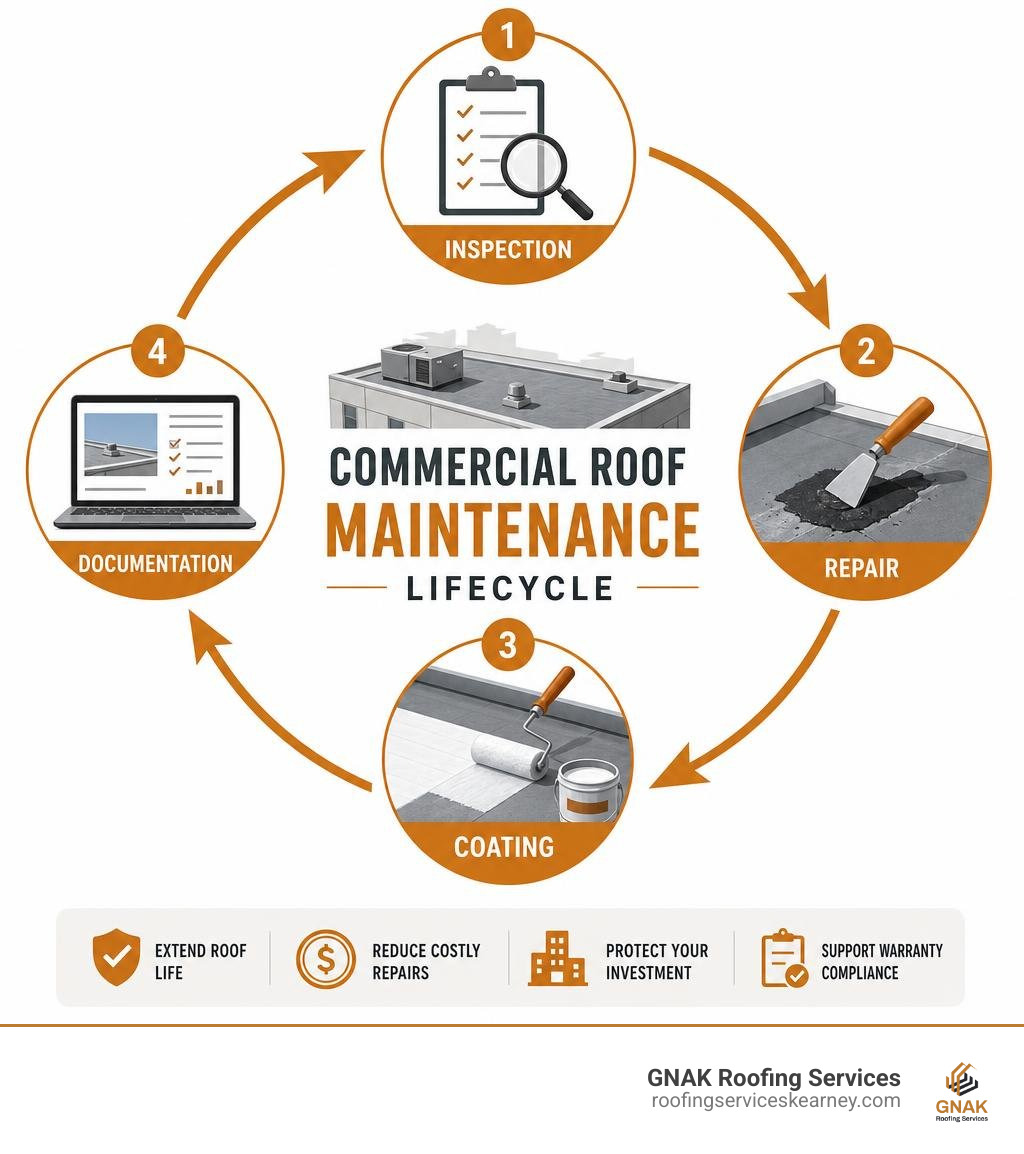
What a basic commercial maintenance program includes:
- Biannual inspections (spring and fall)
- Debris removal and drainage clearing
- Minor repairs — seams, flashing, punctures
- Protective coating application where needed
- Documented records for warranty compliance
Your commercial roof is one of the most expensive parts of your building — and one of the most overlooked. Nebraska’s weather doesn’t make things easy. Kearney businesses face scorching summer heat, heavy snow loads, and hailstorms that can quietly accelerate roof wear year after year. A small ignored leak or blocked drain today can become a five-figure repair bill faster than most property owners expect.
The good news: proactive maintenance works. When applied to aging but structurally sound systems, roof coatings alone can extend a roof’s service life by 10 to 20 years — a significant return on a modest annual investment.
I’m Greg Nakata, owner of GNAK Roofing Services, and my background in commercial real estate finance and asset underwriting since 1999 gives me a different lens on commercial roof maintenance in Kearney — one focused on documentation, long-term value, and protecting your investment the way an underwriter would. In the sections below, I’ll walk you through exactly what to look for when evaluating your options.
Essential Steps for Commercial Roof Maintenance in Kearney
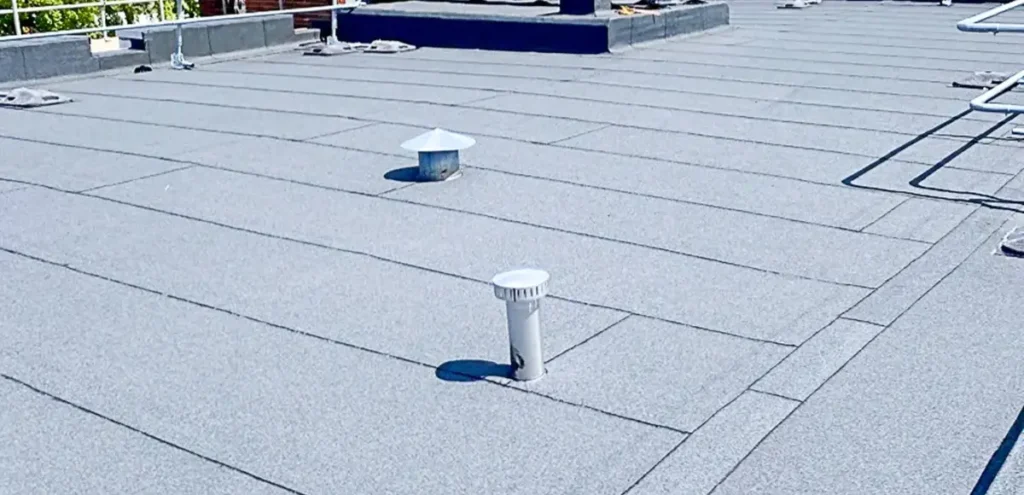
Implementing a thorough, proactive care routine is the only way to shield your commercial property from the harsh elements of the Midwest. Without a systematic approach, tiny structural anomalies can easily transform into devastating water damage inside your building. To understand the true value of preventative care, you can read more info about commercial roof inspection services to see how our team systematically evaluates commercial properties.
The Impact of Midwest Weather on Kearney Roofs
Kearney, MO and the surrounding Clay County region experience some of the most dramatic weather shifts in the country. Our commercial roofs must endure a brutal cycle of seasonal extremes:
- Major Hail Events: Missouri consistently ranks in the top five states for severe hail damage. When frozen stones pelt your roof at high velocities, they can easily fracture modified bitumen, dent metal panels, or puncture single-ply membranes.
- Intense UV Radiation & Thermal Expansion: During our scorching summer months, flat roofs absorb direct sunlight. This leads to extreme thermal expansion, where materials stretch during the heat of the day and rapidly contract at night. Over time, this “thermal shock” weakens seams and pulls flashing away from walls.
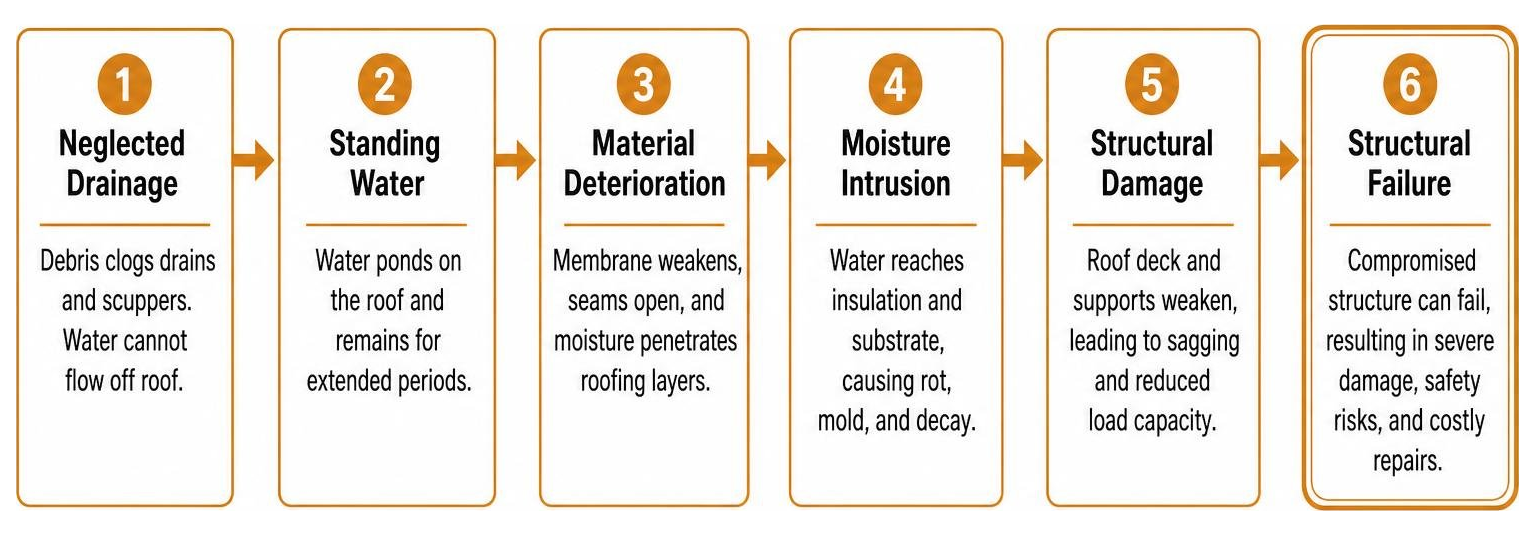
- Freeze-Thaw Cycles: As winter sets in, any standing water on your roof will freeze, expand, and thaw. This cycle acts like a slow-motion crowbar, widening tiny cracks in your roof membrane and separating essential seals.
- Heavy Snow Loads: Accumulated snow places immense physical stress on commercial support structures. If your roof drainage is slow or blocked, melting snow pool and create heavy “ponding” areas that can cause structural sagging.
Why Biannual Inspections Prevent Costly Repairs
We strongly advocate for a strict schedule of biannual professional inspections — specifically in the spring and autumn.
A spring inspection is designed to identify and repair any damage sustained during the harsh winter freeze-thaw cycles. Fall inspections, on the other hand, prepare your building for the impending snow loads by ensuring the entire system is sealed, insulated, and fully functional.
During these visits, our commercial technicians focus heavily on the following vulnerabilities:
- Drainage Systems: Blocked drains, scuppers, and downspouts are the leading causes of ponding water. We clear out leaves, dirt, and windblown debris to ensure water flows off the roof within 48 hours of a storm.
- Membrane Tears & Punctures: We search for physical damage caused by fallen branches, tool drops from HVAC technicians, or bird activity.
- Flashing Failures: Flashing around chimneys, skylights, vents, and parapet walls is the most common point of water intrusion. We check for rusted metal, cracked caulking, and separated seams.
Evaluating Local Commercial Roof Maintenance in Kearney Programs
Not all commercial maintenance programs are created equal. When choosing a plan for your Clay County business, look for a program that offers:
- A Tailored, Multi-Point Checklist: Your maintenance program should be customized to your specific roofing material and building layout rather than a generic one-size-fits-all checklist.
- Priority Dispatch Service: If a severe storm rolls through Kearney, maintenance members should receive priority scheduling for emergency repairs.
- Comprehensive Digital Reporting: You should receive clear, high-resolution photo documentation of every issue found, along with transparent repair estimates before any work begins.
Comparing Commercial Roofing Systems and Their Maintenance Needs
Different roofing materials require vastly different care routines and have widely varying lifespans. Understanding these differences helps you budget accurately for future capital expenses. For a deeper look at the materials we work with, check out more info about commercial roofing systems.
| Roofing System | Expected Lifespan | Primary Maintenance Focus | Key Strengths |
|---|---|---|---|
| TPO (Thermoplastic Polyolefin) | 20–30 Years | Heat-welded seam integrity, puncture checks | High solar reflectivity, energy efficiency |
| EPDM (Rubber) | 25–35 Years | Adhesive seam degradation, shrinkage | Excellent freeze-thaw resistance, highly durable |
| Metal Roofing | 40–60 Years | Fastener tightening, rust mitigation, seam seals | Incredible longevity, high wind resistance |
| Modified Bitumen | 15–20 Years | Blistering, joint separation, mineral loss | Superior foot traffic resistance, puncture-proof |
Single-Ply Membranes: TPO, PVC, and EPDM
Single-ply membranes are incredibly popular across Missouri due to their balance of cost and performance.
- TPO & PVC: These white, highly reflective membranes are fantastic for energy efficiency. TPO seams are heat-welded, creating a physical bond that is actually stronger than the membrane itself. However, they require regular cleaning to maintain their reflective properties and must be monitored for punctures.
- EPDM: Often referred to as “rubber roofing,” EPDM handles freeze-thaw cycles beautifully due to its natural elasticity. However, because EPDM seams are typically held together with specialized adhesives rather than heat welding, those seams must be checked regularly for dry-rot and separation.
Heavy-Duty Systems: Metal and Modified Bitumen
For buildings that require maximum physical durability, heavy-duty systems are the industry standard.
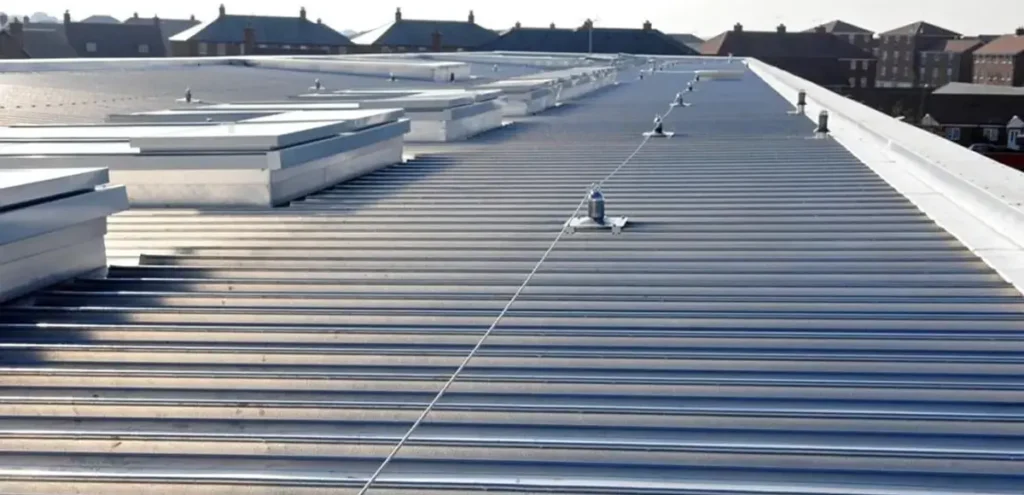
- Standing Seam Metal: A properly maintained metal commercial roof can easily last 40 to 60 years. Maintenance for metal roofs focuses on inspecting fasteners, checking neoprene washers for UV degradation, and clearing debris from valleys to prevent rust.
- Modified Bitumen: These multi-layer asphalt systems are incredibly tough, making them the perfect choice for roofs that experience heavy foot traffic from HVAC maintenance crews. However, because they are dark, they absorb heat and are prone to thermal expansion issues over their 15-to-20-year lifespan.
When to Choose Targeted Commercial Roof Repair
You don’t always need to jump straight to a full roof replacement when a leak occurs. If the underlying insulation is dry and the damage is localized, targeted Commercial Roof Repair can easily resolve issues like:
- Seam separations on single-ply membranes.
- Minor punctures from hail or windborne debris.
- Leaking seals around HVAC curbs and plumbing vents.
However, if more than 25% of your roof is compromised or if moisture has saturated the insulation substrate, you should read more info about commercial roof replacement to evaluate your long-term options.
How Roof Coatings and Storm Restoration Extend Lifespan
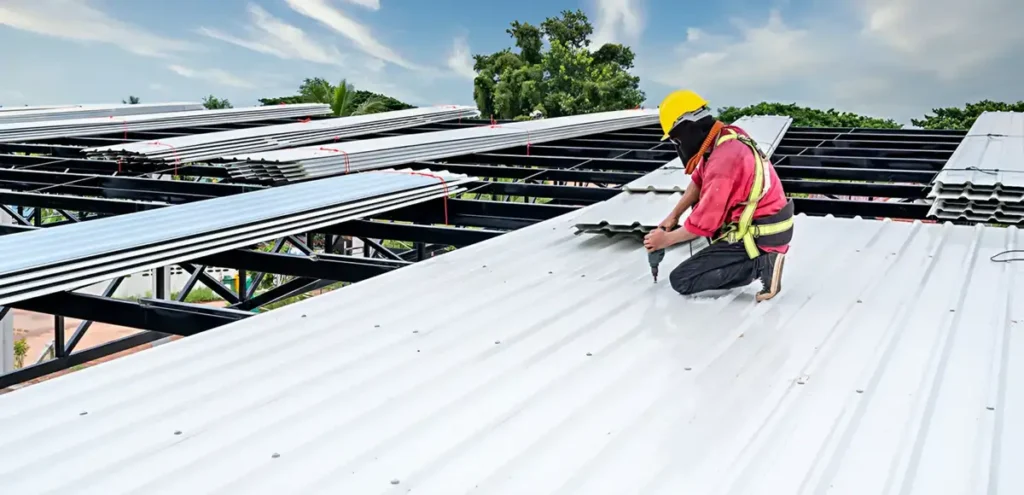
Roof restoration is one of the most financially savvy decisions a property owner can make. By applying a high-performance elastomeric, silicone, or acrylic coating to an aging but dry roof, you can completely avoid the disruption and massive cost of a full tear-off.
Restoring Storm Damage with Protective Coatings
After a severe Clay County hailstorm or high-wind event, roof coatings act as a seamless, waterproof barrier that locks down wind-lifted seams, seals hail micro-fractures, and prevents future leaks.
- Silicone Coatings: Perfect for low-slope roofs that experience frequent ponding water. Silicone does not degrade under standing water and offers incredible UV resistance.
- Acrylic Coatings: Highly reflective and cost-effective, making them ideal for sloped metal roofs that require maximum energy efficiency and thermal movement protection.
Applying a coating system can easily add 10 to 20 years of reliable service life to your roof, saving your business thousands of dollars in premature replacement costs.
Maintaining Warranties Through Proper Documentation
To keep your manufacturer’s warranty valid, you must prove that the roof has been professionally maintained. Most major manufacturers (such as GAF, Carlisle, and Firestone) require:
- Written proof of biannual inspections.
- Detailed logs of all debris removal and drainage clearing.
- Receipts showing that all repairs were performed by a licensed, manufacturer-certified roofing contractor.
If you fail to keep these records, the manufacturer can legally void your warranty, leaving you completely uncovered in the event of a material failure.
Frequently Asked Questions About Commercial Roof Maintenance in Kearney
How often should commercial roof maintenance in Kearney be performed?
We recommend a minimum of two times per year: once in the spring to evaluate winter weather damage, and once in the fall to prepare the system for heavy snow loads. Additionally, you should always schedule a professional inspection immediately following any major hail or high-wind storm event.
Can roof coatings be applied over any existing commercial roof?
No. A roof coating can only be applied to a roof that is structurally sound and has dry insulation underneath. If moisture is trapped within the roofing system, applying a coating will trap that water, leading to rapid rot, mold, and structural decay. We always perform a thorough core analysis and infrared moisture scan before recommending a coating system.
What documentation is required to keep a commercial roof warranty valid?
You must maintain a detailed roof history file. This file should contain your original installation contract, manufacturer warranty certificates, biannual inspection reports with photo documentation, and invoices for any professional maintenance or repairs completed on the roof.
Conclusion
Taking a proactive approach to your commercial roof maintenance in Kearney is the single best way to protect your physical assets, your employees, and your bottom line.
At GNAK Roofing Services, we combine our deep understanding of Clay County’s unique climate with insurance-ready documentation and manufacturer-compliant workmanship. We don’t just patch leaks; we help you manage your roof as a critical financial asset.
Don’t wait for the next major storm to test your roof’s integrity. Schedule your commercial roof repair today and let our team of certified specialists provide the peace of mind your business deserves.