

Your roof takes on a lot every single day. Rain, wind, hail, ice, and blazing summer sun all wear it down over time. The good news is that a little routine care goes a long way toward protecting your home and stretching your roof’s lifespan.
This guide covers the most important roofing maintenance tips homeowners in Kearney, MO and the surrounding area should know. Whether your roof is a few years old or pushing two decades, these habits can save you from costly repairs down the road.
If you want a professional set of eyes on your roof before you start, GNAK Roofing Services offers thorough roof inspections for homeowners throughout the region.
Why Roof Maintenance Matters
Most roofing problems do not appear overnight. A small crack in flashing, a clogged gutter, or a few missing shingles can go unnoticed for months. By the time water damage shows up on your ceiling, the underlying issue has usually been building for a while. Routine maintenance helps you catch problems while they are still small and inexpensive to fix. Here is what regular roof upkeep delivers for Kearney homeowners:
- Early Problem Detection — Catching small issues like cracked flashing, loose shingles, or blocked drainage before they develop into costly structural damage.
- Extended Roof Lifespan — The average asphalt shingle roof lasts 20 to 30 years with proper care, according to the National Roofing Contractors Association (NRCA). Neglect can cut that lifespan significantly, leading to premature replacement costs.
- Warranty Protection — Many roofing manufacturers require documented maintenance and inspections to keep material warranties valid. Skipping upkeep can void coverage when you need it most.
- Lower Long-Term Repair Costs — Routine maintenance is consistently less expensive than emergency repairs or early replacement. Small investments in upkeep avoid large, unexpected expenses down the road.
- Stronger Home Resale Value — A well-maintained roof with documented inspection history is a meaningful selling point that supports your home’s appraised value and buyer confidence.
- Storm Readiness — In Clay County, where severe weather is a regular occurrence, a properly maintained roof is better equipped to handle hail, high winds, and heavy rain without sustaining serious damage.
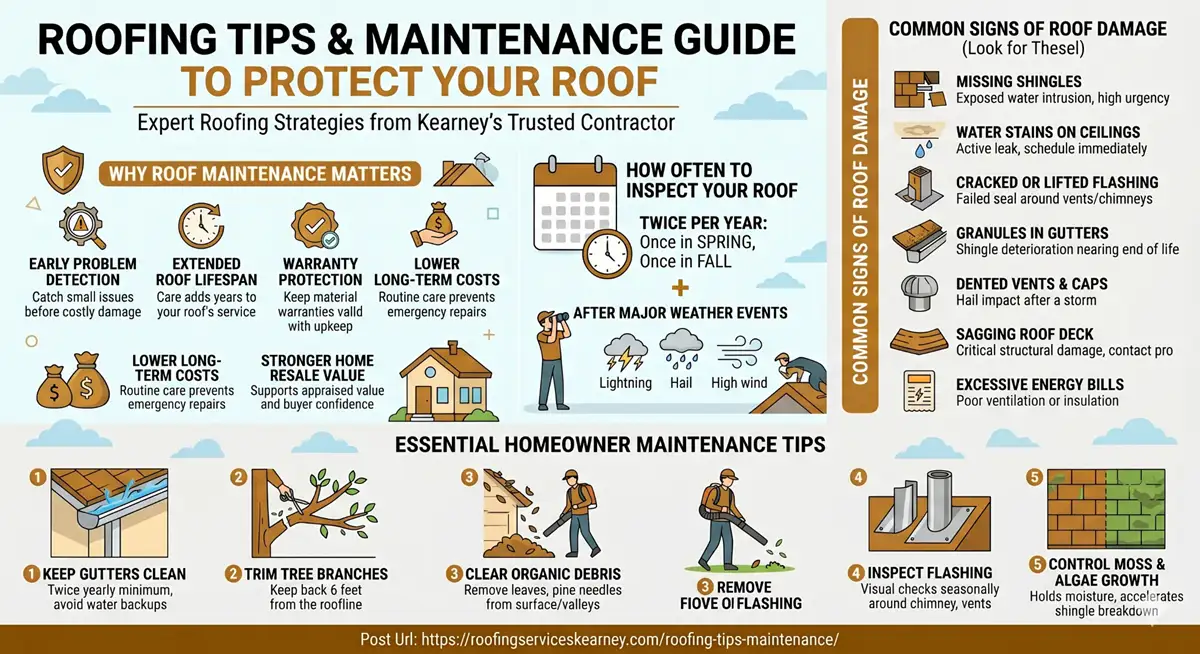
Common Signs of Roof Damage and What They Mean for Kearney Homeowners
Recognizing early warning signs of roof damage can be the difference between a minor repair and a full replacement. Use this reference guide to understand what you are seeing and when to act.
| Warning Sign | What It Means | Urgency Level | Recommended Action |
| Missing shingles | Wind damage or shingle failure — roof is exposed to water intrusion | High | Schedule repair immediately |
| Curling or buckling shingles | Age, moisture trapped beneath shingles, or poor ventilation | Medium to High | Professional inspection needed |
| Granules in gutters or downspouts | Shingle surface deterioration — nearing end of service life | Medium | Schedule inspection to assess replacement timeline |
| Dark stains or streaks on shingles | Algae growth holding moisture against the roof surface | Low to Medium | Apply treatment and monitor closely |
| Moss or green growth on roof | Moisture retention accelerating shingle breakdown | Medium | Professional cleaning and treatment recommended |
| Sagging roof deck | Structural damage from long-term moisture or excessive load | Critical | Contact a roofing contractor immediately |
| Water stains on interior ceilings | Active leak — water has penetrated the roofing system | High | Schedule emergency inspection right away |
| Daylight visible through attic | Gaps or holes in the roof deck or sheathing | Critical | Contact a roofing contractor immediately |
| Cracked or lifted flashing | Failed seal around chimney, vents, or skylights | High | Repair before next rain event |
| Dented or damaged vents and caps | Hail impact — roof surface likely affected as well | Medium to High | Schedule post-storm inspection |
| Excessive energy bills | Poor attic ventilation or compromised roof insulation | Medium | Inspect ventilation and insulation levels |
| Soft or spongy feel when walking on roof | Moisture-damaged decking beneath the surface | Critical | Contact a roofing contractor immediately |
| Shingle debris in yard after storm | Wind uplift damage — shingles dislodged or partially torn | High | Schedule inspection and document for insurance |
| Rust stains around flashing | Corroding metal flashing nearing failure | Medium | Replace flashing before leaks develop |
How Often Should You Inspect Your Roof?
Most roofing professionals recommend inspecting your roof at least twice a year: once in the spring and once in the fall. Spring inspections catch damage from winter ice and storms. Fall inspections let you prepare before temperatures drop and snow arrives.
You should also inspect after any major weather event, including high winds, heavy hail, or severe thunderstorms. Missouri weather can be unpredictable, and a storm that passes quickly can still leave behind shingle damage or debris that creates problems if left unaddressed.
A basic visual inspection from the ground with binoculars can reveal a lot. Look for missing or curling shingles, sagging areas, dark staining, and debris buildup around the chimney or valleys. For a more thorough evaluation, schedule a professional roof inspection with a qualified contractor.
Roof Maintenance Tips Every Homeowner Should Follow
1. Keep Your Gutters Clean
Gutters do more for your roof than most homeowners realize. When they fill with leaves, twigs, and debris, water backs up along the roofline. That standing water can seep under shingles, rot the fascia board, and create ideal conditions for mold. Clean your gutters at least twice a year, or more often if you have large trees nearby.
2. Limit Foot Traffic on Your Roof
Walking on your roof puts stress on shingles, especially asphalt ones. Every step can crack, loosen, or compress granules, reducing the shingle’s ability to shed water. Avoid going up on the roof unless necessary, and when you do, walk carefully on the structural ridges rather than the flat faces of shingles.
3. Control Moss and Algae Growth
Dark streaks on your roof are typically algae. Green or fuzzy growth is usually moss. Both hold moisture against your shingles and accelerate deterioration. According to the Asphalt Roofing Manufacturers Association (ARMA), zinc or copper strips installed near the ridge are among the most reliable long-term preventive measures. There are also spray treatments available, but avoid pressure washing, as the force can strip protective granules off asphalt shingles.
4. Trim Tree Branches Near Your Roof
Overhanging branches scrape and gouge shingles whenever the wind blows. Fallen limbs can cause serious structural damage. Keep branches trimmed back at least six feet from the roofline. This also reduces the volume of leaves and organic material landing on your roof and in your gutters.
5. Clear Away Organic Debris
Leaves, pine needles, and other debris sitting on your roof hold moisture and create a surface where moss and algae thrive. After windstorms, take a few minutes to remove any buildup from the roof surface, valleys, and around the chimney. A soft-bristle broom or a leaf blower on a low setting works well without damaging shingles.
6. Inspect Your Flashing
Flashing is the thin metal that seals the joints around your chimney, skylights, vents, and along roof valleys. It is one of the most common sources of leaks. Over time, flashing can crack, lift, or corrode. Check it visually each season and look for gaps, rust, or sections that appear to have pulled away from the surface. If you spot a problem, contact a roofing contractor before the next rain.
7. Watch for Ice Dams in Winter
Ice dams form when heat escaping through the roof melts snow near the ridge, and that water refreezes along the colder eaves. The trapped water has nowhere to go except under your shingles. Proper attic insulation and ventilation are the best long-term solution. In the short term, a roof rake can help you pull snow back from the eaves after a heavy snowfall.
8. Check Roof Ventilation
A properly ventilated roof stays cooler in summer and reduces moisture buildup in winter. Blocked or insufficient ventilation can cause shingles to age faster, lead to ice dam formation, and drive up energy costs. Check that your ridge vents, soffit vents, and any power vents are clear and functioning. If your attic feels unusually hot or humid, ventilation may be an issue worth investigating.
9. Look for Storm Damage After Severe Weather
After a significant storm, take a few minutes to assess your roof from the ground. Look for missing shingles, dented or lifted flashing, granule buildup in your gutters or downspout splash zones, and any visible dents on metal components like vents or caps. If you suspect hail damage, schedule a professional inspection right away. Many residential roof repairs are covered by homeowners insurance when damage is documented promptly.
What Ruins Asphalt Shingle Roofs?
Several common factors can shorten the lifespan of asphalt shingles faster than normal aging:
- Moisture exposure is the biggest culprit. Whether from clogged gutters, poor ventilation, or debris buildup, prolonged moisture contact breaks down the asphalt binder and leads to cracking and curling.
- Heat and UV exposure cause shingles to become brittle over time. Roofs with poor ventilation bake from both the outside and below, accelerating this process.
- Physical impact from hail, falling branches, or foot traffic strips granules and creates cracks that allow water infiltration.
- Algae and moss hold moisture against the surface and break down the protective granule layer.
Understanding what causes damage helps you take targeted steps to prevent it. For homeowners considering a longer-lasting option, metal roofing offers exceptional durability against all of these factors.
Recommended Roof Maintenance Schedule for Homeowners
Staying on a consistent maintenance schedule is the most effective way to protect your roof year-round. Use this schedule as a practical reference to keep your roof in strong condition through every Missouri season.
| Maintenance Task | Frequency | Best Time to Complete |
| Professional roof inspection | Twice per year | Spring and Fall |
| Gutter cleaning | Twice per year minimum | Spring and Fall |
| Visual ground inspection | After every major storm | Following hail, high winds, or heavy rain |
| Remove debris from roof surface | As needed | After windstorms or heavy leaf fall |
| Trim overhanging tree branches | Once per year | Late summer or early fall |
| Check attic ventilation and insulation | Once per year | Fall before winter temperatures arrive |
| Inspect flashing around chimney, vents, and skylights | Twice per year | Spring and Fall |
| Check gutters and downspouts for granule buildup | Twice per year | Spring and Fall |
| Apply moss or algae treatment | As needed | Spring when growth is first detected |
| Monitor for ice dam formation | Throughout winter | After heavy snowfall events |
| Inspect roof penetrations and pipe boots | Once per year | Fall |
| Document roof condition with photos | Twice per year | Spring and Fall inspections |
When Should You Call a Roofing Contractor?
Some maintenance tasks are safe for the average homeowner, like clearing gutters or trimming nearby branches. Others require a trained professional. Call a roofing contractor when you notice:
- Missing, cracked, or curling shingles that cover more than a small area
- Water stains on interior ceilings or walls
- Daylight visible through your attic
- Sagging sections anywhere on the roof deck
- Damaged or lifted flashing around your chimney or vents
- Granule loss significant enough to see in your downspouts
Delaying these repairs often turns a manageable fix into a full roof replacement. When in doubt, get a professional opinion sooner rather than later. A trustworthy contractor will walk you through exactly what they find and give you clear options without pressure.
Keep Your Roof Strong With GNAK Roofing Services
Your roof is one of the most important parts of your home. With a consistent maintenance routine and the right professional support, it can protect your family for decades. GNAK Roofing Services proudly serves homeowners in Kearney, Liberty, Independence, St. Joseph, and throughout the surrounding area. From routine inspections to full replacements, our team is ready to help. Explore our full range of roofing services or contact us today to schedule a free consultation.
GNAK Roofing Services
Address: 120 W 8th St, Kearney, MO 64060
Phone Number: (816) 728-8111
Email: info@roofingserviceskearney.com
Google Maps: Find Us Here
Business Hours:
Monday: 8:00 AM To 6:00 PM
Tuesday: 8:00 AM To 6:00 PM
Wednesday: 8:00 AM To 6:00 PM
Thursday: 8:00 AM To 6:00 PM
Friday: 8:00 AM To 6:00 PM
Saturday: Closed
Sunday: Closed
FAQs About Roofing Tips & Maintenance
How often should I have my roof inspected in Kearney & across Missouri?
Twice per year, once in spring and once in fall, plus after any significant storm event. Missouri’s severe weather season makes regular inspections especially important for Clay County homeowners. GNAK Roofing Services offers free roof inspections throughout the Kearney area.
Can I inspect my own roof?
A basic ground-level inspection using binoculars is safe and can reveal obvious issues like missing shingles, sagging areas, or debris buildup. However, a professional inspection goes deeper, covering flashing, underlayment, attic conditions, and documented photo evidence that a homeowner visual check cannot provide.
How do I know if my roof damage is covered by homeowners insurance in Kearney & across Missouri?
Most Missouri homeowners insurance policies cover sudden storm-related damage from wind, hail, or falling debris. Damage from age or neglected maintenance is typically excluded. Prompt professional documentation after a storm gives you the strongest foundation for a successful claim.
What is the most common cause of roof leaks?
Failed or cracked flashing is the most frequent source of roof leaks. Flashing seals the joints around chimneys, skylights, vents, and valleys, areas where water concentrates. Age, poor installation, and freeze-thaw cycles all contribute to flashing failure over time.
How do I prevent ice dams on my Kearney home?
The most effective solution is proper attic insulation and ventilation, which keeps the roof surface at a consistent temperature and prevents the melt-refreeze cycle that creates ice dams. A roof rake can help remove snow from eaves after heavy snowfall as a short-term measure.
Is moss on my roof a serious problem?
Yes. Moss holds moisture against your shingles, accelerating deterioration of the asphalt binder and granule layer. Left untreated, it can significantly shorten your roof’s lifespan. Zinc or copper strips near the ridge line and spray treatments can control growth without damaging shingles.
How long does a roof last with proper maintenance in Missouri?
A well-maintained asphalt shingle roof typically lasts 20 to 30 years in Missouri. Without routine care, that lifespan can drop significantly due to the state’s temperature swings, UV exposure, and frequent severe weather. Metal roofing systems can last 40 to 70 years with proper upkeep.
When is roof repair no longer enough and replacement becomes necessary?
When damage is widespread across multiple roof sections, the decking shows signs of moisture damage, the roof is over 20 years old, or repeated repairs are failing to stop leaks, replacement is typically the more cost-effective long-term decision. GNAK Roofing Services assesses your roof honestly and recommends only what your situation actually requires.