

Understanding Modified Bitumen Roofing and System Architecture
Modern modified bitumen roofing evolved directly from old-fashioned built-up roofing (BUR), often called “tar and gravel.” While BUR relies on building multiple layers of asphalt and felt on the job site, modified bitumen shifts that manufacturing into a controlled factory environment. Blending asphalt with asphalt modification polymers creates prefabricated rolls with uniform thickness, higher tensile strength, and superior elasticity.
First used commercially in the mid-1960s, polymer-modified asphalt rapidly transformed commercial roofing across the United States by the mid-1970s. Today, it accounts for roughly 10% of all low-slope commercial installations. To understand why it remains so popular, check out this Overview of Modified Bitumen Systems for additional historical context.
Unlike single-ply membranes that rely on a single thin layer of plastic or rubber, modified bitumen roofing relies on multi-ply protection. The sheets work together as a cohesive waterproofing unit, providing built-in redundancy that protects the underlying building even if the outer surface suffers minor damage.
Comparing SBS and APP Modified Bitumen Roofing Polymers
The performance of a modified bitumen system depends heavily on the specific polymer added to the asphalt blend during manufacturing. The two primary categories are SBS (Styrene-Butadiene-Styrene) and APP (Atactic Polypropylene).
- SBS (Styrene-Butadiene-Styrene): Known as “rubberized asphalt,” SBS utilizes synthetic rubber polymers to create an elastomeric matrix. This blend delivers exceptional low-temperature flexibility, staying pliable in freezing weather down to -20°F. SBS systems excel in regions like Clay County and St. Joseph, MO, where winter freeze-thaw cycles cause significant structural movement.
- APP (Atactic Polypropylene): Known as “plasticized asphalt,” APP incorporates plastic polymers (developed originally in Italy in 1967). This modifier raises the asphalt’s softening point to around 300°F, providing exceptional resistance to high heat, foot traffic, and direct ultraviolet light exposure.
| Feature / Characteristic | SBS (Styrene-Butadiene-Styrene) | APP (Atactic Polypropylene) |
|---|---|---|
| Modifier Class | Synthetic Rubber Polymer | Plastic Polymer |
| Primary Physical Trait | Elasticity & Pliability | Plastic Hardness & Meltability |
| Cold Temperature Flexibility | Excellent (Down to -20°F) | Fair to Moderate |
| UV & High Heat Resistance | Good (Requires Granules/Coating) | Superior High-Heat Tolerance |
| Typical Installation Methods | Cold-Applied, Hot Mop, Self-Adhered, Torch | Primarily Torch-Applied (Heat Welded) |
| Material Cost | $0.50 to $1.00 higher per sq. ft. | Slightly Lower Material Cost |
Essential Components of Multi-Ply Roof Assemblies
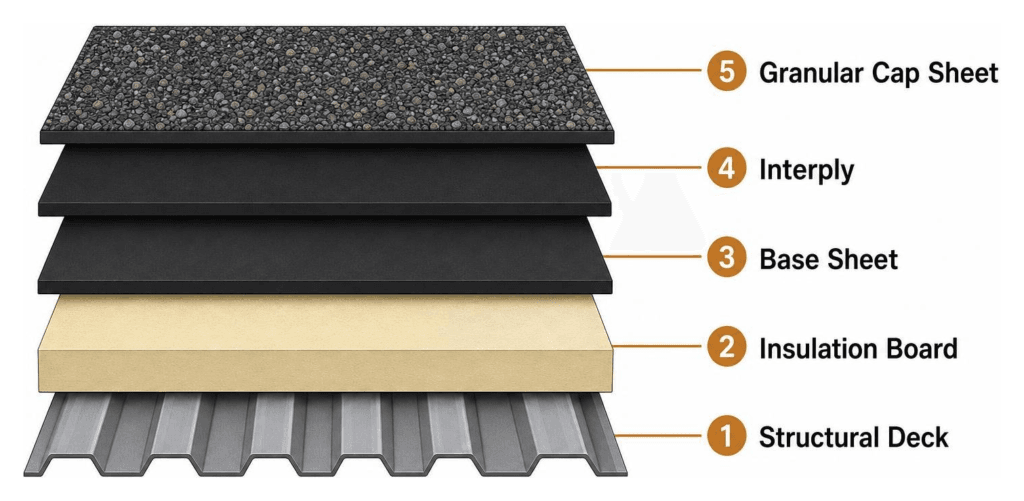
A complete, code-compliant modified bitumen assembly requires several distinct layers working together. Omitting a component compromises the whole waterproofing system:
- Roof Deck: The underlying structural foundation, such as poured concrete, steel, wood planks, or plywood (minimum 1/2-inch thickness).
- Thermal Insulation & Cover Boards: Rigid polyisocyanurate insulation or cover boards (such as perlite, wood fiber, or gypsum) installed over the deck to regulate thermal efficiency and protect insulation from hot asphalt or torches.
- Base Sheet: The foundation membrane. Options include lightweight fiberglass felts (like GAF Tri-Ply #75) or SBS self-adhering base sheets. In nailable wood deck setups, this sheet is mechanically fastened to shield the deck.
- Interply Sheet: An optional intermediate sheet placed between the base and cap sheet in three-ply commercial systems, adding an extra layer of waterproofing defense.
- Cap Sheet: The final top membrane. Granule-surfaced (Grade G) cap sheets feature factory-embedded mineral granules to shield asphalt from UV degradation, while smooth sheets (Grade S) require a liquid-applied reflective coating. Metallic foil-faced sheets are also available for parapet walls and flashings.
- Roof Flashings & Terminations: Reinforced membrane flashings installed at vertical intersections, curbs, parapet walls, and penetrations. Specialized liquid PMMA (Polymethyl Methacrylate) liquid flashings are frequently used to seal odd-shaped stanchions. For property owners evaluating different building setups, reviewing various Commercial Roofing Systems helps clarify how these components come together.
Installation Methods, Costs, and Lifespan Factors
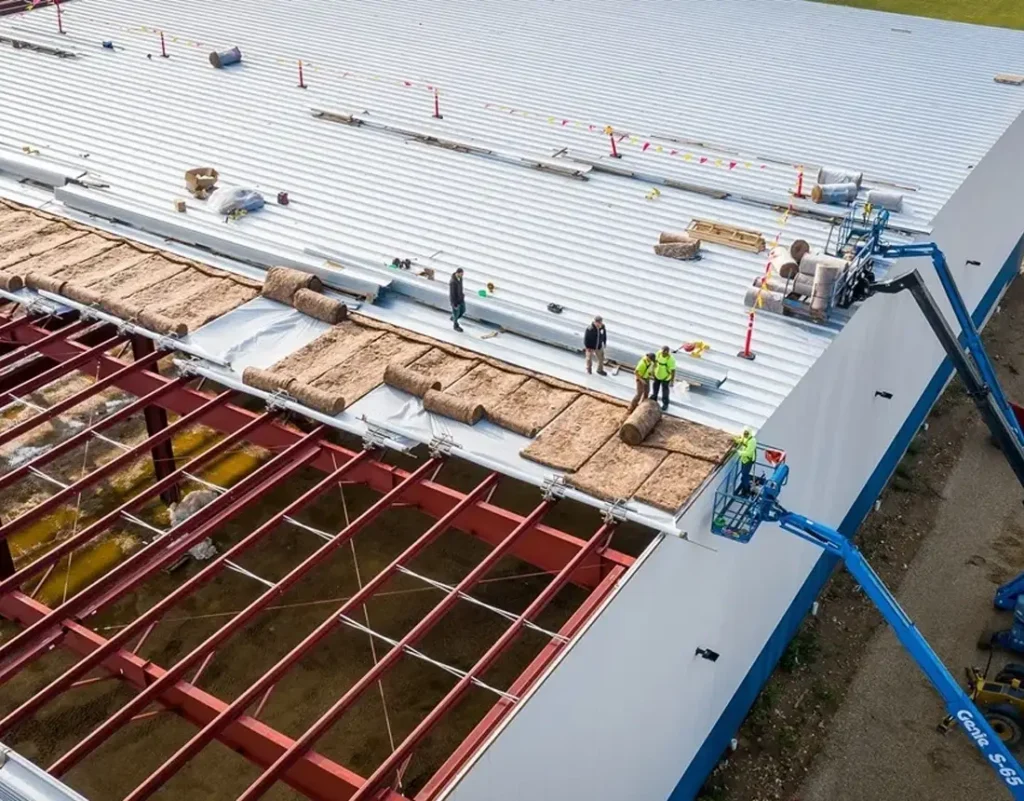
How a roof is installed is just as critical to its performance as the material chosen. Even top-tier SBS rolls will fail prematurely if placed over damp substrates or laid with inadequate seam overlaps. Explore our comprehensive range of Roofing Services to see how proper installation techniques protect long-term property values.
Attachment Techniques: Torch, Hot Mop, Cold Adhesive, and Self-Adhered
Four distinct application methods are used to attach modified bitumen membranes:
- Torch-Applied (Heat Welding): Installers use a open-flame propane torch to heat the underside of APP (and select SBS) rolls, melting the back coating to create a continuous welded seam. Side laps must maintain a 4-inch overlap, while end laps require 6 inches, showing a consistent 1/8-inch to 3/8-inch compound bleed-out along the seam edge.
- Hot-Mopped Asphalt: Used exclusively with SBS sheets, this traditional method beds membranes in hot asphalt (Type III or Type IV) heated in a rooftop kettle. The asphalt must maintain an Equiviscous Temperature (EVT) of at least 400°F at the exact point of application to flux the membrane backing properly.
- Cold-Process Adhesives: Low-odor, liquid asphalt cements or solvent-free silane-terminated polymers are spread with squeegees or trowels. This method is ideal for occupied facilities—such as active schools or hospitals in Independence or Kansas City, MO—where open flames and intense hot-asphalt fumes are prohibited.
- Self-Adhered (Peel-and-Stick): Factory-applied adhesive backings protected by release films allow clean, flame-free installation. Self-adhered SBS roll roofing (such as the GAF Liberty system) requires no kettles or torches, making it a popular option for low-slope residential applications and quick commercial rollouts. Review these technical guidelines on JM – SBS Modified Bitumen Specifications to see standard physical property requirements across different methods.
Financial Breakdown and Expected Longevity
On average, installed modified bitumen roofing costs $4 to $10 per square foot. Pricing shifts depending on system complexity, building height, surface access, tear-off requirements, and local labor rates:
- Two-Ply APP Torch-Down System: Generally costs $4.00 to $7.00 per sq. ft. installed. On a 10,000-square-foot commercial roof, total costs typically range from $40,000 to $70,000.
- Two-Ply SBS Self-Adhered System: Generally costs $5.00 to $8.00 per sq. ft. installed due to self-bonding roll technologies.
- Three-Ply Commercial Grade System: Generally costs $7.00 to $10.00 per sq. ft. installed. Adding a third interply sheet typically adds $2.00 to $3.00 per sq. ft., bringing a 10,000-square-foot project to $70,000 to $100,000.
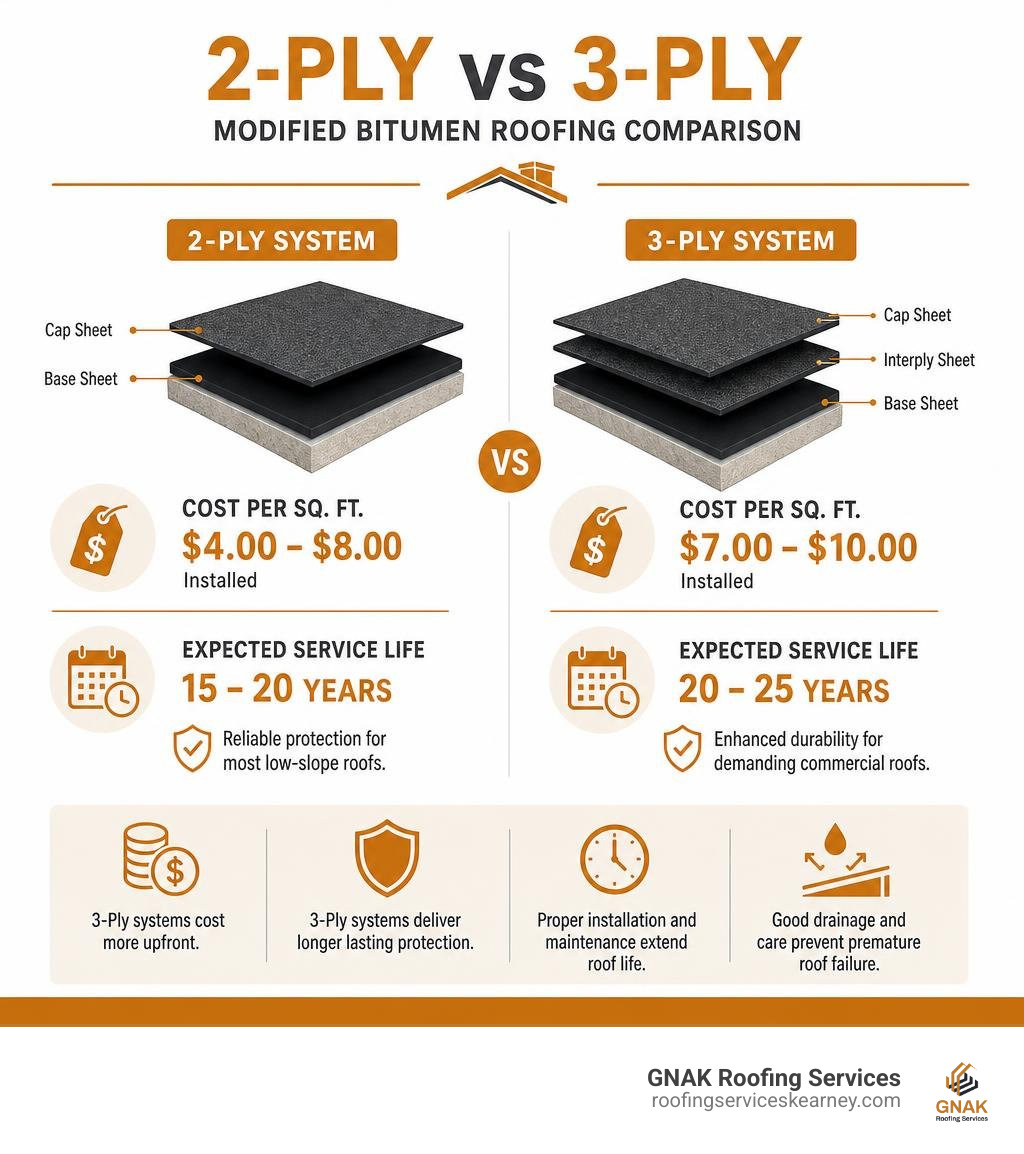
A properly installed modified bitumen roof has an average service life of 15 to 25 years. Two-ply assemblies generally last 15 to 20 years, whereas three-ply heavy-duty commercial assemblies last 20 to 25 years (or up to 30 years with diligent maintenance). Factors that shorten lifespan include poor roof drainage, unaddressed ponding water (water standing longer than 24 hours), heavy foot traffic, and missing maintenance routines. If your existing low-slope roof is nearing the end of its life, explore our options for Commercial Roof Replacement.
Practical Applications, Safety, and Maintenance
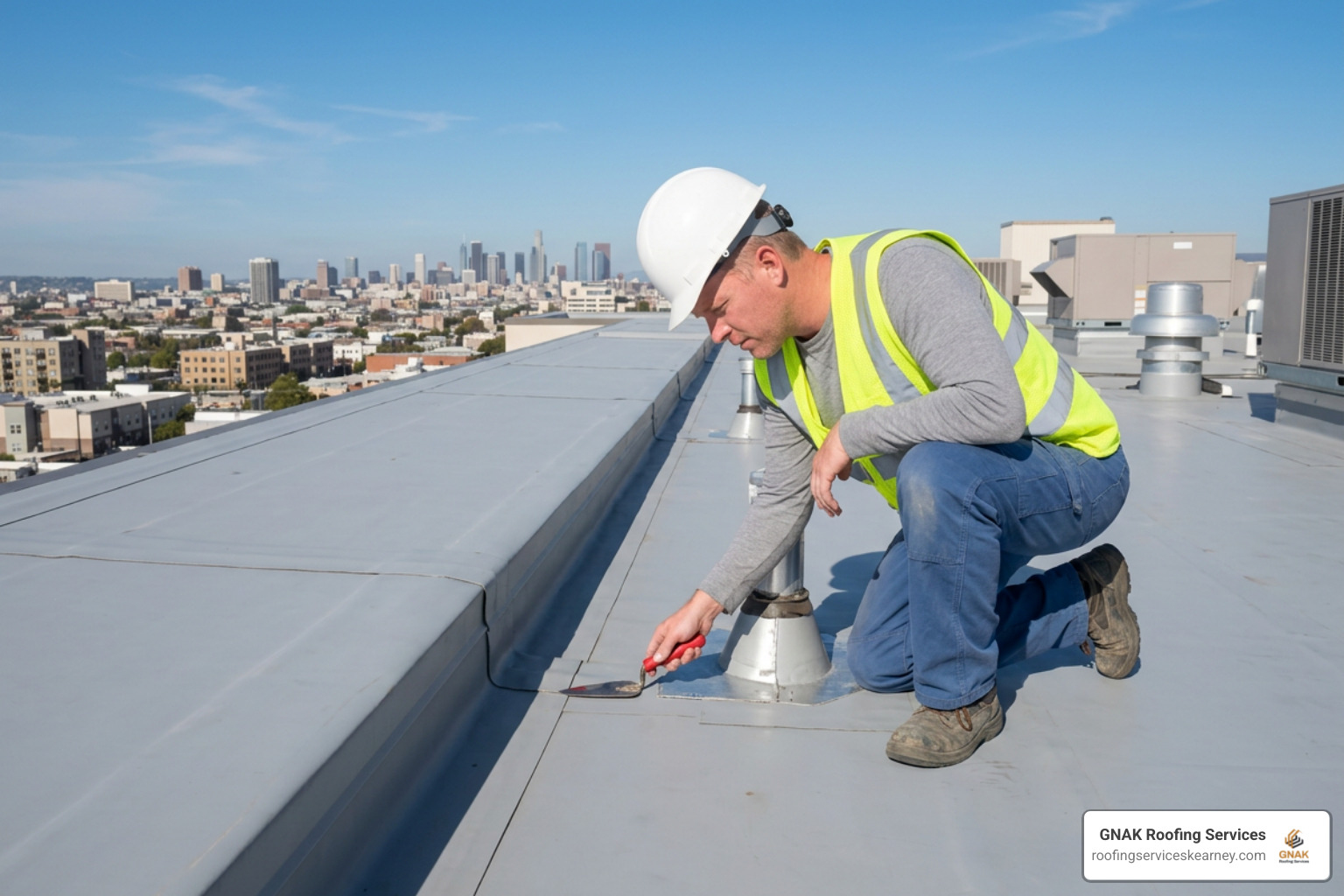
Choosing the right roofing system involves balancing structural protection with routine maintenance requirements. Modified bitumen roofing offers a rugged, time-tested option for low-slope roof designs.
Key Advantages and Disadvantages of Modified Bitumen Roofing
Understanding both the strengths and weaknesses of modified bitumen helps building owners make confident investments:
Advantages:
- Puncture Resistance: Multi-ply assemblies range between 180 and 380 mils in total thickness—substantially thicker than single-ply single-layer membranes like TPO (which measure only 40 to 80 mils).
- Foot Traffic Tolerance: Excellent resistance to punctures from fallen debris, HVAC maintenance crews, and direct foot traffic.
- Proven Track Record: Built on over 50 years of field performance with consistent chemical formulas.
- Multi-Ply Redundancy: Layered construction means a surface tear does not immediately result in interior leaks.
Disadvantages:
- Weight Factors: Weighing between 1.1 and 2.2 lbs per square foot per layer, multi-ply systems are heavier than single-ply options.
- Installation Hazards: Open-flame torch applications introduce jobsite fire hazards, while hot asphalt creates strong asphalt fumes and off-gassing during installation.
- Absorbs Heat: Dark-colored mineral granules absorb solar radiation unless specified with reflective white granules or finished with elastomeric solar coatings. To evaluate single-ply alternatives, check out our dedicated pages on TPO Roofing and EPDM Roofing.
Safety Standards, Recovers, and Long-Term Maintenance
Safety protocols are essential during modified bitumen installations. Propane flames are difficult to spot in bright sunlight. Jobsite safety requires 20 lb. ABC fire extinguishers, thermal imaging checks, and a dedicated fire watch worker on site for at least one hour after heat welding ends each day to guard against hidden smoldering.
Building codes limit low-slope roofs to two total membrane layers. Installing a new system over an existing roof (a “recover”) is permissible only if local building codes allow it, the underlying substrate is completely dry, and a moisture survey confirms structural integrity.
To keep a modified bitumen roof in top condition, follow these simple maintenance practices:
- Eliminate Ponding Water: Ensure all roof drains, gutters, and thru-wall scuppers stay clear. Water standing longer than 24 hours breaks down asphalt granules and voids manufacturer system guarantees.
- Routine Seam Probing: Check lap seams annually using a probe to identify unbonded edges before wind-driven rain can penetrate.
- Apply Reflective Coatings: Extend membrane service life by applying liquid elastomeric coatings at mid-life. Learn more low-slope upkeep strategies by reading our Roofing Tips Maintenance guide, or request immediate assistance through our Commercial Roof Repair service.
Frequently Asked Questions About Modified Bitumen Roofing
For more general questions regarding local building codes, inspections, and project estimates, visit our central FAQ hub.
Can modified bitumen roofing be installed directly over an existing roof?
Yes, a modified bitumen system can often be installed over one existing sound membrane as a recover system. However, building codes strictly limit roof assemblies to two total layers—a second recover requires a complete tear-off down to the deck. A professional moisture survey and structural load check must be performed beforehand to verify that no trapped moisture remains inside the existing roof sandwich.
How does modified bitumen roofing compare to single-ply TPO membranes?
Modified bitumen is a multi-ply system measuring 180 to 380 mils in total thickness, providing far greater puncture resistance and foot-traffic tolerance than TPO single-ply sheets (which measure only 40 to 80 mils). While TPO offers lower material costs and high solar reflectivity, modified bitumen provides multi-layer redundancy backed by over 40 years of stable formulation history.
What safety precautions are required for torch-applied installations?
Torch-applied projects require strict open-flame safety protocols:
- Obtain necessary fire permits from local municipal fire marshals.
- Maintain active 20 lb. ABC fire extinguishers on the roof deck at all times.
- Keep torch flames at least 12 inches away from combustible details, wood curbs, or insulation edge boards.
- Post a dedicated safety observer for a mandatory fire watch lasting at least one hour after torching operations conclude to inspect for hidden smoke or smoldering materials.
Conclusion
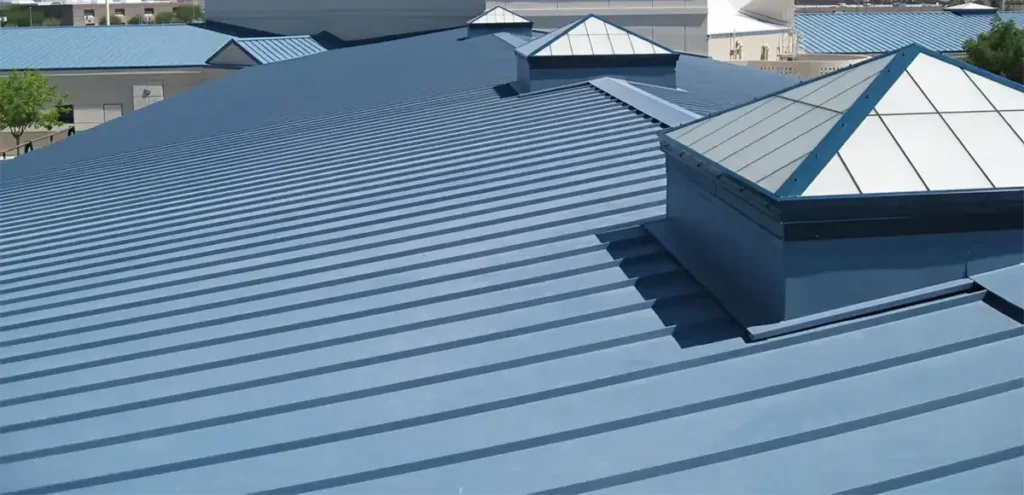
Modified bitumen roofing remains a reliable choice for flat and low-slope roofs across Kearney, MO, Clay County, Liberty, Independence, and the surrounding Kansas City metro area. Its thick, multi-ply construction provides outstanding puncture resistance, cold-weather flexibility, and decades of proven waterproofing performance.
At GNAK Roofing Services, we pair deep commercial real estate underwriting experience with insurance-ready documentation and manufacturer-compliant workmanship. Whether you need a routine maintenance inspection, storm damage documentation for an insurance claim, or a full system replacement, our team delivers dependable local service.
Contact us today to schedule your commercial or residential low-slope roof evaluation through our Contact page, or explore our dedicated Modified Bitumen Roofing Services to get started!