

Why Getting Kearney Residential Roof Repair Right Matters for Your Home
Kearney residential roof repair is one of the most important—and often most urgent—home maintenance decisions you’ll face as a local homeowner.
Here’s a quick answer to what most Kearney homeowners need to know:
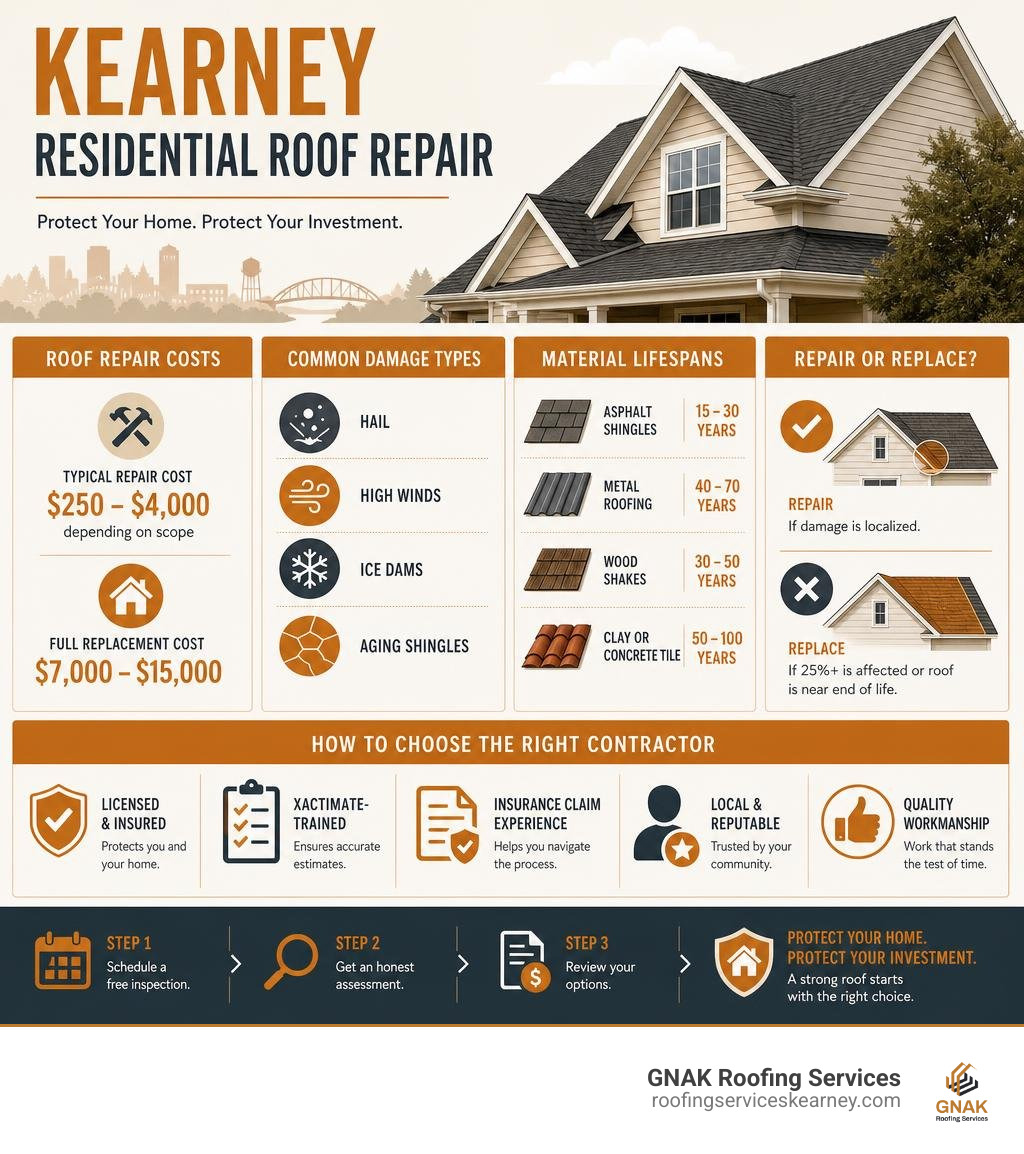
Quick Reference: Kearney Residential Roof Repair
| What You Need | Key Facts |
|---|---|
| Typical repair cost | $250 – $4,000 depending on scope |
| Full replacement cost | $7,000 – $15,000 |
| Most common damage causes | Hail, high winds, ice dams, aging shingles |
| When to repair vs. replace | Repair if damage is localized; replace if 25%+ is affected or roof is near end of life |
| What to look for in a contractor | Licensed, insured, Xactimate-trained, insurance claim experience |
| Best first step | Schedule a free professional inspection |
Kearney’s weather is hard on roofs. Hailstorms, heavy snow loads, temperature swings, and high winds can quietly wear down even a well-built roof — and a damaged roof left unaddressed can lower your home’s value by as much as 10%. On the flip side, a properly repaired or replaced roof can add an average of $15,427 in home value with a return on investment close to 68%.
The challenge most homeowners face isn’t just finding a roofer — it’s knowing whether they’re getting an honest assessment, fair pricing, and workmanship that will actually hold up.
I’m Greg Nakata, owner of GNAK Roofing Services, and my background in commercial real estate, insurance documentation, and asset underwriting gives me an unusual perspective on Kearney residential roof repair — one focused on accuracy, proper documentation, and work that holds up to scrutiny. In this guide, I’ll walk you through everything you need to make a confident, informed decision about your roof.
Common Causes of Roof Damage in Kearney
When we look at homes throughout Clay County and the wider Kansas City Northland, we see beautiful historic structures downtown alongside rapidly growing modern subdivisions. However, regardless of whether your home is a century-old classic or a newly built architectural marvel, the Missouri climate is merciless. The National Weather Service notes that severe thunderstorms can produce damaging winds and large hail, both of which are major concerns for residential roofs in our region.

Understanding what causes roof failures in our area can help you spot problems before they turn into major interior leaks. Here are the primary culprits behind most local roof failures:
- High-Velocity Winds: Missouri is notorious for severe spring and summer storms that bring winds exceeding 70 MPH. These high winds create pressure differentials that lift shingles, break their adhesive seals, or tear them off entirely. Once a shingle is lifted, the underlying wood deck is exposed to direct rainfall.
- Hail Impact: Golf ball-sized hail is a regular visitor to the Northland. When hail strikes an asphalt shingle, it knocks loose the protective mineral granules. This exposes the underlying asphalt layer to harmful UV rays, leading to rapid deterioration, cracking, and eventual leaks.
- Winter Ice Dams and Snow Loads: During cold winter months, heat rising from poorly ventilated attics melts snow on the upper portions of the roof. As this water flows down to the cold eaves, it refreezes, forming a solid barrier of ice. This “ice dam” traps subsequent meltwater, forcing it backward under the shingles and directly into your ceilings and walls.
- Extreme Temperature Swings: Kearney experiences blistering summer heat and sub-zero winter freezes. This dramatic thermal cycling causes roofing materials to expand and contract rapidly, which can pull fasteners loose, warp decking, and split flashing materials.
Recognizing these weather patterns is the first step toward protecting your home. For more detailed advice on seasonal preventative maintenance, you can read our comprehensive guide on Roofing Tips & Maintenance.
Repair vs. Replacement: Evaluating Your Roof’s Condition
One of the most frequent questions we receive is: “Does my roof just need a patch, or am I looking at a complete replacement?”
As a homeowner, you don’t want to pay for a whole new roof if a simple repair will suffice. Conversely, throwing money at temporary repairs on a structurally failing roof is simply wasting hard-earned cash.
To help you evaluate your roof’s current health, look for these key indicators:
- Shingle Curling and Cupping: If the edges of your shingles are curling upward or the centers are beginning to cup, the physical structure of the asphalt is failing. This is a sign of age and poor attic ventilation, indicating that a Residential Roof Replacement is likely on the horizon.
- Granule Loss: Finding a small amount of sand-like granules in your gutters is normal for a new roof. However, if your gutters are overflowing with granules or you can see dark, bald spots on your shingles, the protective barrier is gone.
- Water Stains on Ceilings: If you notice brown, circular stains on your drywall or ceiling, water is actively bypassing your roof system. While a single localized leak can often be repaired, multiple stains across different rooms suggest systemic failure.
- Sagging Rooflines: A sagging roofline is a structural emergency. It indicates that the decking underneath has rotted from long-term water exposure or that the rafters themselves are failing under snow loads.
To help you make an informed decision, let’s look at the key differences between these two options:
- Scope of Damage: If less than 20–25% of the roof is damaged (such as a few blown-off shingles from a recent storm), a targeted repair is highly effective. If damage is widespread across multiple slopes, replacement is the safer, more cost-effective long-term choice.
- Age of the Roof: An asphalt shingle roof that is 15 to 20 years old is nearing the end of its useful life. Investing in major repairs on an aging roof rarely makes financial sense.
- Future Plans: If you plan to sell your home in the near future, keep in mind that resolving roof issues beforehand can return 60% to 70% of your investment and prevent buyers from walking away during inspections.
Warning Signs That Require Immediate Kearney Residential Roof Repair
Some roof issues simply cannot wait for a convenient time. Delaying action on critical warning signs can lead to structural wood rot, toxic mold growth, and damaged personal property. If you notice any of the following, you should request an emergency inspection immediately:
- Active Interior Leaks: Water dripping into your living space during rainstorms is a clear sign of a breached roof system.
- Damaged or Missing Flashing: Flashing is the metal material installed around chimneys, dormers, and valleys. If it is cracked, rusted, or missing, water has a direct pathway into your attic.
- Rapid Moss and Algae Growth: While algae stains are mostly cosmetic, thick moss growth traps moisture against the shingles, causing the wood underneath to rot. Preventative rot care is crucial; neglecting it can lower your home’s overall value by up to 10%.
If you suspect your home has suffered damage, do not wait for the next storm to test it. Learn more about our fast-response options for Residential Roof Repair to secure your home.
Navigating Storm Damage and Insurance Claims for Kearney Residential Roof Repair
Storm damage can be incredibly stressful. When a severe storm sweeps through Clay County, dealing with the physical damage is only half the battle—the other half is navigating the insurance claims process.
Many homeowners find themselves overwhelmed by paperwork, confusing terminology, and adjusters who may try to minimize the payout. This is where having a contractor with insurance-ready documentation makes all the difference.
Here is the step-by-step process we recommend following immediately after a storm:
- Document the Damage Safely: Take photos of any visible damage from the ground. Look for dented gutters, broken window screens, and shingles lying in your yard. Do not climb onto a wet or damaged roof yourself.
- Schedule a Professional Inspection: Before filing a claim, have a trusted local contractor perform a detailed inspection. They will provide a comprehensive report detailing the exact scope of the damage.
- File the Claim: Contact your insurance provider and provide them with the inspection report. They will schedule a time for an insurance adjuster to visit your property.
- Ensure Contractor-Adjuster Coordination: Your contractor should meet the insurance adjuster at your home. Having a professional advocate present ensures that all damaged areas—including subtle hail bruising that adjusters sometimes miss—are properly documented and included in the claim.
At GNAK Roofing Services, we specialize in providing the precise, line-item documentation that insurance carriers require. By utilizing industry-standard estimating software like Xactimate, we make the approval process as smooth and transparent as possible. To learn more about how we assist homeowners with storm restoration in neighboring areas, check out our dedicated guide to Roof Repair Liberty MO.
Key Factors to Consider When Choosing a Local Contractor
Selecting the right roofing company is the most critical decision you will make for your home’s longevity. Unfortunately, the roofing industry is filled with “storm chasers”—out-of-state contractors who arrive after a storm, perform quick, subpar work, and disappear before their warranties can be tested.
To protect your investment, look for a contractor who offers:
- Local Licensing and Physical Presence: Ensure the company is fully registered in Missouri and has a physical office nearby. Local businesses rely on their community reputation and are around to honor their warranties.
- Comprehensive Liability Insurance: Never work with a contractor who cannot provide up-to-date certificates for general liability and workers’ compensation insurance. Without this, you could be held financially liable for accidents on your property.
- Manufacturer-Compliant Workmanship: Top-tier manufacturers like GAF, CertainTeed, and Owens Corning only offer extended warranties if their products are installed by certified contractors who strictly follow their guidelines.
- Transparent, Written Estimates: Avoid contractors who offer vague verbal quotes or pressure you to sign a contract immediately. Demand a detailed, written scope of work listing materials, labor, cleanup procedures, and payment terms.
To help you understand your options, here is a comparison of the most common roofing materials used in the Kearney area:
| Material Type | Average Lifespan | Pros | Cons |
|---|---|---|---|
| Asphalt Shingles | 15 – 30 Years | Affordable, versatile, easy to install and repair | Susceptible to wind uplift and hail damage |
| Metal Roofing | 50 – 75 Years | Extremely durable, sheds snow efficiently, highly wind-resistant | Higher upfront cost, can be noisy during heavy rain |
| Rubber (EPDM/TPO) | 30 – 50 Years | Excellent water resistance, flexible, ideal for low-slope roofs | Limited aesthetic options for sloped residential roofs |
| Wood Shingles / Shakes | 20 – 25 Years | Beautiful natural aesthetic, excellent insulation properties | Requires high maintenance, susceptible to rot and mold |
Whether you are looking for repairs in Kearney or need assistance further north, working with a reputable company is key. You can read about our high-quality local workmanship standards in our guide to Roof Repair St. Joseph MO.
Average Costs for Kearney Residential Roof Repair
We believe in complete pricing transparency. While every roof is unique, having a general understanding of local repair costs can help you budget effectively and avoid dishonest operators.
- Minor Repairs ($250 – $600): This typically covers sealing a minor leak, replacing a few blown-off shingles, or repairing damaged flashing around a single pipe boot.
- Moderate Repairs ($600 – $1,500): This range generally includes repairing moderate valley leaks, replacing larger sections of damaged shingles, or sealing flashing around chimneys and dormers.
- Major Repairs ($1,500 – $4,000): This covers extensive storm damage repair, replacing rotted decking sections, or resolving severe, long-term leaks that have affected structural components.
- Full Roof Replacement ($7,000 – $15,000+): The total cost for a full replacement depends heavily on the square footage of your roof, its pitch (steepness), and the materials you choose.
For a detailed breakdown of specific material costs and options tailored to your home’s architectural style, explore our comprehensive guide on Residential Roofing.
Frequently Asked Questions About Kearney Roof Services
To help you make the best decisions for your property, we have gathered answers to some of the most common questions we hear from local homeowners.
How long do common roofing materials last in Missouri?
In our variable Missouri climate, roofing materials generally perform within the following ranges:
- Standard 3-Tab Asphalt Shingles: 15 to 20 years.
- Architectural Asphalt Shingles: 20 to 30 years with proper attic ventilation.
- Metal Roofing (Standing Seam): 50 to 75 years, easily shedding heavy snow and resisting high winds.
- Wood Shakes: 20 to 25 years, provided they receive regular cleaning and preservative treatments.
What should I do immediately after discovering a roof leak?
If you discover water actively leaking into your home, take these immediate steps to minimize damage:
- Contain the Water: Place buckets or plastic bins under the leak. If water is pooling behind ceiling drywall, poke a small pinhole in the center of the sag to drain the water safely into a bucket, preventing a sudden ceiling collapse.
- Move Valuables: Protect furniture, electronics, and personal belongings by moving them out of the room or covering them with plastic sheeting.
- Call a Professional: Contact a certified roofer immediately for emergency tarping services to halt the water intrusion while a permanent repair plan is put in place.
If you are facing an active emergency in the Kansas City metro area, you can request immediate assistance through our guide to Roof Repair Independence MO.
Are there energy-efficient roofing options for Kearney homes?
Absolutely. Modern roofing technology offers several ways to lower your monthly utility bills:
- Cool Roof Shingles: These shingles are manufactured with specialized granules that reflect solar heat away from your home, keeping your attic significantly cooler in the summer.
- TPO Membranes: Highly reflective white TPO membranes are an exceptional choice for low-slope or flat roof sections, preventing heat absorption.
- Advanced Attic Ventilation Systems: Properly balancing your intake (soffit) and exhaust (ridge) vents allows trapped heat and moisture to escape, reducing the load on your air conditioning system.
Conclusion
Your home is your most valuable asset, and your roof is its first line of defense. When it comes to kearney residential roof repair, taking a proactive approach saves money, protects your family, and preserves your home’s long-term value.
At GNAK Roofing Services, we are proud to serve Kearney, Clay County, and the surrounding Northland communities. We combine deep local expertise with insurance-ready documentation and manufacturer-compliant workmanship to ensure your roof is repaired correctly the first time. We also serve our neighbors throughout the region, and you can learn more about our dedicated local teams by visiting our service pages for:
Don’t wait for a minor leak to turn into a costly structural repair. Get a professional roof inspection and repair estimate today and let us give you the peace of mind you deserve.