
Why Commercial Roofing Maintenance Is One of the Most Important Investments You Can Make
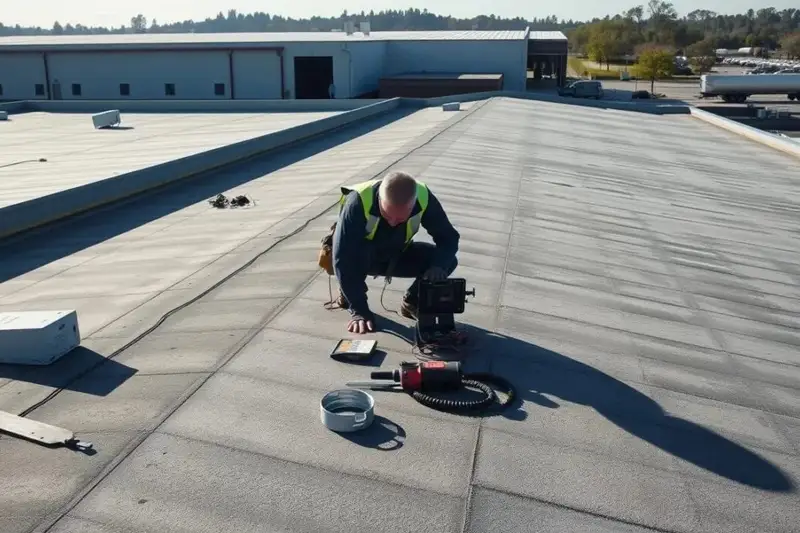
Commercial roofing maintenance is the practice of regularly inspecting, cleaning, and repairing your roof system before small problems turn into expensive failures.
Here’s what you need to know at a glance:
- Inspect twice a year — spring and fall, minimum
- Clear drains and debris at every visit
- Check flashings, seams, and penetrations for early signs of failure
- Document everything — photos, reports, work orders
- Hire a certified contractor for warranty-qualifying inspections
- Inspect after any major storm, regardless of your regular schedule
Most commercial roofs don’t fail dramatically. They fail quietly. A small seam separation. A clogged drain left through winter. A flashing that lifts just enough to let moisture in. None of these look urgent — until the ceiling tiles are stained and the insulation is soaked.
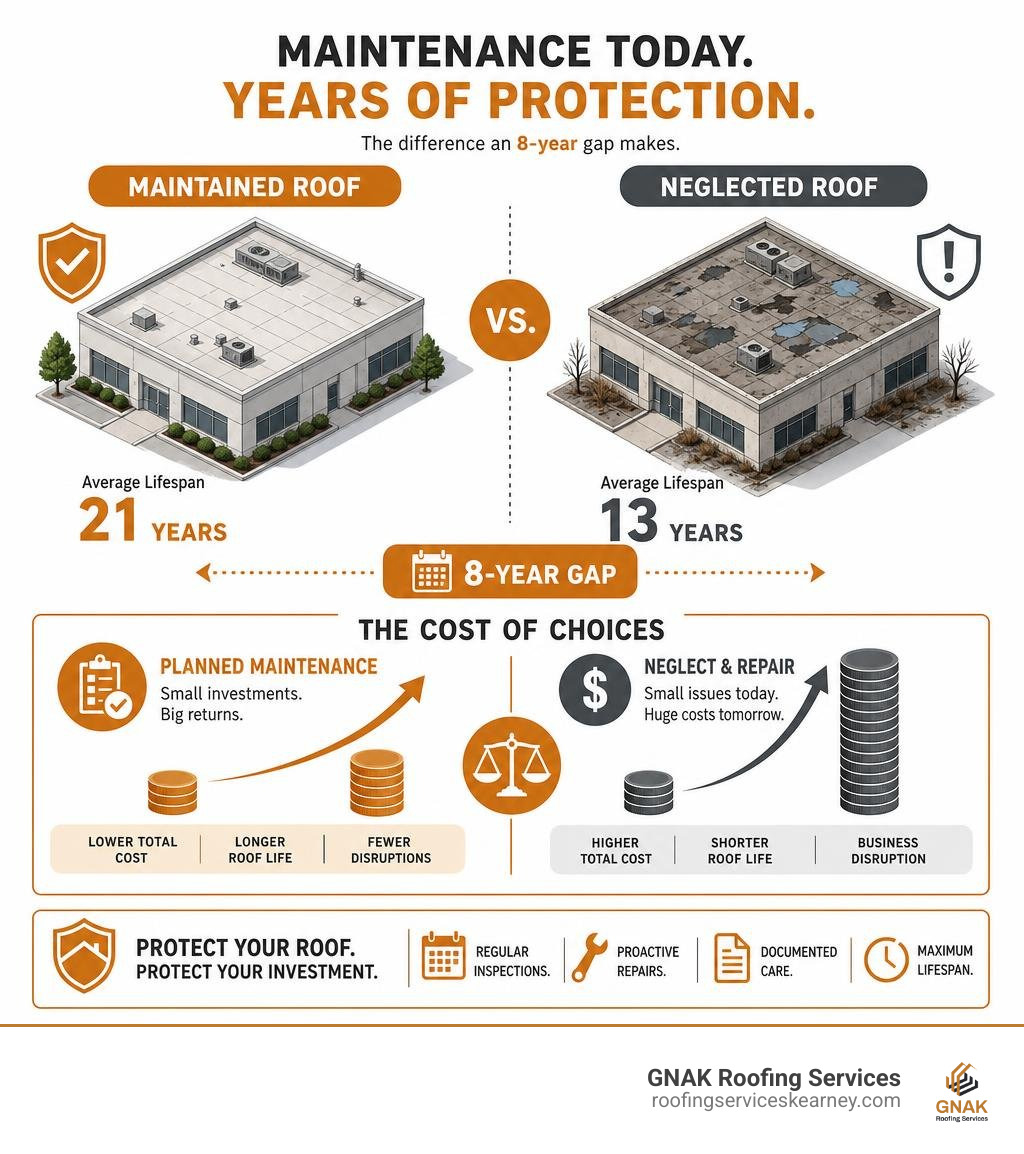
The numbers tell the story clearly. According to the NRCA, a well-maintained commercial roof lasts approximately 21 years. A neglected one lasts around 13 years. That’s an eight-year gap that can cost hundreds of thousands of dollars in early replacement costs — money most building owners never see coming.
And it gets worse when you ignore it. Emergency repairs run three to five times more than planned maintenance work. A $400 repair left unattended for two seasons can easily become a $40,000 interior damage event once water reaches insulation, decking, and electrical systems below.
Roofing also carries unusual legal weight. It represents just 4% of a building’s construction cost — but accounts for as much as 75% of the litigation cost. That gap exists almost entirely because of deferred maintenance.
The good news: most of this is preventable. A structured maintenance program, applied consistently, is one of the highest-return investments a commercial property owner can make.
I’m Greg Nakata, owner of GNAK Roofing Services in Kearney, Missouri — and my background in commercial real estate finance, asset underwriting, and collateral evaluation since 1999 gives me a different lens on commercial roofing maintenance than most contractors bring to the table. That perspective shapes everything in this guide, from how we think about roof inspections to how we document findings for insurance and warranty compliance.
What is a Commercial Roofing Maintenance Program?
Think of a preventative roof maintenance program as an insurance policy where you actually get to keep your roof at the end. Instead of waiting for a bucket-worthy drip in your warehouse or retail space, a structured program treats your roof as a managed capital asset. It is a systematic process of scheduled inspections, routine housekeeping, and proactive minor repairs designed to keep your building dry and your balance sheet happy.
When you enroll in a professional program, you transition from reactive firefighting to strategic asset management. In partnership with a trusted local team, you establish a baseline of your roof’s health and follow a customized roadmap to maximize its service life. According to the comprehensive Commercial Roof Maintenance Guide (2026), a structured approach can extend your roof’s lifespan by 25% to 50%, saving you from premature and stressful tear-offs.
To make the best decisions for your facility, it helps to understand the specific commercial roofing systems protecting your property. Whether you manage a manufacturing plant in St. Joseph, a retail center in Liberty, or a warehouse in Independence, every roof has unique structural quirks and vulnerabilities that require professional oversight.
The Financial Impact of Neglecting Your Roof
Let’s talk numbers, because as a former financial underwriter, I love them. Deferring your roof maintenance does not eliminate your costs; it simply rearranges them into a much larger, much more painful bill down the road.
For example, a typical 25-year commercial roof that receives zero maintenance will generate $200,000 or more in additional repair costs over its shortened service life. Why? Because small, undetected leaks slowly destroy the underlying insulation. Wet insulation loses up to 40% of its thermal performance, sending your utility bills through the roof (pun intended) long before you realize you have a moisture problem.
To put this in perspective, let’s look at a financial comparison for a typical 20,000-square-foot commercial building over a 20-year period:
| Financial Metric | Proactive Maintenance Program | Reactive “Run-to-Failure” Approach |
|---|---|---|
| Annual Maintenance Cost | $0.15 – $0.25 per sq. ft. ($3,000 – $5,000) | $0.00 |
| 20-Year Maintenance Total | $60,000 – $100,000 | $0.00 |
| Average Roof Lifespan | 21 – 25 Years | 10 – 13 Years |
| Replacement Frequency (20 Yrs) | 0 Replacements | 1 Full Replacement |
| Estimated Replacement Cost | $0 (Deferred past Year 20) | $100,000 – $320,000 ($5 – $16/sq. ft.) |
| Emergency Repair & Water Damage | Minimal ($500 – $2,000 total) | High ($50,000 – $150,000+ in interior damage) |
| Total 20-Year Financial Outlay | $60,500 – $102,000 | $150,000 – $470,000+ |
Beyond the raw repair savings, there is a massive tax advantage to keeping up with your maintenance. Under Section 179 of the tax code, routine maintenance costs can often be fully written off in the year they are incurred. In contrast, a full roof replacement is a capital expenditure that must be depreciated over a painful 39-year period. Keeping your roof alive is simply smart business.
Warranty Compliance and Insurance Requirements in 2026
If you think your manufacturer’s No Dollar Limit (NDL) warranty has you covered for any and all leaks, I have some tough news. Almost every commercial roofing manufacturer requires documented, professional maintenance to keep their warranties active. Skipping your annual or biannual inspections is the single most common reason warranty claims are denied.
The same holds true for commercial property insurance. In 2026, insurance carriers have become incredibly strict. Due to the rise in severe weather events across the Kansas City Northland, insurers routinely request timestamped, geo-tagged photo documentation of your roof’s pre-storm condition before they will pay out a wind or hail claim. If they see evidence of clogged drains, rusted flashings, or long-term neglect during their adjusters’ visits, they will attribute the storm damage to “contributory negligence” and deny your claim.
To protect your investment, we recommend following the Standard Manufacturer Scheduled Maintenance Checklist Guidelines. Keeping a dedicated, cloud-backed roof file with detailed inspection reports is your best defense against denied claims and voided warranties.
Why You Need a Biannual Commercial Roofing Maintenance Schedule
We live and work in Missouri, which means our buildings are subjected to some of the most erratic weather patterns in the country. From brutal summer heat and humidity to freezing winter blizzards and spring tornado seasons, your roof takes a beating 365 days a year.
To combat this, the National Roofing Contractors Association (NRCA) recommends a minimum of two professional inspections per year:
- The Spring Inspection (March/April): This visit focuses on identifying freeze-thaw damage from the winter. We look for cracked sealants, split seams, and masonry damage caused by expanding ice.
- The Fall Inspection (October/November): This is all about preparing for the coming winter. We clear out autumn leaves, check that all drainage pathways are wide open, and ensure the membrane is sealed tight against snow loads and ice dams.
According to the Commercial Roof Maintenance & Inspection Program: Complete 2026 Guide, sticking to this seasonal rhythm prevents the quiet accumulation of minor defects, keeping your facility running smoothly without unexpected operational downtime.
The Core Components of a Professional Roof Inspection
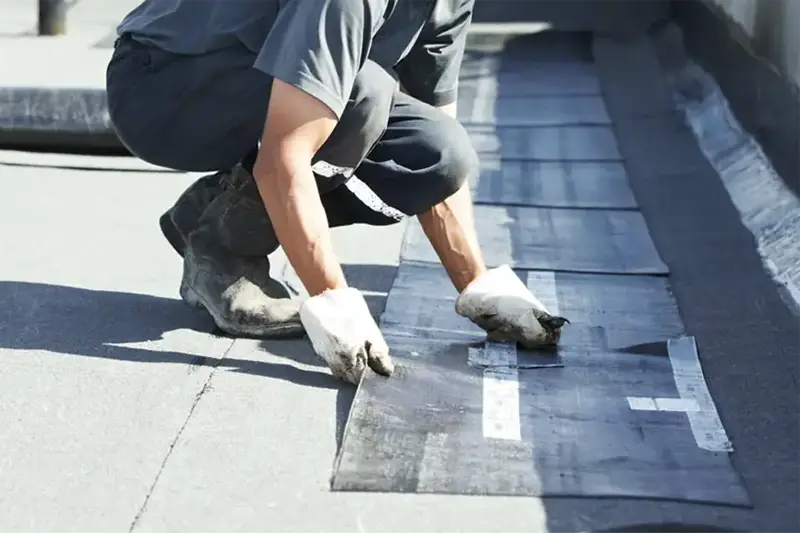
A professional roof inspection is much more than a quick walk-around with a clipboard. It is a highly technical evaluation that combines physical examinations with advanced diagnostic tools to locate hidden moisture and structural weaknesses. When you partner with us for a commercial roof inspection, we look deep into the layers of your roofing system.
Our technical diagnostics include:
- Thermal Infrared Moisture Surveys: We use specialized infrared cameras to scan your roof at dusk. Because water has a higher thermal mass than dry insulation, wet areas retain heat longer. The camera highlights these temperature differences, allowing us to pinpoint trapped moisture months before a physical leak appears inside your building.
- Core Sampling: If our thermal imaging detects a suspicious hot spot, we take a physical core sample. This involves cutting a small, cylindrical cross-section through the membrane down to the structural deck. This allows us to physically verify the condition of your insulation and deck, after which we immediately patch the sample area to manufacturer specifications.
Key Areas Checked During a Commercial Roof Inspection
A truly thorough commercial inspection covers dozens of individual components. At GNAK Roofing Services, we utilize a rigorous multi-point checklist that leaves no stone unturned:
- The Roof Membrane: We inspect the entire field for punctures, cracks, blistering, tenting fasteners, and physical wear.
- Seams and Laps: We physically test membrane seams to ensure the adhesive or welds remain 100% watertight.
- Perimeter Flashings and Edge Metal: Since flashings are the most common failure point on any commercial roof, we carefully check the metal edges, termination bars, and counter-flashings.
- Drainage Systems: We check all drains, scuppers, gutters, and downspouts for blockages, proper slope, and secure clamping rings.
- Rooftop Penetrations: We examine the seals, pitch pans, and boots around pipes, vents, skylights, and chimneys.
- Rooftop Equipment (HVAC): We inspect the curbs, vibration dampers, and access panels of your heavy equipment.
- Structural Deck and Support: We look for signs of sagging, rust, or physical deflection from underneath the roof deck.
- Interior Ceilings and Walls: We start inside, checking for water stains, mold, or warped window frames that indicate active water intrusion.
Common Risks and System-Specific Maintenance Needs

Every commercial roof faces threats from the elements, but the severity of those risks often depends on your building’s location and design. In our service areas — from Kearney and Clay County to Independence and Kansas City — we must constantly prepare roofs for high winds, heavy thunderstorms, and biological growth like moss or lichen. To keep your property safe, it is vital to understand the fundamentals of commercial roofing and how different environmental forces impact your specific structure.
Managing Drainage Systems, Flashings, and Rooftop Equipment
Water is your roof’s greatest enemy, and a failed drainage system is its accomplice. Standing (or ponding) water on a flat roof is defined as water that remains for more than 48 hours after rain. Ponding water adds immense structural weight to your building and accelerates the chemical breakdown of single-ply membranes. Keeping your drains clear of leaves, trash, and dirt is the simplest yet most critical step in roofing tips & maintenance.
Additionally, rooftop HVAC units are notorious for causing roof damage. When HVAC technicians service units, they can accidentally drop tools, puncture membranes, or leave heavy access panels on the bare roof. Condensate lines from AC units must be piped directly into drains; letting acidic AC water pool on your membrane will quickly eat through the material.
Tailoring Commercial Roofing Maintenance to Your Membrane Type
Different roofing materials have completely different maintenance requirements. A one-size-fits-all approach simply does not work.
TPO Roofing
Thermoplastic Polyolefin is highly popular for its energy efficiency and reflective properties. However, TPO is highly dependent on hot-air welded seams. During our inspections, we use a specialized seam probe to physically check every inch of the welded seams, looking for cold welds that can open up under wind uplift pressures. We also wash the membrane periodically to maintain its cool-roof reflectivity.
EPDM Roofing
Ethylene Propylene Diene Monomer is a highly durable synthetic rubber. While EPDM can handle extreme temperatures, it is prone to shrinkage over time. This shrinkage pulls the membrane away from wall flashings and roof edges. We inspect EPDM roofs for seam pull-stripping, adhesive failure, and degradation of the black rubber under intense UV exposure.
Modified Bitumen
Modified bitumen systems are tough, multi-layer roofs. Their primary vulnerability is the loss of protective mineral granules, which shield the underlying asphalt from UV rays. We check these roofs for “alligatoring” (cracking that looks like alligator skin), open lap seams, and blisters caused by trapped moisture between the felt layers.
Metal Roofing
Commercial metal roofing is incredibly long-lasting but expands and contracts significantly with Missouri’s seasonal temperature swings. This movement can back out fasteners and wall screws over time. We inspect metal roofs to tighten loose fasteners, replace dried-out neoprene washers, clear debris from built-in gutters, and reseal metal joints and transition flashings.
Frequently Asked Questions About Commercial Roofs
How much does a commercial roof maintenance program cost?
The cost of a commercial roof maintenance program depends on several factors, including the size of your roof, the type of membrane, the age and condition of the system, and the number of HVAC units and penetrations.
Generally, a professional, full-service preventative maintenance program costs between $0.15 and $0.25 per square foot per year. For a 20,000-square-foot facility, this equates to roughly $3,000 to $5,000 annually. If you choose an inspection-only contract (which provides detailed reports but leaves repairs for a separate work order), the cost drops to about $0.05 to $0.10 per square foot. Given that a single emergency leak repair can easily exceed $5,000 in structural and interior damage, the return on investment for a maintenance program is incredibly high.
Can our in-house facility team perform commercial roof maintenance?
While your in-house maintenance staff can handle basic housekeeping tasks — such as picking up loose trash, sweeping leaves away from drains, and keeping a log of who accesses the roof — they should not perform technical inspections or repairs.
Most modern commercial roofs are highly specialized chemical systems. Using the wrong sealant or caulk on a TPO or EPDM membrane can chemically melt the material and instantly void your manufacturer’s warranty. Furthermore, certified manufacturer warranties require inspections to be completed by a licensed, certified roofing contractor. Keeping your warranty active and ensuring OSHA fall-protection safety compliance requires professional, factory-trained roofers.
What steps should be taken immediately after a severe storm?
Missouri storms can be incredibly destructive, bringing heavy hail, high winds, and flying debris. To protect your property, you should take the following steps immediately after a major storm:
- Perform an Interior Check: Look for new water stains on ceiling tiles, damp drywall, or water pooling on the floor.
- Clear the Drainage System: Check that storm debris has not blocked your drains and scuppers, which can cause water to pool rapidly.
- Document Everything: Take photos of any visible damage, fallen branches, or hail accumulation on and around your property.
- Schedule a Professional Post-Storm Inspection: Contact us to perform a thorough safety and integrity check. We provide insurance-ready documentation to streamline your claims process if storm damage is found.
If a storm has caused catastrophic damage to an aging system, we can also assist you in evaluating your options for a complete commercial roof replacement to restore long-term security to your business.
Conclusion
At GNAK Roofing Services, we believe that taking care of your commercial roof shouldn’t be a source of constant stress. By partnering with a local, experienced team, you can transform your roof from a ticking financial liability into a highly stable, well-managed asset.
We proudly serve commercial property owners across the Kansas City region, including Kearney, Clay County, St. Joseph, Liberty, Independence, and Kansas City, MO. Our unique approach combines deep local expertise with manufacturer-compliant workmanship and the insurance-ready documentation you need to protect your bottom line.
Don’t wait for the next heavy Missouri storm to find out if your roof is ready. Schedule a professional commercial roof repair assessment today and let us help you extend the life of your roof — and keep your peace of mind intact.