


What to Do After Storm Damage Roof Repair Becomes Urgent
Storm damage roof repair is one of the most time-sensitive home emergencies you can face. Every hour you wait, water pushes deeper into your home.
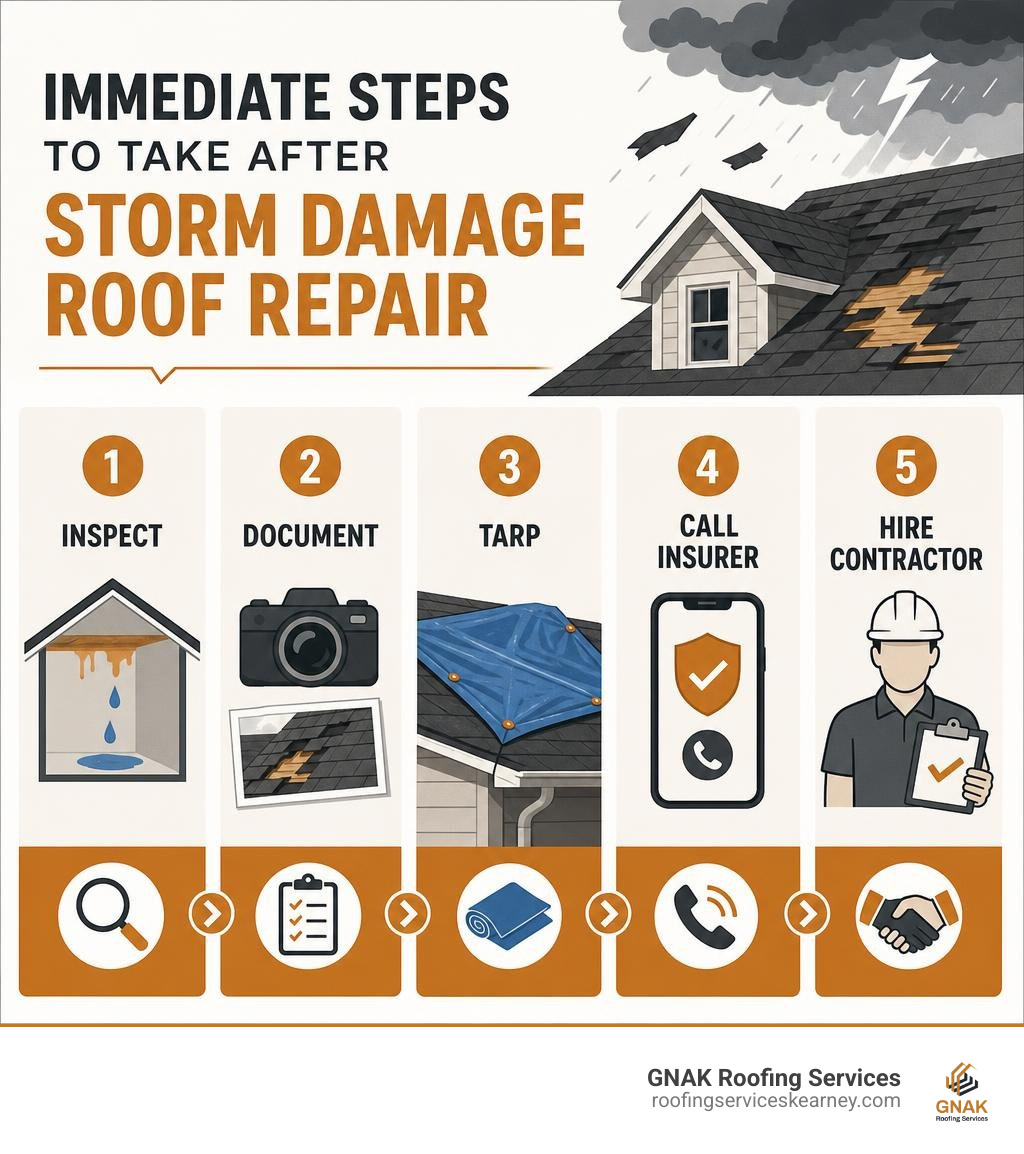
Here’s what to do right now:
- Stay safe — do not climb onto the roof during or immediately after a storm
- Check inside first — look for water stains, drips, or wet insulation in your attic
- Document everything — photograph all visible damage from the ground before anything is moved or cleaned up
- Call a licensed roofing contractor — schedule an inspection within 24 to 48 hours
- Contact your insurance company — report the damage as soon as possible to start your claim
- Request emergency tarping — if there is an active leak, temporary protection prevents further interior damage
Severe storms can strip shingles, dent metal panels, drive water through flashing, and compromise the structural deck beneath your roof — sometimes without any obvious signs from the ground. Hailstones as small as 1 inch in diameter cause measurable damage to asphalt shingles, and 1.5-inch hailstones can cause granule loss severe enough to warrant full replacement. In the Kansas City region, that kind of storm is not rare — it’s a regular part of spring and summer weather.
The damage you can’t see is often more dangerous than what you can. Hidden moisture leads to mold. Weakened shingles fail in the next storm. A small leak becomes a ruined ceiling.
This guide walks you through every step — from safely assessing your roof to filing your insurance claim to deciding between repair and full replacement.
I’m Greg Nakata, owner of GNAK Roofing Services in Kearney, Missouri, and my background in commercial lending, asset underwriting, and insurance documentation gives me a different perspective on storm damage roof repair than most contractors bring to the table. That experience shapes how we inspect, document, and advocate for every property owner we work with — and it’s the foundation for everything covered in this guide.
Common Types of Storm Damage Affecting Roofs
When a severe Midwestern weather system rolls through Clay County, it brings a cocktail of destructive forces. Understanding how different elements impact your roofing system is the first step toward securing the right repairs.
- Hail Damage: Hailstones act like tiny, high-velocity hammers. When they strike your roof, they knock away the protective mineral granules on asphalt shingles, exposing the fragile asphalt sub-layer to destructive UV rays. Over time, this leads to rapid deterioration, cracking, and leaks.
- Wind Uplift: High winds do not just blow across your roof; they create pressure differentials that lift shingles. Once a shingle’s adhesive seal is broken, wind can peel it back, crease it, or tear it away entirely, exposing the bare wooden deck underneath.
- Falling Debris: Heavy storms regularly snap tree limbs. A falling branch can puncture shingles, crack tiles, dent metal panels, or even fracture the roof trusses below.
- Water Intrusion: Driven by high winds, rainwater can find its way under compromised shingles, deteriorating underlayment, and aging flashing. Once water bypasses these outer barriers, it pools on the roof deck and slowly drips into your attic and living spaces.
| Damage Type | Primary Indicator | Long-Term Threat if Untreated |
|---|---|---|
| Wind Uplift | Missing, creased, or lifted shingles; exposed underlayment | Rapid roof deck rot, interior ceiling leaks |
| Hail Strikes | Circular dents, granule loss, bruised asphalt underlayment | Premature shingle failure, cracking, slow leaks |
| Falling Debris | Punctures, cracked structural components, broken valley flashing | Immediate structural failure, major water intrusion |
| Water Intrusion | Ceiling stains, damp attic insulation, musty odors | Fungal wood rot, structural mold, ruined drywall |
Identifying Hail and Wind Damage
Hail and wind damage are often subtle. Hail leaves behind “bruises” — dark, soft spots on asphalt shingles where the granules have been crushed into the backing material. This granule loss is not just cosmetic; those granules protect your roof from sun damage. Without them, the shingle will quickly curl, crack, and leak.
Wind damage manifests as lifted edges, broken seals, or entirely missing shingles. When wind breaks the sealant strip of a shingle, it may settle back down after the storm, looking completely normal from the ground while remaining highly vulnerable to the next rainfall. This is why getting a professional assessment through Roof Inspection Services is critical to catching hidden issues before they escalate.
Water Intrusion and Structural Compromise
Water is patient, and it will always find the path of least resistance. Once a storm breaches your roof’s outer defenses, water seeps into the attic, saturating your insulation and reducing its R-value. This trapped moisture creates a breeding ground for mold within weeks.
If left unchecked, water will rot the wooden rafters and sheathing, compromising the structural integrity of your entire home. If you notice sagging drywall, water stains on your ceiling, or a sudden musty smell in your attic after a storm, you need to schedule Residential Roof Repair immediately to halt structural decay.
How to Safely Inspect Your Roof After a Storm
Your safety is paramount. Never, under any circumstances, climb onto a wet, storm-damaged roof yourself. Slips, structural instability, and hidden weak spots make post-storm roof climbing incredibly hazardous. Instead, you can perform a highly effective preliminary inspection right from the safety of the ground.
Ground-Level Visual Inspection Techniques
To safely inspect your roof, grab a pair of binoculars and walk the entire perimeter of your property. Look closely at the rooflines, valleys, and eaves.
- Check the Ground First: Walk your yard and look for torn shingle pieces, loose metal flashing, or large piles of mineral granules accumulating at the base of your downspouts.
- Scan the Shingles: Use your binoculars to look for missing shingles, curled edges, or dark, circular spots that indicate hail impact.
- Inspect the Metal Accents: Look at your chimney flashing, roof vents, and valley metal. Dents in soft metals like aluminum vents are a surefire sign of significant hail.
- Examine the Gutters: Check for dents along the gutter troughs and look inside downspouts for excessive granule runoff.
If you suspect damage during your walk, it’s time to call in the professionals. Our team uses advanced drone mapping and physical assessments during our Roof Inspection Services to document every square inch of your roof safely and accurately.
Signs of Damage Across Different Roofing Materials
Different materials react uniquely to storm forces, which means the signs of damage vary widely depending on what your roof is made of:
- Asphalt Shingles: Look for bald spots (granule loss), bruising, cracks, and missing tabs.
- Metal Panels: Look for circular dents, scratched protective coatings, and loose fasteners or seams.
- Clay and Concrete Tiles: Check for cracked, chipped, or completely shattered tiles, as well as tiles that have slid out of alignment.
- Slate: Look for broken or missing slates, particularly around the roof edges and valleys.
- Wood Shakes: Look for splits, deep cracks, or shakes that have rotted and separated from their fasteners.
For more detailed advice on maintaining your specific roof type, read through our guide on Roofing Tips & Maintenance.
Immediate Steps and Temporary Protective Measures
When a storm leaves your home exposed, you cannot always wait for a sunny day to start permanent repairs. You must take immediate, temporary steps to stabilize your home and prevent secondary issues like rotting structural wood or mold outbreaks.
Emergency Tarping and Temporary Sealing
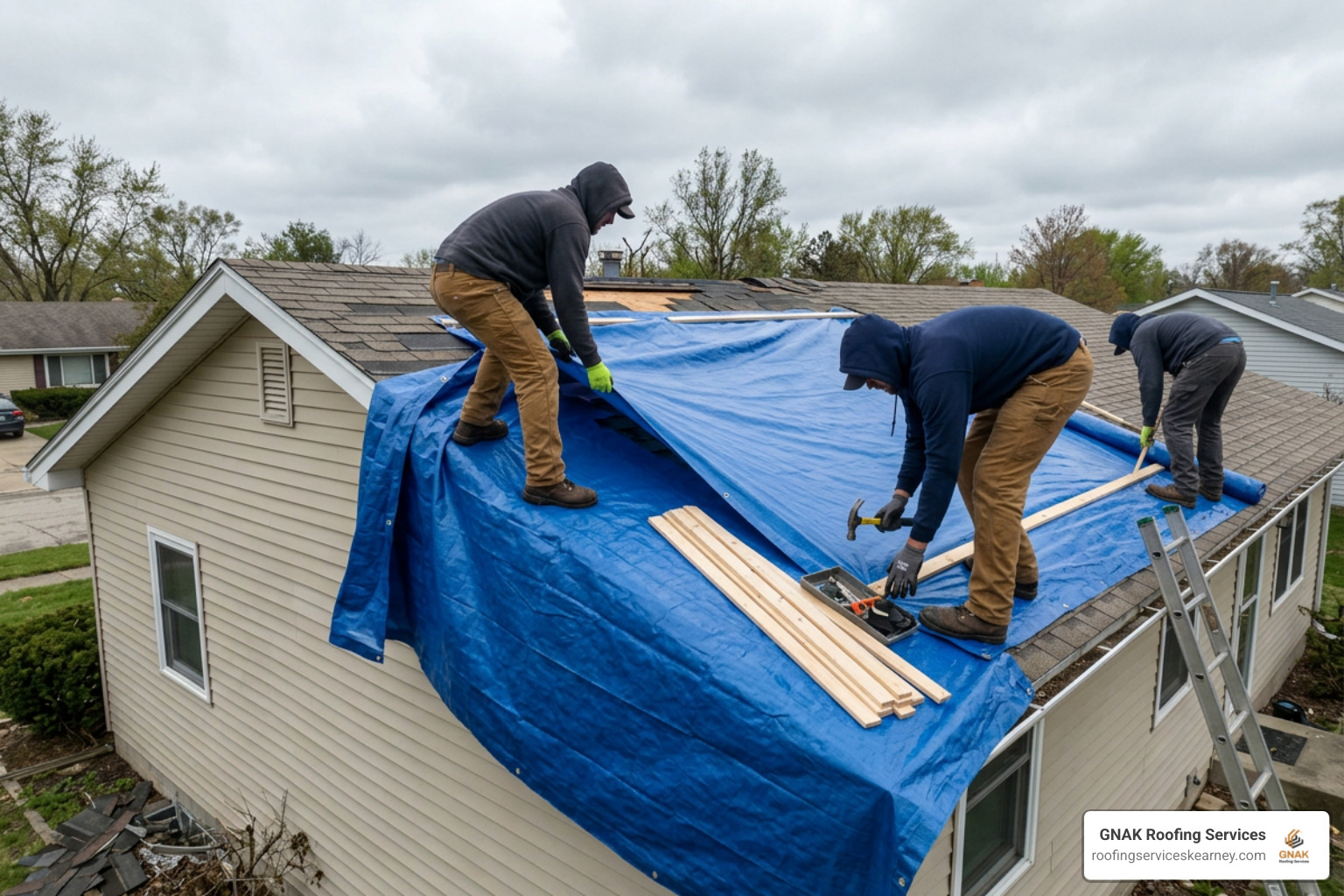
If you have an active leak, emergency tarping is your first line of defense. We use heavy-duty, woven polyethylene tarps secured with 2×4 wooden batten strips and ring-shank nails. By wrapping the top edge of the tarp over the roof ridge or tucking it securely under undamaged shingles higher up the slope, we ensure that water is safely routed down the roof and into your gutters, rather than into your ceiling.
For commercial properties experiencing water intrusion, prompt action is just as vital. Securing temporary seals prevents costly business interruptions and protects inventory. If your business has taken a hit, our team provides rapid Commercial Roof Repair to keep your doors open.
Preventing Mold and Water Damage While Waiting
While waiting for permanent repairs to begin, you must manage the moisture already inside your home.
- Dry It Out: Set up industrial fans and dehumidifiers in your attic and living spaces to draw out moisture.
- Check Moisture Levels: Use moisture meters to monitor wood sheathing and drywall. Any attic space registering above 16% moisture content requires active drying to prevent mold growth.
- Clear Debris: Ensure your gutters and downspouts are clear of leaves and storm debris so rainwater can drain away from your foundation.
If water has breached your home’s interior, scheduling professional Residential Roof Repair immediately will help prevent mold from taking hold in your wall cavities.
Navigating the Insurance Claims Process for Storm Damage Roof Repair
Filing an insurance claim for storm damage roof repair can feel overwhelming, but understanding the process makes it highly manageable. Most standard HO-3 homeowners insurance policies in Missouri cover sudden, accidental damage caused by wind, hail, lightning, and falling debris.

Documenting Your Storm Damage Roof Repair Claim
To ensure your insurance company approves your claim, you need bulletproof documentation.
- Note the Date and Time: Keep a record of exactly when the storm occurred.
- Take Comprehensive Photos: Capture wide shots of your property as well as close-ups of specific damage (from the ground).
- Obtain a Professional Report: A detailed, itemized estimate from a licensed contractor is invaluable.
If you live in Liberty, having a local partner who understands how to compile insurance-ready documentation makes all the difference. We provide detailed assessments designed to streamline your Roof Repair claim.
Working with Insurance Adjusters and Contractors
When the insurance adjuster visits your property, it is highly beneficial to have your roofing contractor on-site as well. We collaborate directly with adjusters, walking the roof together to ensure no damage is overlooked. We speak their language, using industry-standard scoping software to align on the exact repairs required.
If you are in St. Joseph, we can help you navigate this process from start to finish. Our team works closely with you and your adjuster to ensure your Roof Repair goes smoothly and covers all necessary restoration work.
Deciding Between Roof Repair and Full Replacement
One of the most common questions we get after a storm is: Can we patch this, or do we need a whole new roof? The answer depends on several key factors.
When to Choose Targeted Storm Damage Roof Repair
If your roof is relatively young (under 10–12 years old) and the damage is highly localized, a targeted repair is often the most sensible and cost-effective choice.
- Minor Wind Damage: A few missing shingles can easily be replaced.
- Localized Leaks: If water is entering around a single roof vent or chimney pipe, flashing repairs will usually solve the problem.
- Isolated Debris Damage: If a small branch damaged a small section of shingles but left the surrounding deck intact, we can perform a seamless patch.
For homeowners in Independence, we offer fast, reliable Roof Repair options to restore your roof’s integrity without the cost of a full replacement.
When Full Roof Replacement is Necessary
In some cases, patching your roof is like putting a band-aid on a structural wound. A full roof replacement is usually necessary if:
- Widespread Hail Damage: If hail has bruised shingles across multiple slopes, the entire system’s lifespan has been compromised.
- Widespread Wind Damage: If more than 25% of your shingles are missing, creased, or have broken adhesive seals, a repair will not guarantee storm resistance.
- Aging Materials: If your roof is already approaching the end of its typical lifespan (15–20 years for standard asphalt shingles), investing in repairs is often a waste of money.
- Structural Compromise: If falling trees or severe water logging have damaged the underlying roof decking, the entire system must be stripped back and rebuilt.
If your roof has suffered extensive damage, our Residential Roofing team can guide you through selecting durable, impact-resistant materials designed to withstand future storms.
Frequently Asked Questions About Storm Damage Roof Repair
How long after a storm should I schedule a professional roof inspection?
You should schedule a professional roof inspection within 24 to 48 hours after a major storm, as long as it is safe to do so. While you have up to a year to file an insurance claim under most policies, delaying your inspection allows hidden leaks to cause mold, rot, and structural damage that insurance may later classify as “neglect” rather than storm damage.
Does homeowners insurance cover all types of storm damage?
Standard HO-3 policies typically cover sudden storm damage from hail, wind, lightning, and falling objects. However, they do not cover gradual wear and tear, pre-existing maintenance issues, or mold caused by unresolved leaks. You will also be responsible for paying your policy’s deductible before insurance coverage kicks in.
Can I perform DIY repairs on my storm-damaged roof?
We strongly advise against DIY roof repairs. Climbing onto a storm-damaged roof is incredibly dangerous. Furthermore, improper DIY repairs can easily void your manufacturer’s material warranties and may cause your insurance company to deny future claims if the work does not meet local building codes.
Conclusion
Recovering from storm damage does not have to be an overwhelming ordeal. By acting quickly, documenting the damage safely from the ground, and partnering with a trusted local roofing contractor, you can protect your home’s value and restore your peace of mind.
At GNAK Roofing Services, we are proud to serve Kearney, Clay County, and the greater Kansas City area. We combine deep local expertise with insurance-ready documentation and manufacturer-compliant workmanship to ensure your roof is restored to pre-storm condition — or better.
If you suspect your home has suffered storm damage, do not wait for the next rainfall to find out. Schedule a professional inspection with GNAK Roofing Services today, and let us help you protect what matters most.