

When Storm Damage Hits: What Insurance Claim Roofers Actually Do for You
Insurance claim roofers help homeowners navigate one of the most stressful parts of owning a home — getting a fair payout after storm damage.
Quick answer: Here’s what to do right after storm damage:
- Document everything — take photos and videos of all visible damage before touching anything
- Call a licensed roofing contractor — get a professional inspection before the insurance adjuster arrives
- File your claim promptly — most policies require filing within one year of the damage event
- Meet the adjuster with your contractor present — this helps ensure no damage gets missed
- Review the estimate line by line — if items are missing, your contractor can file a supplement
A severe storm can leave your roof — and your finances — in rough shape. Between filing paperwork, scheduling inspections, and dealing with adjusters, it’s easy to miss steps that directly affect whether your claim gets approved, and for how much. Over 70% of initial adjuster estimates come in low, and the difference between a fair payout and an underpaid one often comes down to how well the damage was documented and who was on the roof when it mattered.
I’m Greg Nakata, owner of GNAK Roofing Services in Kearney, Missouri. My background spans commercial real estate, insurance documentation, and asset underwriting since 1999 — which means I approach insurance claim roofers work with the same detail an underwriter would bring to evaluating a property. That combination of roofing expertise and financial documentation experience is exactly what this guide is built on.
Roofer or Insurance First? Navigating the Initial Steps of a Storm Damage Claim
When a major hailstorm or wind event rolls through the Kansas City metro area, homeowners are often left wondering: Do I call my insurance company first, or do I call a roofer?
While it might seem logical to call your insurance company the second the storm passes, the smartest first step is actually to contact a trusted local roofing contractor.
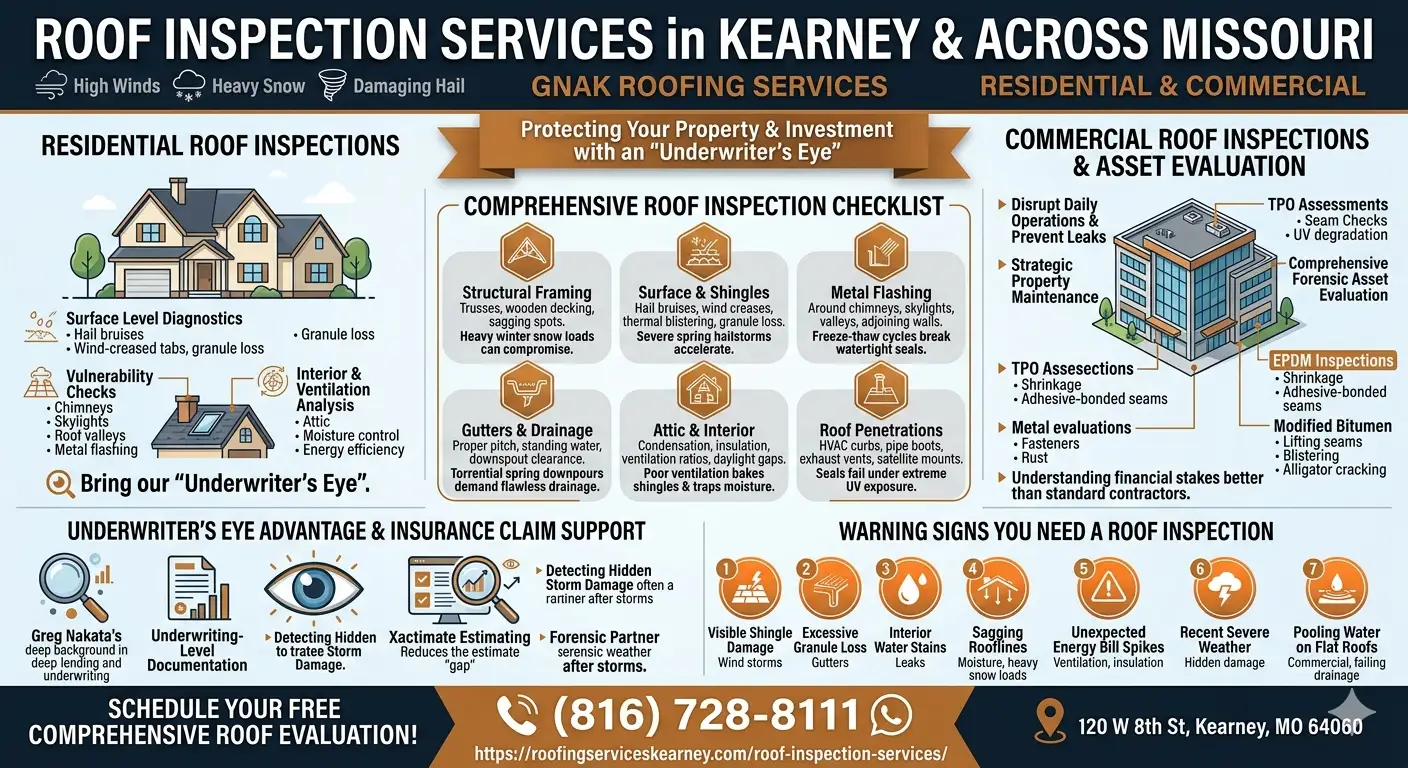
When you schedule professional Roof Inspection Services, you ensure that you actually have legitimate, claimable damage before involving your insurance carrier. This is crucial because filing a claim that gets denied still goes on your insurance record as a “$0 claim,” which can negatively impact your future premiums or insurability.
Additionally, standard HO-3 insurance policies place a “duty to mitigate” on the homeowner. This means you are legally obligated to prevent further damage to your home after a storm. If water is actively leaking into your attic, you cannot wait weeks for an insurance adjuster to show up. A professional contractor can perform emergency mitigation and temporary repairs—such as tarping exposed areas—to protect your home’s interior. We always recommend saving every receipt from these temporary repairs, as they are typically fully reimbursable under your claim.
For reliable local assistance in adjacent areas, homeowners should look for established local contractors who understand how regional weather patterns and local building codes affect these initial steps.
Why Inspecting First Protects Your Claim
Having a professional inspection before filing a claim serves as your shield against premature denials. Insurance adjusters are often sent out in droves after a major storm, and they may only spend 15 to 20 minutes on your roof. A thorough inspection by an experienced roofer takes upwards of an hour.
During this pre-inspection, your roofer will verify whether the issues are fresh storm damage or simply pre-existing wear and tear. They will also help you establish the exact storm date. Because most insurance policies require claims to be filed within a strict timeframe—often one year from the date of the event—having a documented storm date tied directly to physical evidence on your roof is vital for claim approval.
How Professional Insurance Claim Roofers Document Damage
Experienced insurance claim roofers do not just climb up, look around, and say, “Yep, it’s damaged.” They build a forensic case for your insurance company. This includes:
- High-Resolution Photo Evidence: Close-up shots of individual shingle bruises, wind-lifted tabs, and collateral damage to metal vents, gutters, and siding.
- Drone Inspections: Utilizing 4K drone photography to map out the entire roof layout and capture hard-to-reach angles.
- Thermal Imaging: Using infrared technology to detect hidden moisture trapped beneath the shingles or underlayment before it turns into a major indoor leak.
- Local Standards: Aligning damage reports with local building code requirements (such as mandatory drip edge or ice and water shield replacements) that the insurance company must pay to cover.
The Step-by-Step Roof Insurance Claim Process from Inspection to Payout
Filing a claim can feel like learning a foreign language. Understanding the step-by-step path from the initial storm to the final payout will help you stay in control of the process.

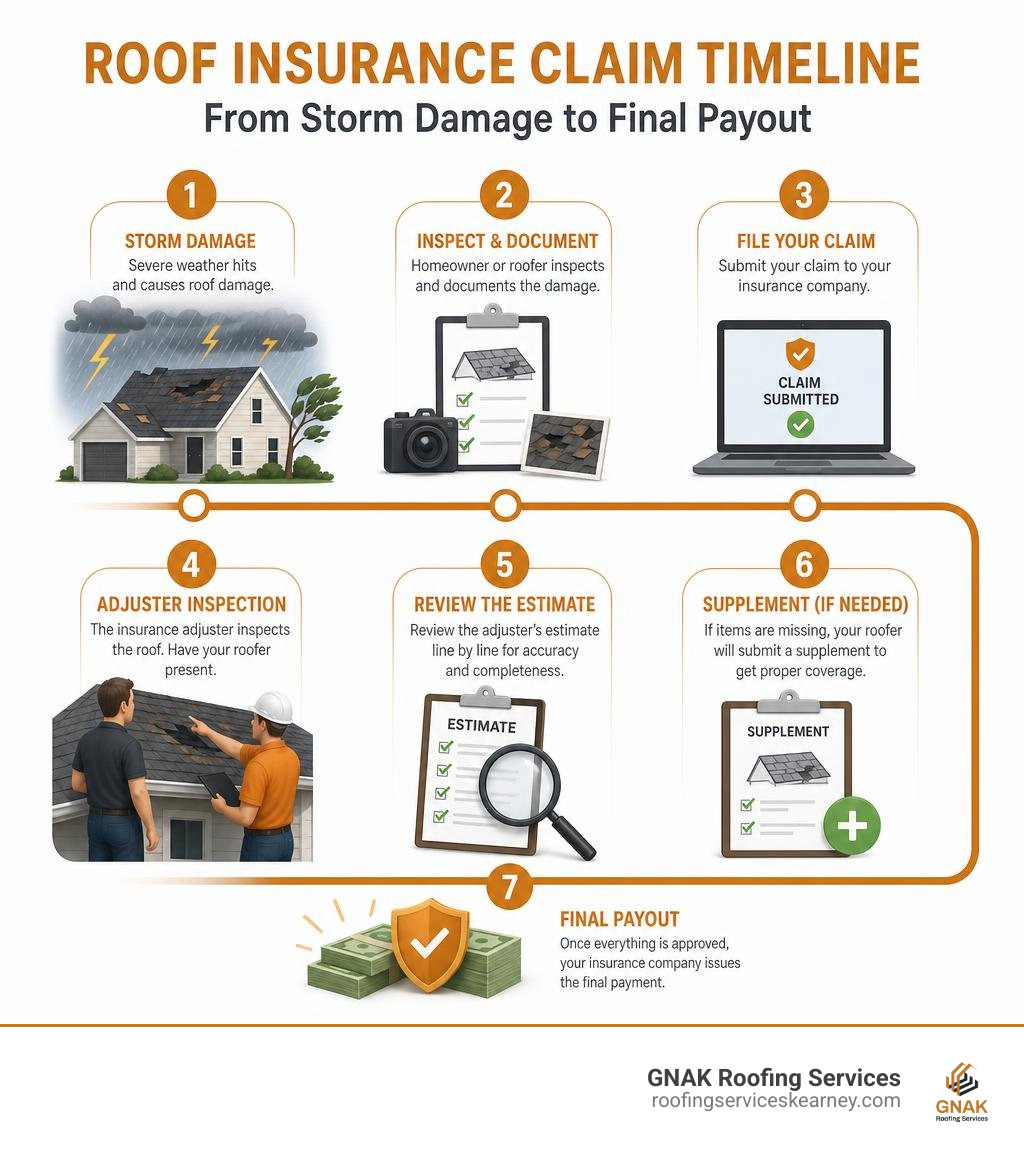
Once we complete our initial inspection and confirm there is sufficient damage to warrant a claim, the process generally moves through these stages:
- File the Claim: You contact your insurance carrier (online, via their app, or through your local agent) to open the claim. You will provide the storm date and our preliminary inspection findings.
- The Adjuster Meeting: The insurance company assigns an adjuster to inspect your roof. Crucial step: Your roofing contractor should always meet the adjuster on-site. We stand on the roof with the adjuster to point out every damaged shingle, compromised valley, and dented vent.
- Review the Scope of Work: The insurer will send you a loss summary (often written in estimating software called Xactimate). This details what they agree to pay for, whether it is a minor Residential Roof Repair or a complete replacement.
- First Check (ACV Payment): If approved, the insurer sends a check for the Actual Cash Value (the cost to replace the roof minus your deductible and depreciation).
- The Restoration Work: Your chosen contractor performs the repairs or replacement.
- Supplementing and Final Payout: If hidden damage is uncovered during construction, your roofer submits a supplement. Once the job is complete, the contractor sends a certificate of completion to the insurer, who then releases the remaining “recoverable depreciation” check.
What Insurance Adjusters Look For During Inspections
Insurance adjusters look for very specific, scientifically verifiable indicators of storm damage. They are trained to distinguish between natural aging and storm-related impacts:
- Hail Damage: Adjusters look for random, dark, soft bruises on asphalt shingles where hail has impacted the shingle and knocked away the protective granules, exposing the fiberglass mat underneath. On wood roofs, they look for splits with sharp, fresh edges.
- Wind Damage: This includes missing shingles, creased shingles (where high winds have folded the shingle upward, breaking the fiberglass core), and unsealed shingle tabs where wind has broken the manufacturer’s sealant strip.
- Collateral Damage: Adjusters will inspect “soft metals” on your property—such as aluminum ridge vents, box vents, gutters, downspouts, and siding. If these metals are heavily dented, it proves hail of a significant size struck the property.
Essential Documentation for a Successful Claim
To ensure your claim is processed smoothly, you and your contractor must provide a clean paper trail. The core documentation packet should include:
- Proof of Loss Form: Completed and signed by the policyholder.
- Comprehensive Photo Reports: Before-and-after photos, close-ups of damage, and wide shots of the entire property.
- Satellite Aerial Measurements: Third-party reports (like EagleView or GAF QuickMeasure) to verify exact roof square footage and pitch.
- Code Requirements: Documentation of local building codes in cities like Liberty, Independence, or St. Joseph to prove that certain upgrades (like synthetic underlayment or ice barrier) are legally required.
What a Detailed Roofing Estimate Must Include
To satisfy both your peace of mind and your insurer’s strict underwriting guidelines, any estimate for a Residential Roof Replacement must be highly detailed. A vague, one-page estimate stating “replace roof for $15,000” will be immediately rejected by your insurer.
An insurance-ready estimate must include:
- Exact material quantities (number of shingle squares, rolls of underlayment, feet of starter strip).
- Specific labor charges separated from material costs.
- Line items for municipal building permits and disposal/dump fees.
- Explicit mention of manufacturer warranties and workmanship guarantees.
- Details on code-related items like drip edge and valley lining.
If you are located in the Northland or surrounding areas, working with local experts who understand these requirements is key. Homeowners in Kearney, Liberty, and the surrounding communities need detailed estimates that align perfectly with local insurance standards to ensure a smooth approval process.
Understanding Your Policy: ACV vs. RCV, Deductibles, and Supplements
Your insurance policy is a legal contract, and the specific endorsements you carry will completely dictate your out-of-pocket expenses.
Actual Cash Value (ACV) vs. Replacement Cost Value (RCV)
The single most important distinction in roof insurance is whether your policy is written as Actual Cash Value (ACV) or Replacement Cost Value (RCV).
| Coverage Type | How It Works | Out-of-Pocket Impact |
|---|---|---|
| Actual Cash Value (ACV) | Pays the cost to replace your roof minus depreciation based on the roof’s age. | High. You must pay the difference between the depreciated payout and the actual cost of a new roof. |
| Replacement Cost Value (RCV) | Pays the full cost to replace your roof with materials of like kind and quality today. | Low. Your only out-of-pocket expense is your policy deductible. |
Under an RCV policy, the insurance company holds back the depreciated value (called “recoverable depreciation”) until the contractor submits proof that the work has been completed. Once completed, they release the remaining funds to cover the full invoice. If you have an ACV-only policy, that depreciation is “non-recoverable,” meaning you are on the hook for the difference.
The Role of Deductibles and Out-of-Pocket Costs
Your deductible is the portion of the claim that you are contractually obligated to pay out of your own pocket. Under standard HO-3 policies, deductibles can be structured in two ways:
- Fixed Dollar Amount: A set fee, typically ranging from $500 to $2,000.
- Percentage of Home Value: Often 1% to 2% of your home’s total insured dwelling value. If your home is insured for $300,000, a 1% deductible means you must pay $3,000 out-of-pocket before insurance covers a dime.
Note on financing: If the upfront cost of your deductible is a barrier, ask your contractor about flexible financing options that can help break that cost down into manageable monthly payments.
Why Your Claim May Need a Supplement
It is incredibly common for an initial insurance estimate to miss necessary items. In fact, over 70% of initial adjuster estimates come in low. This is where “supplements” come in.
A supplement is a request sent to the insurance company for additional materials, labor, or code-required items that were either overlooked by the adjuster or only discovered once the old shingles were torn off (such as rotten decking).
At GNAK Roofing Services, we file supplements on over 60% of claims—and the average supplement recovers an additional $2,000 to $5,000 for the homeowner. This ensures the roof is restored safely and correctly without the homeowner having to pay for the insurer’s oversight.
How to Choose Reputable Insurance Claim Roofers and Avoid Scams
After a severe storm, out-of-state “storm chasers” flood affected neighborhoods. They knock on doors, offer free roofs, and pressure homeowners into signing restrictive contracts. Protecting yourself requires knowing what to look for.
When selecting a contractor, always prioritize local businesses with physical offices in your area. Check their standing with the Better Business Bureau (BBB) and read local reviews. For helpful advice on maintaining your roof and selecting the right professional, check out our guide on Roofing Tips & Maintenance. For general consumer guidance on insurance questions and contractor-related concerns, homeowners can also review resources from the Missouri Department of Commerce and Insurance.
When searching for established local companies in the wider Kansas City area, taking the time to research regional options and verify their credentials ensures you partner with a reputable firm that operates with integrity.
Red Flags and Legal Restrictions for Insurance Claim Roofers
When dealing with storm restoration, keep these critical legal and ethical rules in mind:
- Deductible Waiving is Illegal: In Missouri (and most other states), it is class A misdemeanor insurance fraud for a contractor to offer to “waive,” “absorb,” or “rebate” your deductible. If a roofer promises to cover your deductible, they are committing fraud, and you could be held liable.
- Public Adjusting Laws: A roofing contractor is not a public adjuster. Legally, a roofer can document damage, provide estimates, and discuss scope details with your adjuster. However, they cannot legally negotiate your policy terms or act as your public adjuster.
- Contingency Contracts: Be wary of signing anything before your claim is approved. Some shady contractors will have you sign a “free inspection” agreement that actually locks you into using them for the replacement if the claim gets approved.
How Roof Age, Materials, and Certifications Affect Your Claim
Your roof’s age and materials play a massive role in how your insurer handles your claim:
- Roof Age: If your roof is over 15-20 years old, some insurance companies may automatically convert your policy from RCV to ACV, limiting your payout.
- Impact-Resistant Shingles: Upgrading to Class 4 impact-resistant shingles during a replacement can often qualify you for substantial annual discounts on your homeowner’s insurance premiums.
- Manufacturer Certifications: Using a manufacturer-certified contractor ensures your new roof is installed to exact specifications, protecting your lifetime material warranties. If you own a commercial property, ensuring these standards are met during a Commercial Roof Replacement is critical to protecting your business asset.
Frequently Asked Questions about Roof Insurance Claims
Navigating insurance rules can be confusing. Here are some of the most common questions we hear from homeowners in Kearney, Liberty, and across the Kansas City area.
Will filing a roof insurance claim raise my premium?
In Missouri, insurance companies generally cannot raise your individual premium rates solely because you filed a single claim for storm damage. Because storm and hail damage are considered “Acts of Nature” or “Forces of Nature,” they are out of your control. However, insurance companies can raise rates for an entire ZIP code after a widespread storm event. This means your rates may go up anyway, whether you file a claim or not—so you might as well get your roof repaired if it has legitimate damage. For more quick answers, visit our FAQ page.
What should I do if my roof insurance claim is denied?
If your claim is denied, do not panic. You have options:
- Ask for a Re-Inspection: You have the right to request a second inspection with a different adjuster.
- Have Your Contractor Present: Ensure your roofing contractor is there for the re-inspection to point out the documented damage.
- Contact a Public Adjuster or Appraisal: If you still disagree, you can hire an independent public adjuster or invoke the “Appraisal Clause” in your policy to resolve the dispute.
For specialized assistance with disputed or complex claims in our region, working with an experienced local roofing contractor who understands the documentation process is your best line of defense.
How long do I have to file a roof claim after a storm?
Most homeowner’s insurance policies require claims to be filed within one year of the storm event. Some policies have even shorter windows (such as 180 days). It is always best to report damage promptly to avoid denials based on policy deadlines or claims that the damage occurred during a different, uninsured period.
Conclusion
Navigating a roof insurance claim doesn’t have to be a battle. By partnering with a reputable, local contractor who understands both high-quality craftsmanship and insurance-ready documentation, you can get your home fully restored with minimal stress.
At GNAK Roofing Services, we combine our deep local roofing expertise in Kearney, Liberty, St. Joseph, Independence, and the Kansas City area with Greg Nakata’s background in insurance-grade asset underwriting. We don’t just build roofs; we build airtight, documented claims that ensure your insurance company pays every dollar your policy contractually owes you.
Don’t let storm damage compromise your home’s value or safety. Read what our neighbors say about us on our Testimonials page, and take the first step toward peace of mind today.
Schedule a Professional Inspection with GNAK Roofing Services