

What You Need to Know Before Filing an Insurance Roof Claim
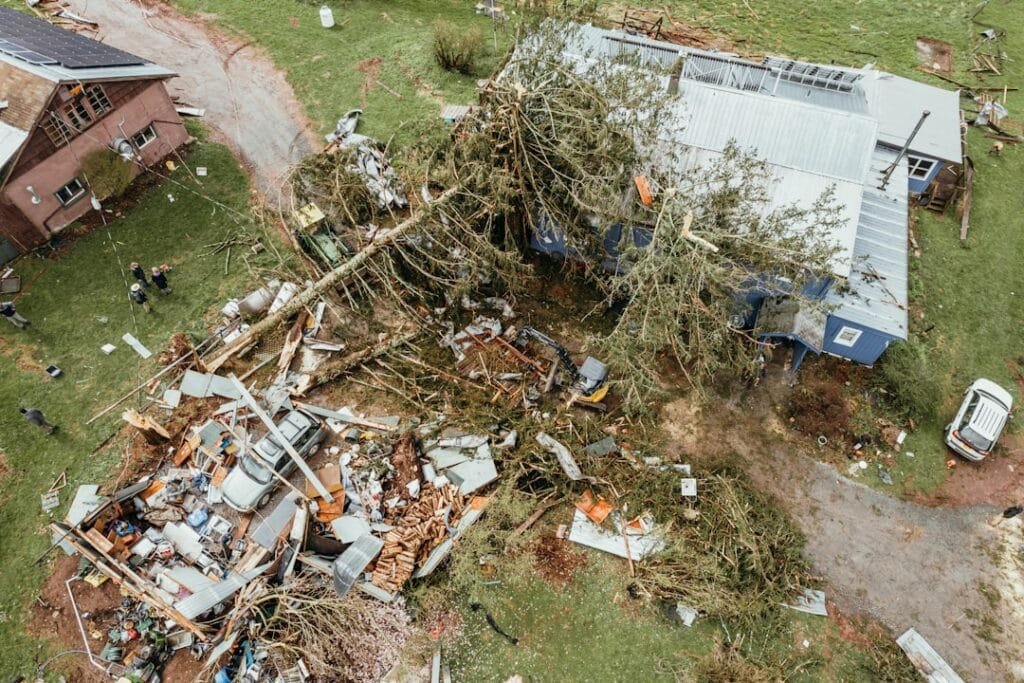
Filing an insurance roof claim is one of the most important — and most misunderstood — things a homeowner can do after a storm. Get it right, and your insurer covers most or all of the repair. Get it wrong, and you could leave thousands of dollars on the table.
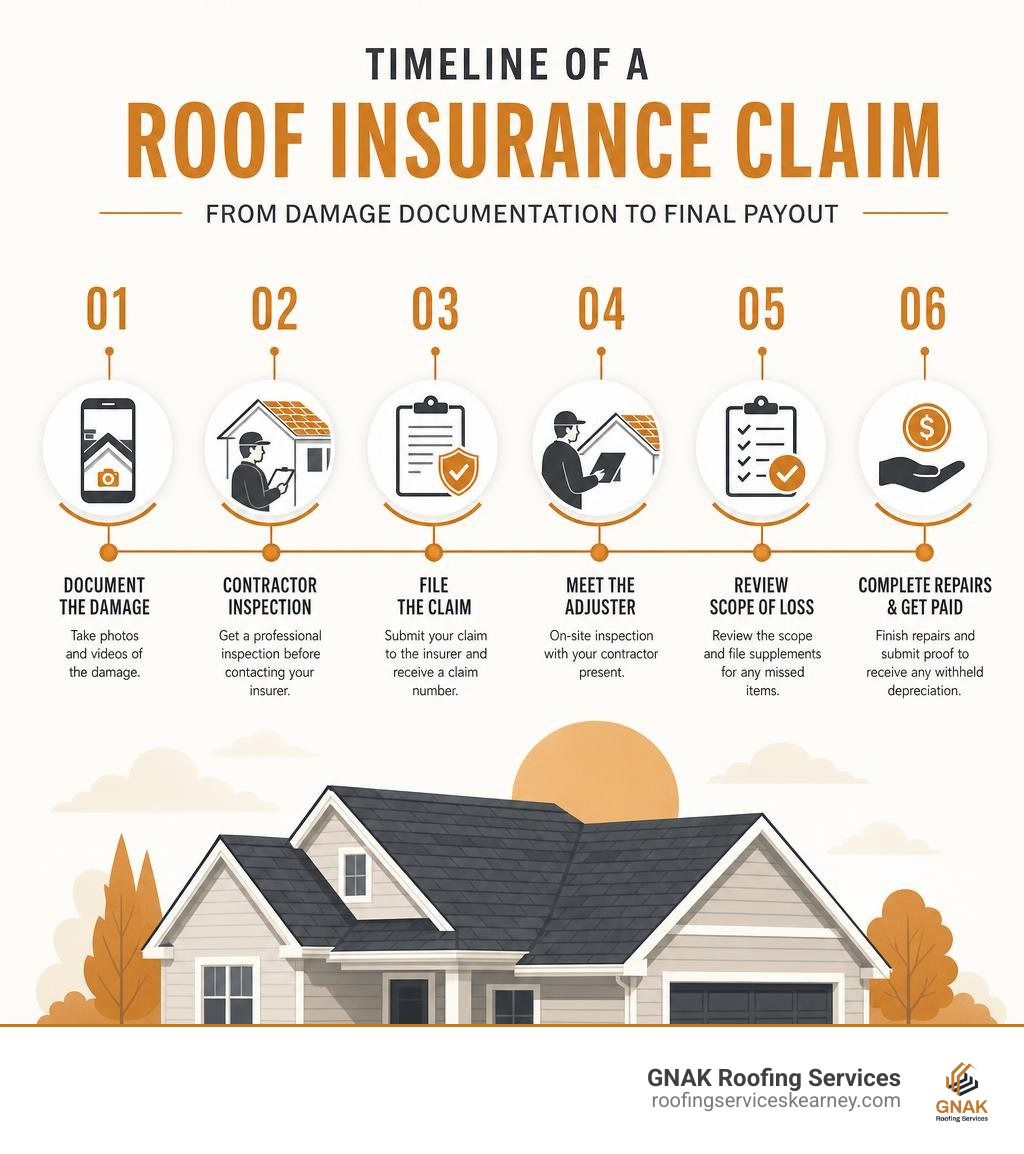
Here is a quick overview of how the process works:
- Document the damage with photos and video before anything is touched
- Get a contractor inspection before calling your insurer
- File the claim with your insurer and receive a claim number
- Meet the adjuster on-site — with your contractor present
- Review the scope of loss and file supplements for missed items
- Complete repairs and submit proof to recover any withheld depreciation
A few facts worth knowing right away:
- Wind and hail damage account for 42.5% of all homeowners insurance losses, averaging $18.5 billion per year
- The average roof damage claim runs $13,000 to $15,000 — often more after major storms
- Around 60% of roof claims are initially underpaid, with supplemental claims recovering 35–55% more on average
- Homes with roofs older than 15 years are 3 times more likely to have claims denied or coverage reduced
This guide walks you through every stage of the process — from covered perils and payout types to deductibles, deadlines, and what to do when a claim is denied.
I’m Greg Nakata, owner of GNAK Roofing Services in Kearney, MO, and my background in commercial lending, asset underwriting, and insurance documentation gives me an unusual lens on the insurance roof claim process that most roofing contractors simply don’t have. That combination of construction knowledge and financial detail is what this guide is built on.
What Is Covered vs. Excluded in an Insurance Roof Claim?
Understanding what your policy actually covers is the first line of defense against unexpected out-of-pocket expenses. Homeowners insurance is designed to protect your property from sudden, accidental damage—not to act as a maintenance plan for an aging home.
In Missouri, particularly across Kansas City, Liberty, and St. Joseph, our weather patterns subject roofs to severe stress. When a major storm hits, knowing the difference between a covered peril and a maintenance issue determines whether your insurance roof claim gets approved.
Covered Perils vs. Wear and Tear
Standard homeowners policies (such as an HO-3 policy) generally cover specific, sudden events known as “covered perils.” These include:
- Wind Damage: High winds can lift, crack, or completely tear shingles away, leaving the underlayment exposed. If you want to dive deeper into identifying this type of damage, check out The Complete Guide to Storm Damage Roof Repair.
- Hail Damage: Hailstones can bruise shingles, knock off protective granules, and crack the underlying fiberglass mat.
- Fallen Trees and Debris: If a heavy limb crashes onto your roof during a storm, the structural damage is typically covered.
- Ice Dams: In cold Missouri winters, ice dams can form along the gutters, forcing water back up under the shingles. For a detailed roadmap on handling this seasonal issue, see our guide on How to File an Ice Dam Roof Damage Insurance Claim Without Freezing Up.
On the flip side, insurance companies explicitly exclude gradual deterioration. Wear and tear, rot, mold, and damage caused by neglected maintenance are your responsibility. For example, if a slow, minor leak goes unaddressed for three years and causes rot in your decking, the insurer will likely deny the claim on the grounds of neglect. Additionally, cosmetic damage—such as minor hail dents on metal vents that do not affect the roof’s performance—is increasingly excluded by major carriers. You can review standard policy structure guidelines via the Liberty Mutual Roof Insurance Guide.
How Roof Age and Condition Affect Your Insurance Roof Claim
As of July 2026, insurance companies are scrutinizing roof age more closely than ever. If your roof is under 10 to 15 years old, you will generally receive standard coverage. However, once a roof crosses the 15-year threshold, the insurance landscape changes dramatically:
- Valuation Shift: Many insurers automatically switch your coverage from Replacement Cost Value (RCV) to Actual Cash Value (ACV) when the roof reaches a certain age.
- Useful Life and Non-Renewal: Insurers may refuse to renew your policy unless the roof passes a strict physical inspection or is completely replaced.
- Pre-existing Damage: If your roof was already in poor condition prior to a storm, the adjuster may argue that the storm did not cause the failure, leading to a partial or complete denial.
To help residents navigate these changing rules, the Missouri Department of Insurance Free Tool provides valuable regional guidance on policy rights and coverage rules. Regular inspections are the best way to prove your roof’s pre-storm condition and protect your future claims.
RCV vs. ACV: Understanding Your Payout Structure
The way your policy calculates depreciation determines how much money you will receive up front—and how much you will have to pay out of your own pocket.
| Feature | Replacement Cost Value (RCV) | Actual Cash Value (ACV) |
|---|---|---|
| Definition | Pays to replace the roof with new materials of like kind and quality at current market prices. | Pays the depreciated value of the roof at the time of the loss. |
| Initial Payout | ACV estimate minus your deductible. | ACV estimate minus your deductible. |
| Depreciation Recovery | Yes, withheld depreciation is released after repairs are completed. | No, depreciation is permanently withheld. |
| Out-of-Pocket Cost | Typically just your deductible. | Deductible + the accumulated depreciation of the old roof. |
Replacement Cost Value (RCV) and Recoverable Depreciation
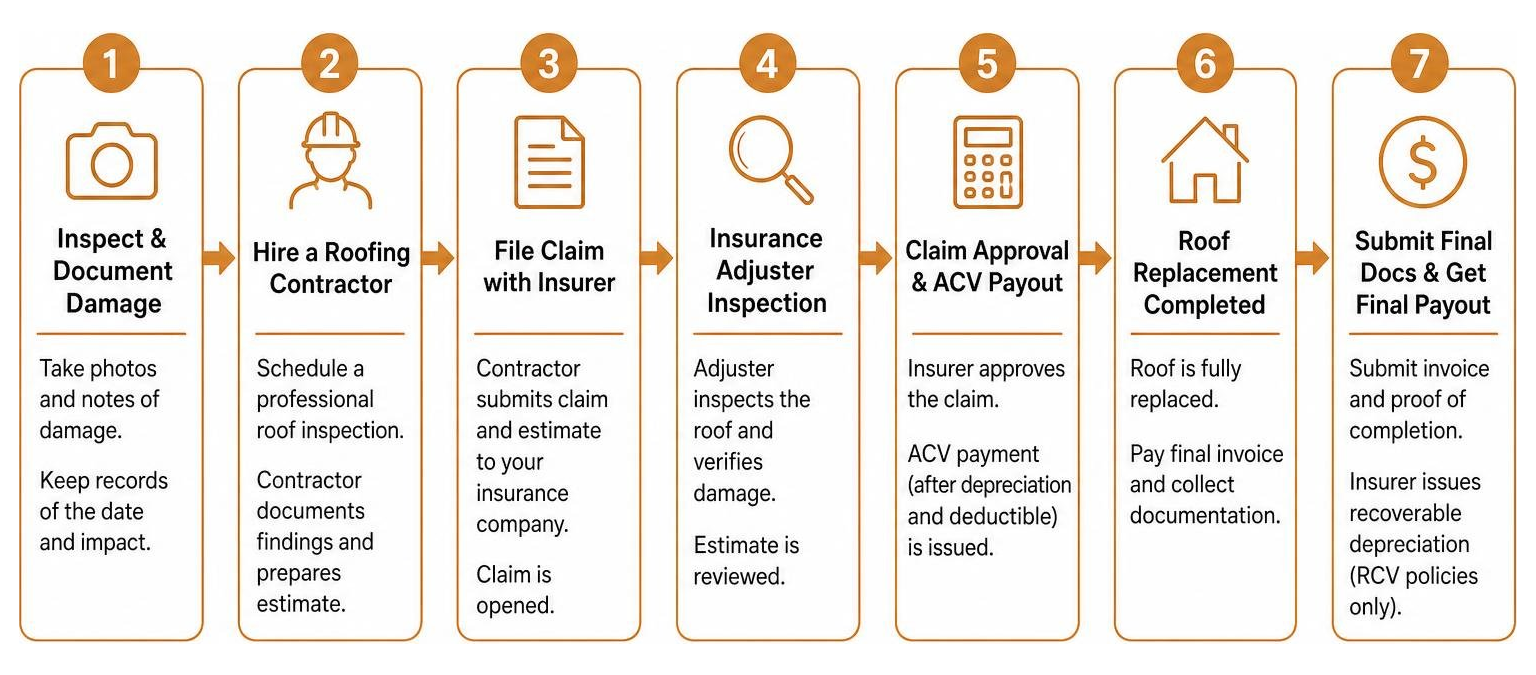
If you have an RCV policy, the claims process follows a two-check system. Let’s look at how the math works on an $18,000 roof replacement with a $2,000 deductible:
- The Estimate: The insurer determines the total current cost to replace the roof is $18,000.
- Depreciation Calculation: Based on the age of your roof, the adjuster calculates 40% depreciation ($7,200).
- The First Check (ACV Payout): The insurer subtracts the depreciation and your deductible from the total cost: $$\$18,000 \text{ (Total)} – \$7,200 \text{ (Depreciation)} – \$2,000 \text{ (Deductible)} = \$8,800$$ This initial $8,800 check is sent to you so you can schedule the work.
- The Second Check (Recoverable Depreciation): Once the roof is fully replaced, we submit proof of completion and the final invoice to the insurance company. They then release the withheld $7,200 depreciation to cover the remaining balance.
That most policies enforce a strict 180-day deadline from the date of the loss to complete the repairs and claim this recoverable depreciation.
Actual Cash Value (ACV) and Out-of-Pocket Costs
Under an ACV policy, depreciation is not recoverable. Using the same $18,000 roof example, the insurance company will write you a check for $8,800, and that is the final payment.
You must cover the remaining $9,200 (the $7,200 in depreciation plus your $2,000 deductible) entirely out of pocket. Many carriers in Missouri now transition older roofs to ACV or utilize “roof surfacing payment schedules” to manage their storm risk, making it essential to review your policy annually.
Step-by-Step Guide to Navigating the Insurance Roof Claim Process
Navigating an insurance roof claim can feel overwhelming, but following a structured sequence of events ensures you don’t make costly mistakes.
Step 1: Documenting Damage and Hiring a Contractor First
Many homeowners make the mistake of calling their insurance company the moment a storm passes. However, calling your insurer before having a professional roof inspection can lead to filed claims that don’t exceed your deductible, which still counts against your claims history.
Before doing anything else, take ground-level photos of any visible damage, fallen limbs, or hail in your yard. For a practical guide on staying organized during this initial chaos, read How to Handle Residential Storm Damage and Roof Repair Without Losing Your Mind and hail damage documentation in St. Joseph, MO.
Next, contact a trusted local roofing professional to perform a comprehensive evaluation. Our team at GNAK Roofing Services provides detailed Roof Inspection Services to document storm damage with insurance-ready photos and measurements.
Warning: Avoid “storm chasers” who knock on your door immediately after a storm offering “free roofs” or pressure you to sign an Assignment of Benefits (AOB) before an inspection is even completed.
Step 2: Filing the Claim and Preparing for the Adjuster
Once your contractor confirms that the storm damage exceeds your deductible, contact your insurance company’s claims department to report the loss. Provide them with the exact date of the storm and your contractor’s inspection report. The insurer will assign you a claim number and schedule an on-site visit with an insurance adjuster.
Always request that your roofing contractor be present during the adjuster’s inspection. Insurance adjusters are often busy, especially after regional storms in Independence or Clay County, and can easily overlook critical damage. Having your contractor there ensures both parties look at the same test squares (10′ x 10′ areas used to count hail impacts), soft metal damage (on vents and flashing), and structural issues together.
Step 3: Reviewing the Scope of Loss and Handling Supplements
After the inspection, the insurance company will generate a “scope of loss” using estimating software like Xactimate. It is very common for this initial estimate to miss essential construction line items, such as starter shingles, drip edges, or code-required ice and water shields.
When items are missing, your contractor will submit a “supplemental claim.” This is a standard industry practice where we send photo evidence and documentation directly to your adjuster to get these necessary items approved before or during construction.
Additionally, if your project involves multiple trades (such as roofing, gutters, and siding repair), you may be entitled to an extra 20% payout for Overhead and Profit (O&P) to cover the coordination of the project.
Deductibles, Deadlines, and Regional Rules
Your policy is a legal contract governed by both state laws and specific regional endorsements.

Standard vs. Wind, Hail, and Hurricane Deductibles
Your deductible is the amount you must pay before your insurance coverage kicks in. While many homeowners have a flat, standard deductible (e.g., $1,000 or $2,500) for common claims like fire or theft, insurers often apply separate deductibles for wind and hail damage.
These wind/hail deductibles are frequently percentage-based rather than a flat fee. They typically range from 1% to 5% of your home’s total dwelling coverage (not the cost of the roof repair).
For example, if your home is insured for $350,000 and you have a 2% wind/hail deductible, your out-of-pocket cost for a storm-related insurance roof claim will be $7,000, regardless of whether the roof repair costs $10,000 or $20,000.
Filing Deadlines and Building Code Rules
Filing deadlines vary by policy and state, but most standard policies require you to notify your insurer of storm damage within one year of the date of loss. If you discover damage late, or delay filing, your claim could be denied entirely.
Building codes also play a massive role in whether your roof is repaired or completely replaced. For example, some regions enforce rules where if more than a certain percentage of the roof is damaged, the entire roof must be brought up to current code, requiring a full replacement.
While Florida is famous for its strict “25% rule” (which historically dictated full replacements if more than 25% of a roof was damaged, though modified under recent laws like Senate Bill 4-D), municipalities across Clay County, St. Joseph, and Kansas City have their own local building codes.
Many local jurisdictions in Missouri require complete tear-offs and code upgrades (such as adding modern drip edges or ice barriers) when a roof is replaced. If your policy includes Law and Ordinance coverage, your insurer will pay for these mandatory code upgrades. If not, these extra expenses must be paid out of pocket. If you suspect your roof needs a full replacement to meet local building standards, you can read more about the process on our Residential Roof Replacement page.
Frequently Asked Questions About Your Insurance Roof Claim
What should I do if my insurance roof claim is denied?
If your claim is denied or significantly underpaid, do not panic. Take these steps to appeal the decision:
- Read the Denial Letter: Identify the exact policy language and exclusions the insurer is using to deny coverage.
- Request a Re-Inspection: Submit your contractor’s detailed photo evidence and request that a different adjuster inspect the property.
- Invoke the Appraisal Clause: If you and the insurer agree that the damage is covered but disagree on the cost of the repairs, you can invoke your policy’s appraisal clause. This brings in independent appraisers to establish the true value of the loss.
- File a Complaint: If you believe your claim is being handled in bad faith, you can file a formal complaint with the Missouri Department of Commerce and Insurance.
Will filing a roof claim raise my insurance premiums?
Generally, a single claim for a catastrophic “act of God” storm event (like a major tornado or regional hailstorm) will not cause an insurer to single out and raise your individual rates. However, insurance companies regularly adjust regional premiums across entire zip codes after widespread storm events to balance their risk. Filing multiple claims within a short window, or filing non-storm claims, can lead to individual rate increases or policy non-renewal.
Can I choose my own roofing contractor for the repairs?
Yes, you have the absolute legal right to choose any licensed contractor to repair your home. You are not obligated to use your insurance company’s “preferred” or “network” contractors.
When choosing a contractor, look for a local business with a physical office in your area, proper general liability insurance, and manufacturer certifications that preserve your materials warranty. It is always best to work with an established local specialist who understands the specific building codes and weather patterns of Kearney, Clay County, St. Joseph, Independence, and the surrounding Kansas City metro area.
Conclusion
Filing an insurance roof claim doesn’t have to be a stressful battle. By documenting the damage early, partnering with a qualified local contractor, and understanding your policy’s payout structure, you can navigate the process with confidence and protect your home’s value.
At GNAK Roofing Services, we specialize in combining local craftsmanship with insurance-ready documentation. We understand how adjusters work, how to read Xactimate estimates, and how to submit proper supplemental claims so you receive every dollar you are entitled to under your policy.
If you suspect your roof has storm damage, don’t wait for a leak to show up on your ceiling. Contact us today through our GNAK Roofing Services Pillar Page to schedule a professional, hassle-free inspection. We proudly serve homeowners and businesses across Kearney, Liberty, St. Joseph, Independence, and the greater Kansas City Northland area.