

Rolled Roofing vs Modified Bitumen: The Quick Difference
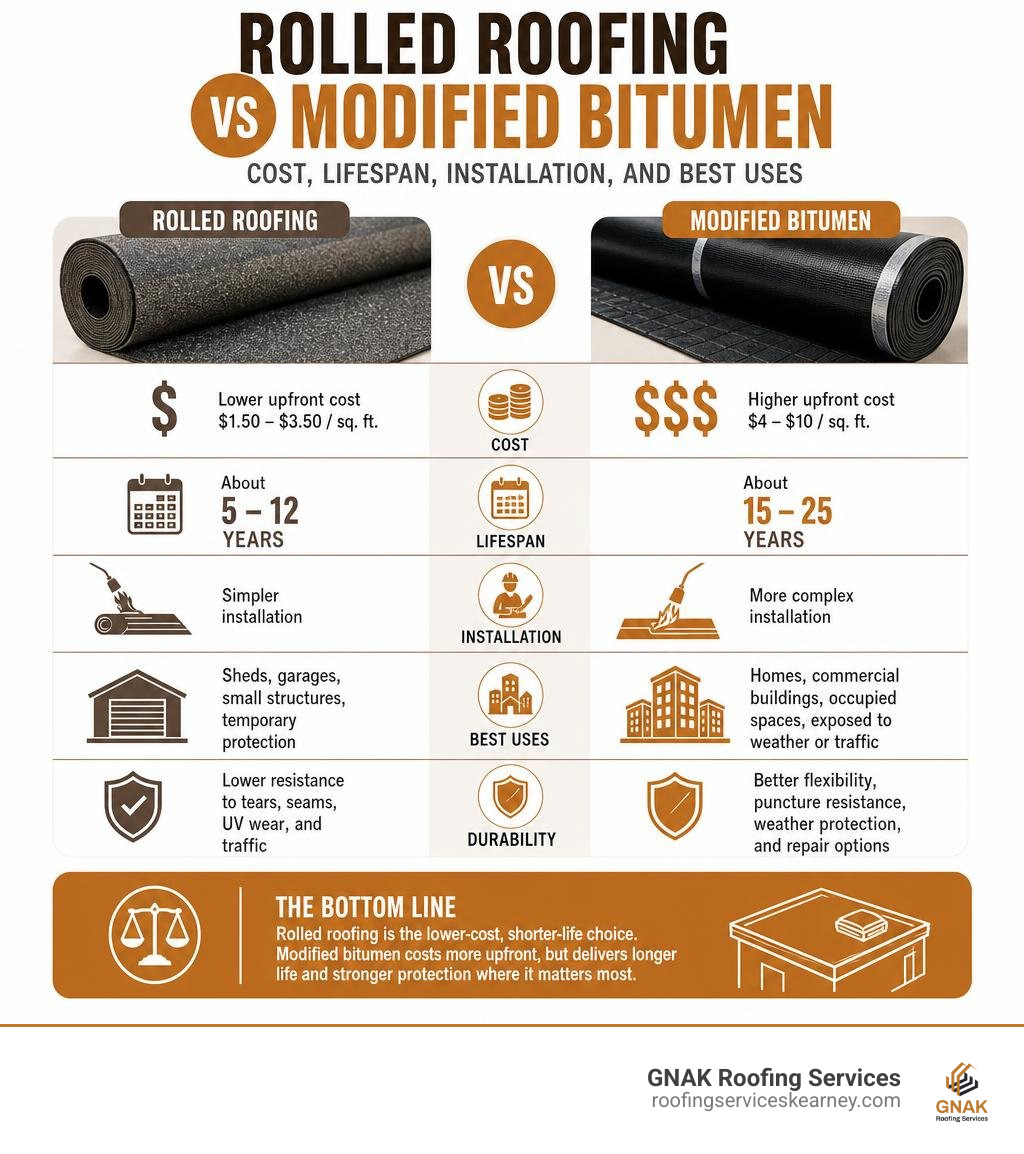
Rolled roofing vs modified bitumen comes down to short-term savings versus longer-term protection. Both are asphalt-based options for flat and low-slope roofs, but they are built, installed, and expected to perform very differently.
| Factor | Rolled Roofing | Modified Bitumen |
|---|---|---|
| Basic build | Single layer of asphalt-saturated felt or fiberglass with mineral granules | Reinforced asphalt membrane modified with rubber-like SBS or plastic-like APP polymers |
| Typical lifespan | About 5 to 12 years | About 15 to 25 years, sometimes longer with proper care |
| Installed cost | Roughly $1.50 to $3.50 per sq. ft. | Roughly $4 to $10 per sq. ft. |
| Best fit | Sheds, detached garages, small low-value structures, and temporary protection | Homes, commercial buildings, occupied spaces, and roofs exposed to weather or foot traffic |
| Durability | Lower resistance to tears, seam failure, UV wear, and traffic | Better flexibility, puncture resistance, weather protection, and repair options |
In simple terms, rolled roofing is usually the lower-cost, shorter-life choice. Modified bitumen costs more upfront, but its reinforced and often multi-ply design makes it a stronger fit where leaks, storm exposure, rooftop equipment, or long-term ownership matter.
I am Greg Nakata, owner of GNAK Roofing Services in Kearney, Missouri, with a background in commercial real estate, underwriting, roof documentation, and roofing systems for property owners facing repair, replacement, and storm-claim decisions. In this guide to rolled roofing vs modified bitumen, I will help you understand the practical differences before you invest in a low-slope roof.
Material Composition and Core Differences: Rolled Roofing vs Modified Bitumen
When evaluating rolled roofing vs modified bitumen, the fundamental differences start at the manufacturing level. While both products rely on asphalt to repel water, their physical construction determines how well they resist tears, seal seams, and handle the dramatic temperature swings we see across Clay County, Liberty, and the greater Kansas City metropolitan area.
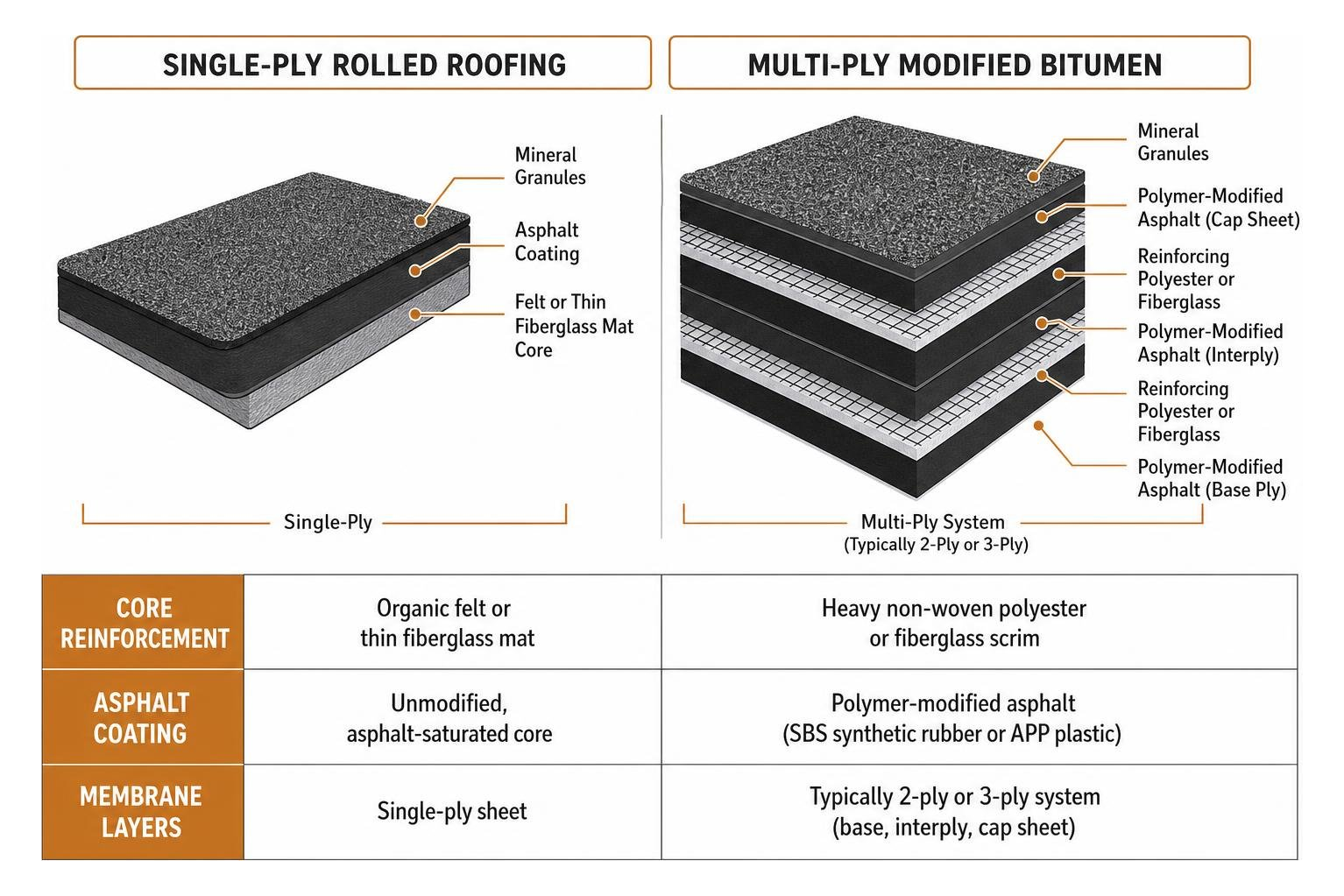
Standard rolled roofing—often referred to as Mineral Surfaced Roll (MSR) roofing or 90-pound roll roofing—is a basic single-ply material. It consists of an organic felt or light fiberglass mat core that is saturated with raw asphalt and topped with a light layer of mineral granules. Because it lacks synthetic additives or heavy reinforcement layers, standard roll roofing remains relatively thin and rigid.
Modified bitumen, on the other hand, was developed as an evolution of traditional built-up roofing (BUR) systems. It blends asphalt with specialized polymer modifiers to impart flexibility, elasticity, and enhanced UV stability. These modified asphalt layers are reinforced with heavy-duty polyester mats or woven fiberglass scrims, creating a multi-layer membrane designed for long-term outdoor exposure. For a detailed material analysis of rolled roofing and polymer membranes, evaluating how these layers interlock helps explain their massive performance gap.
| Feature / Spec | Mineral-Surfaced Rolled Roofing | Modified Bitumen Roofing (SBS or APP) |
|---|---|---|
| Core Reinforcement | Organic felt or thin fiberglass mat | Heavy non-woven polyester or fiberglass scrim |
| Asphalt Coating | Unmodified, asphalt-saturated core | Polymer-modified asphalt (SBS synthetic rubber or APP plastic) |
| Membrane Layers | Single-ply sheet | Typically 2-ply or 3-ply system (base, interply, cap sheet) |
| Weight per Square | ~75 to 90 lbs per 100 sq. ft. roll | ~100 to 220+ lbs per 100 sq. ft. depending on plies |
| Minimum Roof Pitch | 2:12 (2 inches of rise per 12 inches of run) | 1/4:12 to 2:12 (can handle flat and very low slopes) |
| Flexural Range | Rigid; cracks easily when cold | Highly flexible; stretches without splitting or tearing |
Mineral-Surfaced Rolled Roofing Essentials
Mineral-surfaced rolled roofing is packaged in 100-square-foot rolls, usually measuring 36 inches wide by 33 feet long. Because it relies on basic asphalt-saturated organic felt, its flexibility is severely limited.
When installed in cold weather—such as a chilly Missouri winter morning—it becomes brittle and prone to snapping or cracking during handling. Furthermore, roll roofing relies heavily on manual lap-nailing and brush-applied plastic roof cement at the seams. Over time, drying roof cement and expanding roof decks cause these single-ply seams to lift, leaving the roof structure vulnerable to moisture intrusion. For a deeper breakdown of how these components are manufactured, review this modified bitumen vs roll roofing material analysis.
Modified Bitumen Rubberized and Plastic Polymer Systems
Modified bitumen achieves its strength by blending pure asphalt with engineered polymers. The two primary types of modified bitumen chemical blends are:
- SBS (Styrene-Butadiene-Styrene): Modified with synthetic rubber, SBS membranes offer exceptional elastomeric expansion, flexing up to 200% without cracking. This high elasticity makes SBS modified bitumen ideal for regions like Kansas City and St. Joseph, where freeze-thaw cycles cause significant roof deck movement.
- APP (Atactic Polypropylene): Modified with plastic polymers, APP membranes offer superior resistance to intense thermal heat and ultraviolet radiation. APP is commonly torch-applied, as the plastic-modified asphalt flows smoothly when heated to form thick, seamless welds.
Rather than relying on a single sheet, a professionally installed modified bitumen system typically includes a heavy base sheet, an optional interply sheet, and a granule-surfaced cap sheet (such as a LIBERTY™ Self-Adhering Cap Sheet). This multi-ply assembly creates redundant waterproof barriers across your building’s footprint.
Lifespan, Durability, and Weather Performance
A central question every property owner asks is how long these materials last under real-world weather conditions. In Missouri, low-slope roofs endure humid summers, intense ultraviolet exposure, heavy spring rainstorms, winter snow loads, and frequent freeze-thaw cycles.
- Standard Rolled Roofing Lifespan: Typically lasts 5 to 12 years. On unconditioned outbuildings or low-slope porches, severe weather can degrade a roll roof in as few as 5 to 8 years.
- Modified Bitumen Lifespan: Commonly lasts 15 to 25 years. Well-maintained 3-ply modified bitumen systems can easily exceed 25 years of reliable service.
If you suspect your current membrane is reaching the end of its functional life or showing signs of water intrusion, exploring our commercial roof repair options can help stabilize the structure before costly interior structural damage occurs.
Wind, Hail, and UV Resistance in Rolled Roofing vs Modified Bitumen
Under severe weather conditions, the physical differences between these systems become starkly clear:
- UV Degradation: Mineral-surfaced roll roofing sheds its protective granules rapidly when exposed to direct sunlight and thermal expansion. Once the asphalt coating underneath is exposed, UV rays bake the volatile oils out of the material, causing cracking and curling. Modified bitumen cap sheets utilize dense ceramic granules embedded in heavy polymer asphalt, retaining solar reflection and protecting the underlying waterproofing plies for decades.
- Hail and Impact Damage: Hailstones readily puncture thin single-ply roll roofing, smashing through the brittle organic backing. Multi-ply modified bitumen membranes absorb mechanical energy, allowing the thick rubberized asphalt matrix to flex and cushion hail impacts without fracturing the primary waterproof barrier.
- Wind Uplift and Seam Integrity: Rolled roofing relies on lap nails driven through exposed seams, paired with a thin coat of roof cement. High wind gusts can pry under these seams, snapping the brittle felt sheet along nail lines. Modified bitumen seams are fused together using heat torching, cold-process adhesive, or factory pressure-sensitive self-adhesives, creating continuous, monolithic seam bonds that resist severe wind uplift forces.
Foot Traffic and Weight Capacity Considerations
Rooftop maintenance is a routine necessity for commercial buildings in Independence, MO, and residential homes with low-slope HVAC platforms.
Standard rolled roofing cannot withstand regular foot traffic. Tools, ladder feet, and heavy work boots easily puncture or tear the thin asphalt felt, exposing the roof deck below. Conversely, polymer-modified bitumen features thick polyester matting designed to handle mechanical abrasion. In high-traffic zones—such as pathways leading to HVAC units or rooftop access hatches—contractors can install specialized modified bitumen walkway pads to protect the cap sheet from ongoing foot traffic and equipment staging.
Installation Methods, Complexity, and Safety
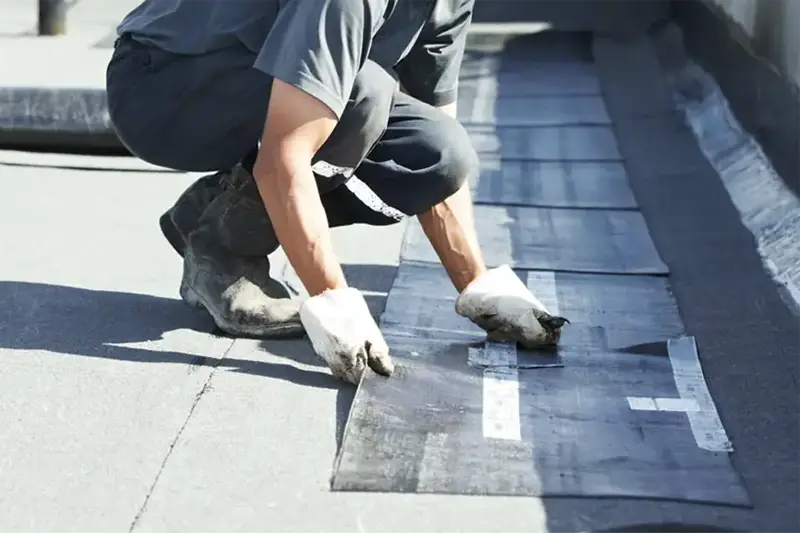
The performance of any flat roof material hinges directly on installation quality. A comparison of rolled roofing vs modified bitumen reveals vastly different labor requirements and safety standards during application. For step-by-step technical details on low-slope techniques, consult this guide to low-slope installation methods.
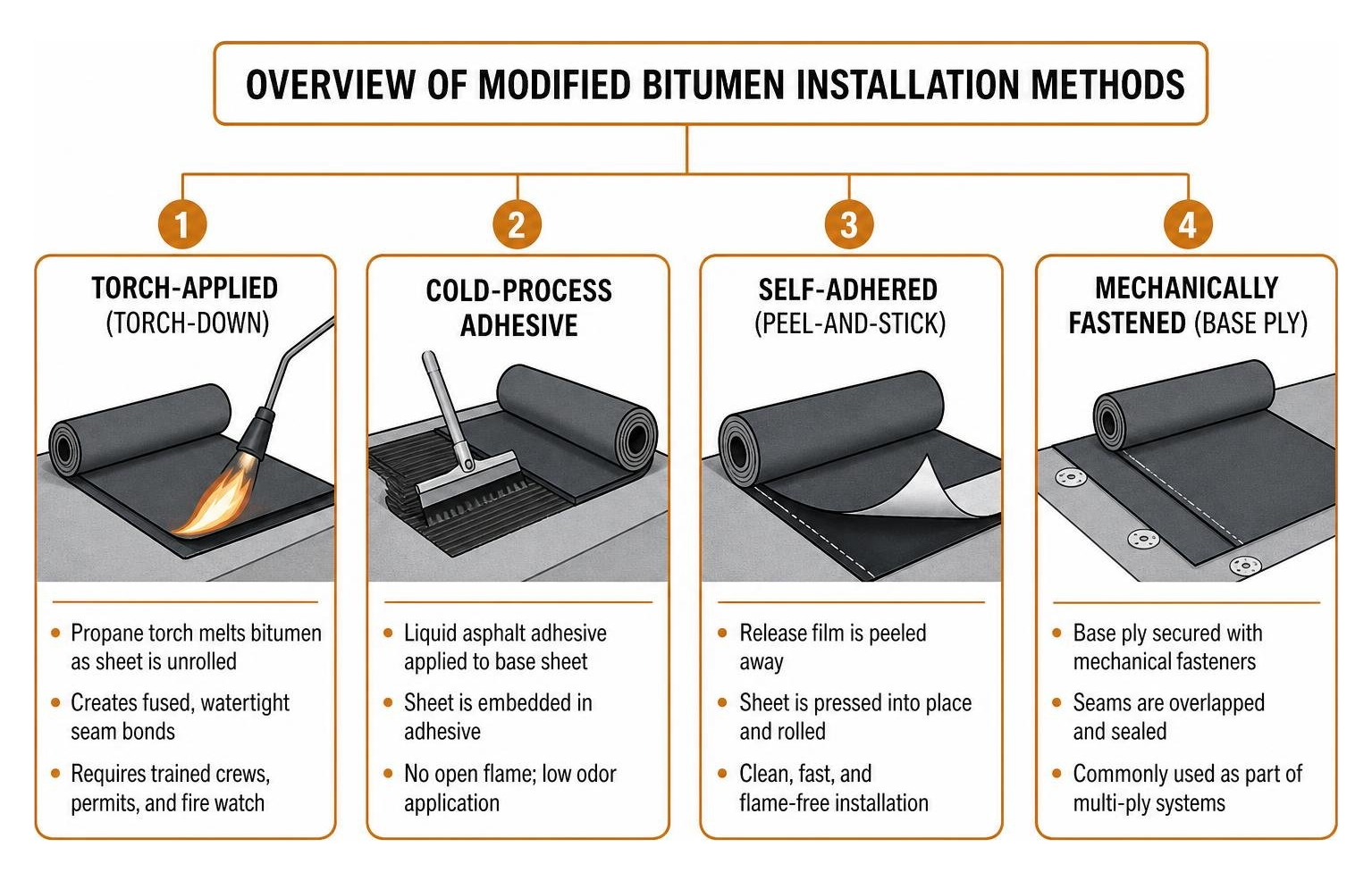
Modified bitumen systems are applied using four primary industry methods:
- Torch-Applied (Torch-Down): A propane torch melts the underside bitumen of an APP or SBS sheet as it is unrolled, forming a fused molten weld at all seams. While highly effective, torching requires trained safety crews, open-flame permits, and post-installation fire watch protocols.
- Cold-Process Adhesive: Liquid asphalt cold adhesive is squeegeed or notched over the base sheet, embedding the cap sheet without open flames. This is an ideal solution for occupied facilities like schools, hospitals, or apartments in Liberty and Kansas City where fumes and fire risks must be eliminated.
- Self-Adhered (Peel-and-Stick): Factory-applied adhesive backings are exposed by peeling off a protective release film. Pressed down with heavy steel rollers, self-adhered systems like SBS membranes offer clean, fast, and flame-free installation.
- Hot-Mopped Asphalt: Similar to traditional built-up roofing, sheets are rolled directly into hot liquid asphalt pumped from a ground kettle.
Rolled roofing, in contrast, is installed using basic mechanical fasteners (roofing nails spaced at 10-inch intervals along lap edges) combined with brush-applied lap cement. While simple, these exposed mechanical fasteners create thousands of potential penetration points for water leaks over time.
DIY Accessibility vs Professional Installation Needs
Because rolled roofing is light and requires only simple hand tools, many property owners attempt to install it themselves on small residential accessory structures. However, improper pitch evaluation (installing roll roofing on slopes flatter than 2:12) or improper seam overlapping frequently leads to premature roof failure.
Modified bitumen installation is strictly a professional endeavor. Achieving tight, waterproof seams requires precise temperature control, material handling, proper flashing integration around roof penetrations, and strict adherence to municipal building codes. Working with licensed professionals ensures that warranties remain intact and that installations comply with strict regional building regulations across Clay County. Homeowners planning broader renovations can review our comprehensive residential roof replacement guide to better understand project scoping and material selections.
Cost Analysis: Initial Upfront Price vs Long-Term Value
Evaluating financial costs requires balancing immediate upfront installation expenses against the 20-year total cost of ownership. For an in-depth walkthrough on evaluating low-slope system economics, refer to this guide comparing flat roof material costs.
- Mineral-Surfaced Rolled Roofing:
- Material Costs: ~$1.50 to $2.50 per square foot.
- Installed Costs (Labor & Materials): ~$1.50 to $3.50 per square foot.
- Modified Bitumen Roofing:
- Material Costs: ~$2.50 to $5.00 per square foot (depending on ply count and SBS/APP formulation).
- Installed Costs (Labor & Materials): ~$4.00 to $10.00 per square foot (varies by application method, such as self-adhered vs torch-down).
While rolled roofing boasts a lower initial sticker price, its short 5-to-12-year lifespan means a building owner may replace a roll roof two to three times over a 20-year span. When factoring in repeated tear-off fees, labor charges, and potential interior leak repairs, roll roofing frequently proves more expensive over a 20-year cycle. You can explore how overall roofing expenses compare across various materials by consulting our comparing roof replacement costs guide.
Furthermore, cool-roof modified bitumen cap sheets coated with highly reflective solar granules reduce surface heat absorption during hot Missouri summers. This energy efficiency reduces HVAC cooling loads, saving facility managers money on monthly utility bills. For an extended comparison of low-slope commercial financial considerations, check out this breakdown of modified bitumen vs built-up roofing costs.
Choosing the Right System: Rolled Roofing vs Modified Bitumen Applications
Selecting between rolled roofing vs modified bitumen depends primarily on the structure’s purpose, slope, and long-term value:
- Ideal Rolled Roofing Applications:
- Unheated outdoor sheds, workshops, gazebos, and detached storage barns.
- Temporary emergency roof coverings following severe wind or storm damage while waiting for permanent insurance replacements.
- Non-critical residential outbuildings where low upfront material cost is the primary decision factor.
- Ideal Modified Bitumen Applications:
- Low-slope residential home additions, sunrooms, porches, and attached garages.
- Low-slope commercial facilities, retail spaces, industrial warehouses, and multi-family structures.
- Flat roof decks accommodating HVAC equipment, heavy foot traffic, or solar panel arrays.
Property managers and business owners evaluating commercial flat roof options can review our detailed commercial roofing systems breakdown to explore multi-ply choices suited for larger facilities. Additional insights regarding commercial application pros and cons are detailed in this contractor guide to modified bitumen roofing.
Maintenance, Repair Protocols, and Seam Integrity
To maximize service life, both systems require regular care and periodic inspections. Because flat roofs lack steep slopes to drain water rapidly, minor seam defects or clogged drains can quickly lead to standing ponding water.
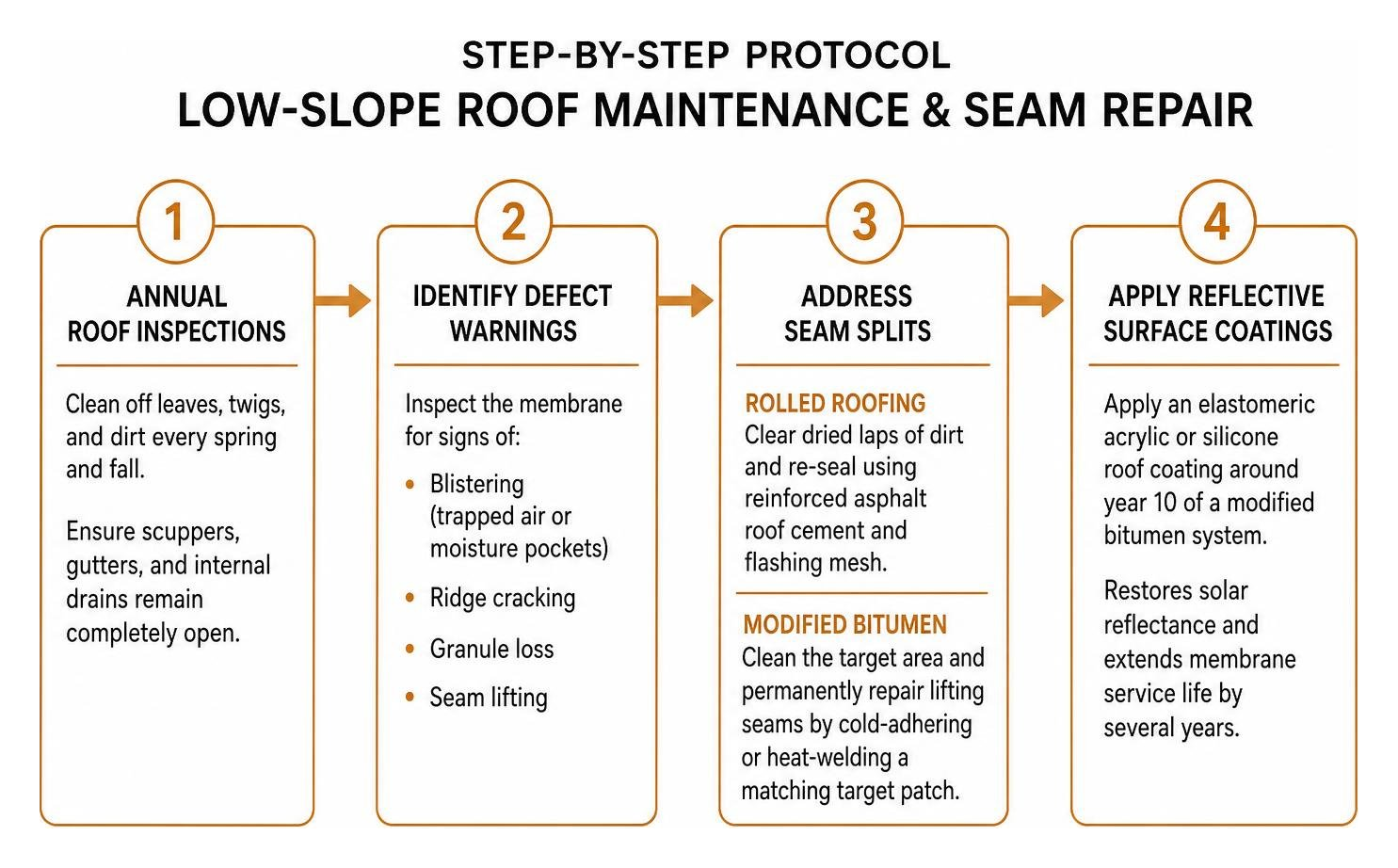
- Annual Roof Inspections: Clean off accumulated leaves, twigs, and dirt debris every spring and fall. Ensure scuppers, gutters, and internal drains remain completely open.
- Identifying Defect Warnings: Inspect the membrane for signs of blistering (trapped air or moisture pockets beneath the plies), ridge cracking, granule loss, or seam lifting.
- Addressing Seam Splits: On rolled roofing, dried laps must be cleared of dirt and re-sealed using reinforced asphalt roof cement and flashing mesh. On modified bitumen roofs, lifting seams are permanently repaired by cold-adhering or heat-welding a matching target patch over the clean target area.
- Applying Reflective Surface Coatings: Applying an elastomeric acrylic or silicone roof coating around year 10 of a modified bitumen system restores solar reflectance and extends the membrane’s underlying service life by several years.
For property owners dealing with active leaks or seam deterioration, following our practical guide to reliable roof repair will help you identify emergency steps and prevent structural wood decay. You can also compare long-term benefits in this guide detailing modified bitumen vs roll roofing pros and cons.
Frequently Asked Questions About Flat Roofing Membranes
Can you install modified bitumen over standard rolled roofing?
In general, overlaying a new modified bitumen membrane directly over an old, deteriorating roll roof is not recommended. Old rolled roofing often hides moisture trapped within the roof deck or underlying insulation. Installing a new membrane over wet substrates traps moisture, causing rapid blistering, wood rot, and premature seam failure.
Additionally, municipal building codes across Missouri limit the maximum allowable weight and total number of roof layers (typically capped at two layers). We recommend performing a full tear-off down to the roof deck, inspecting the deck boards for rot, installing proper insulation board, and laying down a fresh base sheet assembly.
Which flat roof material is better for extreme cold and freeze-thaw cycles?
SBS-modified bitumen is significantly better for cold climates subject to freeze-thaw cycles. Because SBS modified bitumen is formulated with synthetic rubber polymers, it retains its elasticity and flexural strength even when temperatures drop well below freezing. When the building frame contracts and expands during winter storms in Kansas City and St. Joseph, the SBS membrane stretches smoothly without cracking or splitting along seam joints. Standard organic felt rolled roofing becomes rigid in cold weather and frequently cracks under severe winter thermal shock.
How do you tell the difference between rolled roofing and modified bitumen visually?
You can usually visually distinguish the two materials by examining the seams, material thickness, and surface finish:
- Seam Appearance: Torch-down modified bitumen displays a uniform squeeze-out edge (bitumen bleed-out) of melted compound along lap seams. Self-adhered modified bitumen shows clean, tightly pressed seams without oozing cement. Standard rolled roofing often shows sloppy, brush-applied black plastic roof cement along laps, or exposed lap nails driven directly through the top edge of the felt.
- Membrane Thickness: Rolled roofing is a single, thin, paper-like asphalt sheet (roughly 1/8 inch thick or less). Modified bitumen is substantially thicker, especially in two-ply or three-ply assemblies, presenting a heavy, rubberized profile at edge metal flashings.
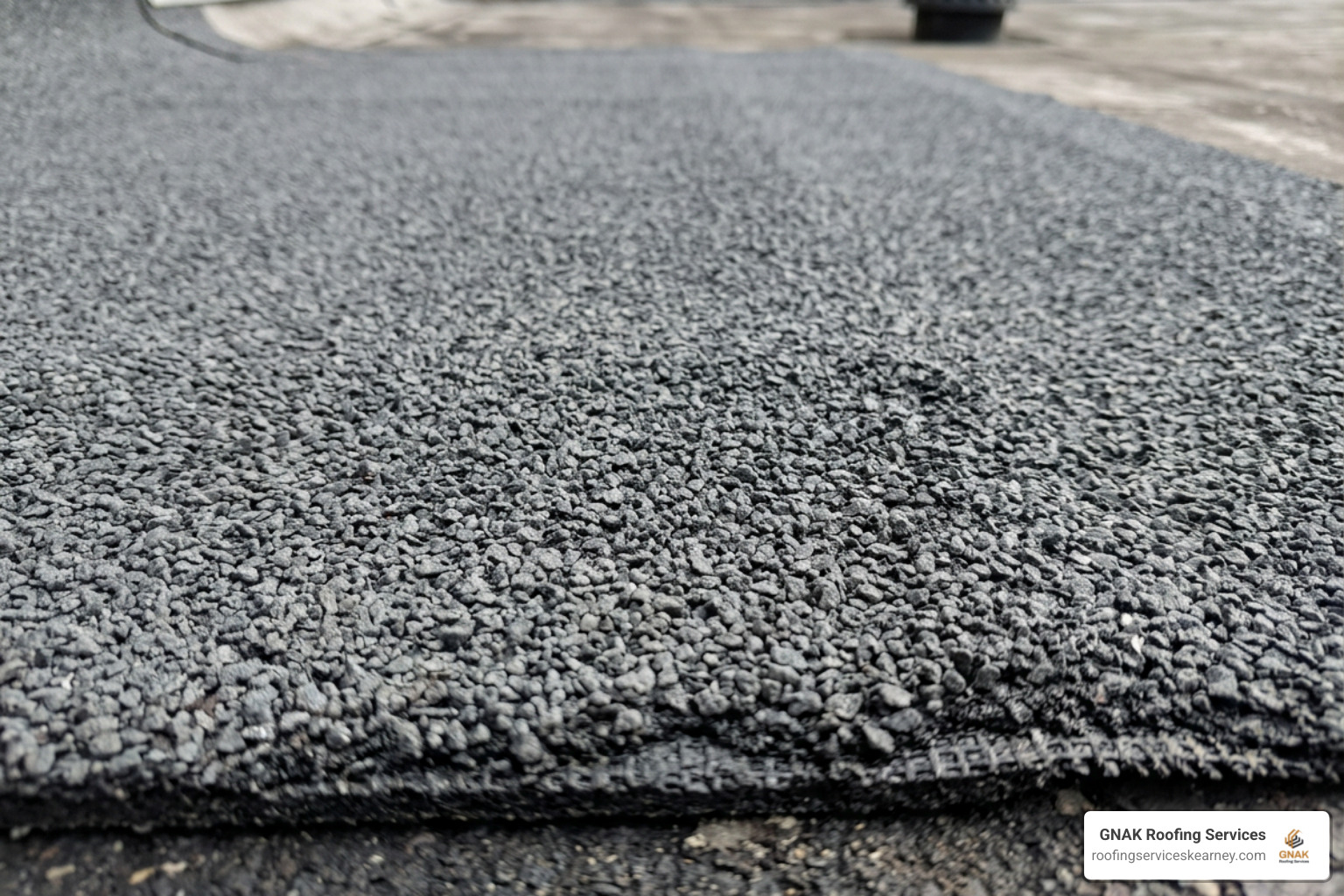
- Granule Uniformity: Modified bitumen cap sheets feature tightly packed, thick ceramic granules, whereas older roll roofing often shows thin, patchy granule coverage with exposed dark asphalt backing.
Conclusion
When comparing rolled roofing vs modified bitumen, the right choice depends on your structural needs, financial budget, and performance goals. Standard mineral-surfaced rolled roofing offers an economical short-term option for basic outbuildings, storage sheds, and temporary emergency patches. However, for primary residential structures, commercial facilities, and long-term property investments across Kearney, Liberty, Independence, and the greater Kansas City region, modified bitumen provides vastly superior durability, elasticity, weather resistance, and lifecycle value.
At GNAK Roofing Services, we specialize in low-slope and commercial flat roofing installations, combining deep regional expertise with insurance-ready documentation and manufacturer-compliant workmanship. Whether you are dealing with storm damage or evaluating a complete replacement, our team is ready to deliver dependable flat roof solutions tailored to your building’s exact requirements. Contact us today to schedule expert modified bitumen roofing services and protect your property investment for decades to come.