

Act Fast When a Roof Leak Starts in Clay County
For emergency roof repair Clay County homeowners and business owners should act the same day: stay off the roof, contain interior water, protect valuables, document visible damage, and call a qualified local roofer for emergency stabilization. If water is near outlets, light fixtures, or electrical panels, turn off power to the affected area if it is safe to do so.
A leaking roof can turn from a small opening into soaked insulation, damaged drywall, wood rot, or mold fast. The first 24 to 48 hours are especially important for stopping water intrusion and beginning drying. Storm winds, hail, fallen limbs, failed flashing, aging shingles, and worn pipe boots are common causes of sudden roof leaks around Kearney and greater Clay County.
Greg Nakata is the owner of GNAK Roofing Services, a Kearney-based roofing company with experience in storm restoration, inspections, commercial and residential roofing, and insurance-ready documentation. His background in property underwriting and claims documentation helps guide emergency roof repair Clay County property owners from immediate protection to a clear permanent repair plan.
Immediate Protocols for Emergency Roof Repair Clay County Homeowners Must Follow
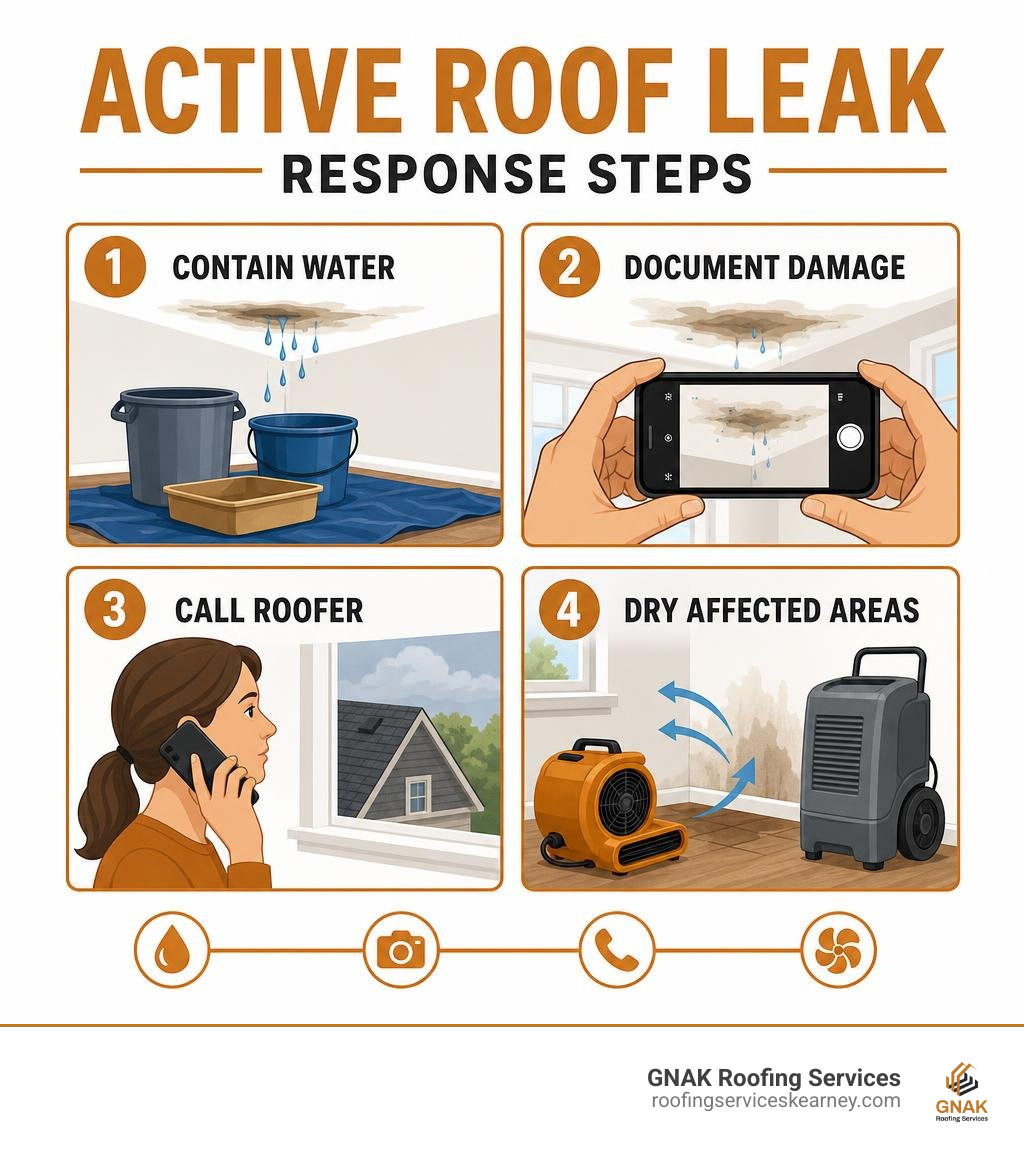
When water starts making its way through your ceiling, seconds feel like minutes. While your natural instinct might be to climb up onto the roof with a flashlight or a toolbox, doing so during or immediately after a storm is extremely dangerous. Wet decking, loose granules, damaged framing, and nearby power lines create serious hazards. The safest and most effective first move is managing the intrusion from the ground and inside the home.
Our priority in any emergency is safeguarding your family and preventing secondary structural losses. Before exterior crews arrive, focus on basic site stabilization:
- Prioritize Electrical Safety: Check whether water is traveling near ceiling fans, recessed lighting, wall outlets, or your breaker panel. If water is pooling around any electrical components, switch off the corresponding circuit breakers immediately at the main service panel, provided the panel area is dry and safe to approach.
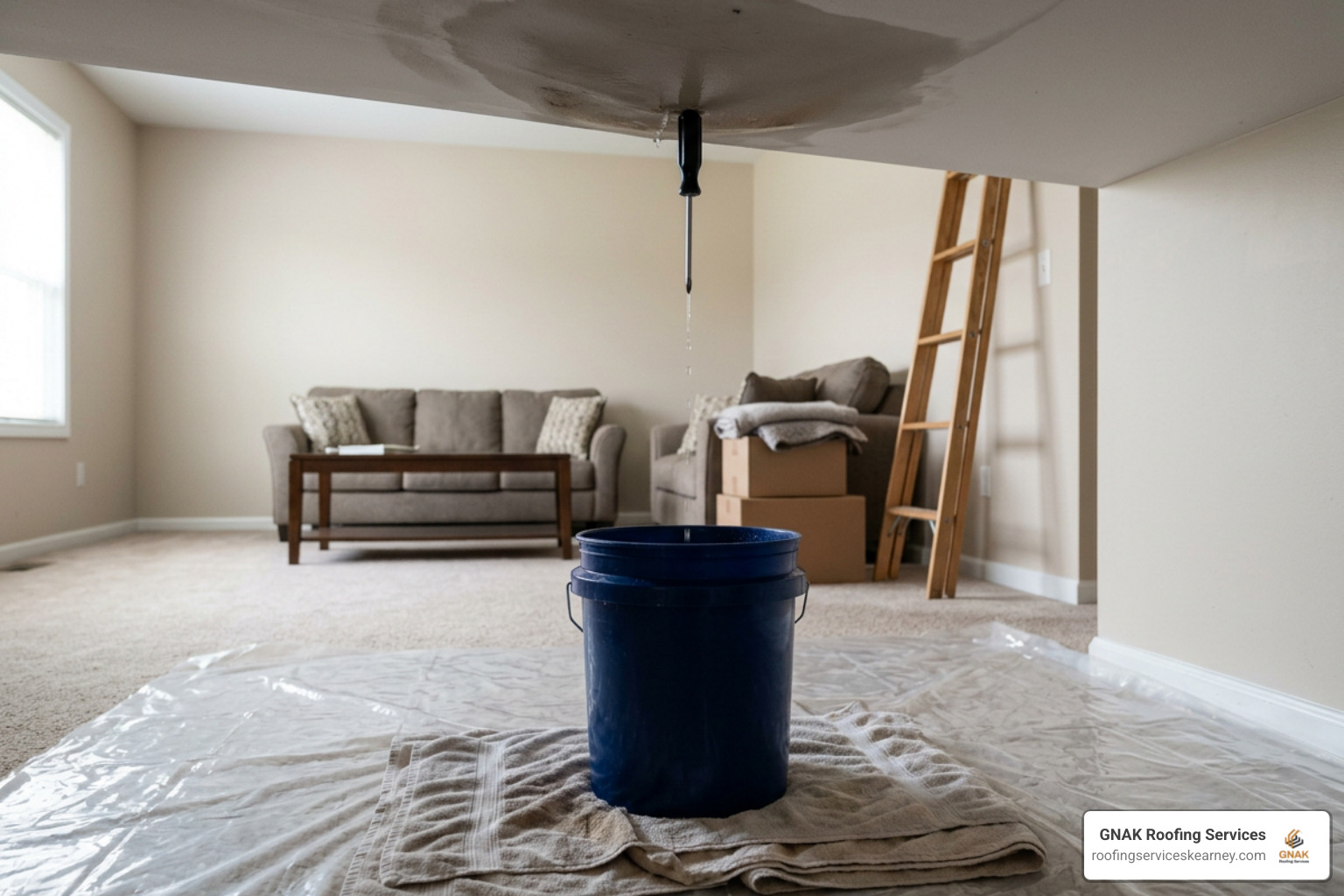
- Contain Active Drips: Place buckets, plastic totes, or deep pots beneath active drips. Lay old towels or waterproof drop cloths across the floor beneath the containers to capture splashing water.
- Relieve Ceiling Water Pressure: If your drywall ceiling is sagging, bubbling, or holding a visible pool of water, it can collapse without warning. Carefully pierce the center of the lowest point of the bulge using a screwdriver or awl while holding a bucket directly underneath. This controlled drainage point relieves the weight of the water and prevents a massive, sudden drywall blowout.
- Call for Professional Dispatch: Contact our team immediately for prompt dispatch. Reviewing The Complete Guide To Storm Damage Roof Repair will also help you understand the full path from triage to full recovery.
Safe Interior Mitigation and Water Containment
Water follows gravity, capillary action, and the path of least resistance across roof trusses, ceiling joists, and drywall seams. That means the spot where water drips through your ceiling is rarely directly below the physical hole in your roof.
Move lightweight furniture, electronics, bedding, and keepsakes out of the room. For heavier furniture that cannot be relocated quickly, drape heavy plastic sheeting over the items and place wood blocks, foil, or plastic saucers under the legs to keep them off damp carpet or flooring.
That attic insulation acts like a sponge. Saturated blown-in cellulose or fiberglass batts hold gallons of trapped water directly against your ceiling drywall. Once the active leak is captured, clearing soaked insulation off the drywall helps reduce weight and allows framing lumber to dry before mold can colonize.
Documenting Initial Damage for Insurance Claims
Insurance adjusters require clear, objective evidence showing that damage was caused by a sudden, covered storm peril rather than long-term neglect. Proper documentation starts the moment you discover the leak.
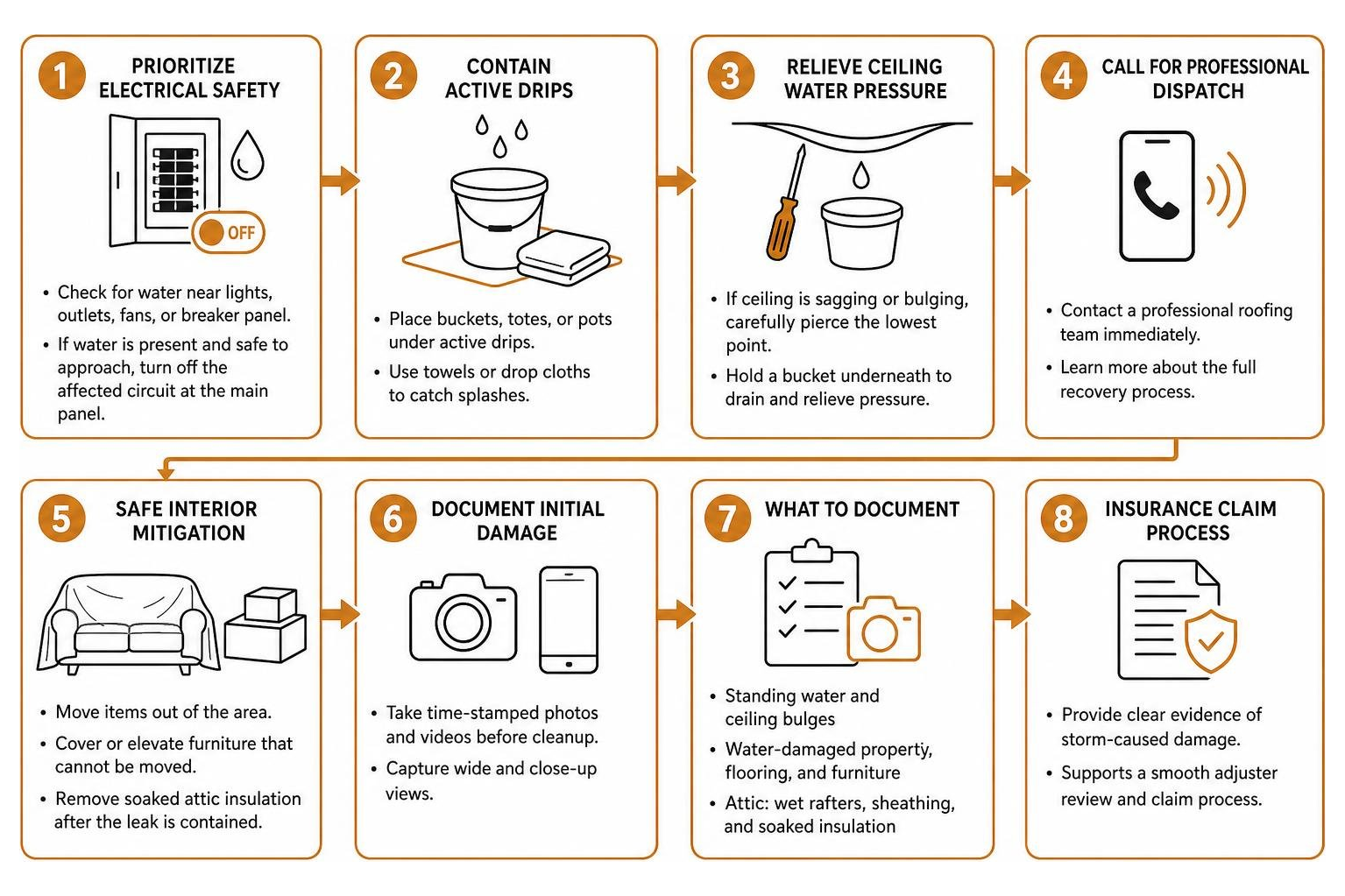
Before cleaning up debris or moving soaked items to the trash, take comprehensive, time-stamped photographs and wide-angle videos of:
- Standing water and ceiling bulges
- Water-damaged personal property, flooring, and furniture
- The attic space (if safely accessible), showing wet rafters, sheathing, and soaked insulation
- Exterior ground-level storm conditions, such as displaced shingles in the yard, hail accumulation, or downed tree branches
Do not throw away damaged personal items until your claims adjuster has reviewed them. Our team prepares detailed line-item damage assessments using industry-standard Xactimate software and high-resolution photo logs with chalk markings. To ensure you stay organized and calm throughout the process, follow our recommendations on How To Handle Residential Storm Damage And Roof Repair Without Losing Your Mind.
Common Causes of Storm Damage and Temporary Tarping Strategies
Clay County weather brings everything from severe convective spring thunderstorms with large hail to high-wind derecho events and heavy winter ice. Each season presents unique challenges to residential and commercial roof systems:
- Hail Impacts: Hailstones fracture shingle fiberglass mats, dislodge protective mineral granules, and expose asphalt to rapid UV degradation. Over time, these impact points weaken and form localized leaks.
- Wind Uplift: Severe gusts catch the edges of shingles, breaking the factory adhesive seal strips. Once lifted, shingles can creased, tear, or blow away entirely, exposing vulnerable underlayment and raw decking.
- Fallen Limbs and Debris: Heavy tree branches punctured roof sheathing, crush ridge caps, and crack roof trusses.
- Flashing and Pipe Boot Deterioration: Rubber plumbing boot collars crack over time due to thermal expansion, and flashing around chimneys, dormers, and valleys can lift during turbulent wind events.
While DIY enthusiasts may be tempted to try minor shingle repairs during calm conditions using resources like Diy Roof Fixes How To Repair And Replace Damaged Shingles, active storm emergencies demand heavy-duty, professional stabilization to ensure safety and keep water out.
How Temporary Tarping Protects Your Roof Decking
Professional emergency tarping is designed to create a secure, weatherproof barrier that stops ongoing water intrusion while permanent restoration is scheduled. A proper tarp installation is not simply throwing a blue sheet over a roof and weighing it down with bricks or landscape rocks. High winds will easily strip loose tarps, causing further structural damage.
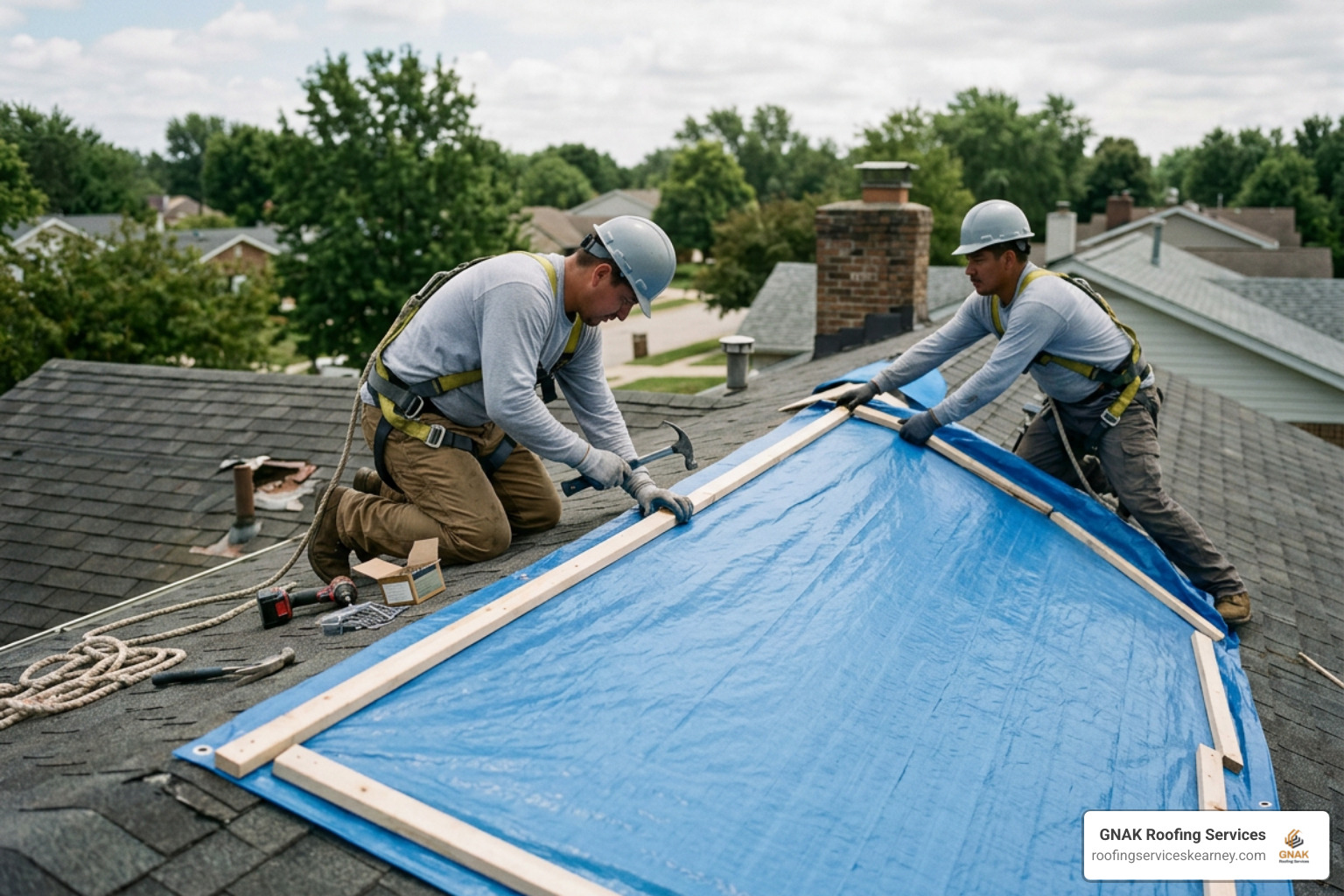
Our technicians follow strict installation standards:
- We deploy heavy-duty, UV-rated woven polyethylene tarps tailored to the exact size of the damaged roof plane.
- The top edge of the tarp is wrapped around wooden furring strips and tucked beneath undamaged shingles or carried securely over the roof ridge to prevent water from running underneath the cover.
- Fasteners are driven through wooden battens using pressure-distribution methods, anchoring the tarp firmly into the roof decking without riddling sound, undamaged shingles with unnecessary puncture holes.
- Side edges and bottoms are drawn tight and sealed against wind uplift, ensuring the temporary protection remains intact through subsequent rain and wind for several weeks.
Avoiding Door-Knocking Storm Chasers After Severe Weather
Following severe weather events in Clay County, out-of-town contractors—often called “storm chasers”—tend to canvas neighborhoods knocking on doors. These transient operators track storm paths from state to state, offering quick fixes, promising to “waive your deductible” (which is illegal in Missouri), or pressuring homeowners into signing binding assignment-of-benefits contracts on the spot.
Hiring unvetted contractors often leads to substandard workmanship, voided manufacturer warranties, unfinished projects, and serious legal headaches. Protect your property by verifying that any roofing contractor you hire has:
- A permanent, verifiable local business address in the area
- Active general liability and workers’ compensation insurance policies
- Established local references and manufacturer certifications
- Clear knowledge of local Clay County municipal building codes
For a complete breakdown on evaluating local trades, check out our guide on How To Choose A Roofing Contractor In Clay County Without Getting Nailed.
Understanding Repair Costs, Permitting, and Insurance Coverage in Clay County
Navigating the financial and regulatory side of roof emergencies can feel overwhelming when water is actively threatening your property. Having transparent baseline pricing and understanding local codes helps you make confident decisions under pressure.
| Service Type | Typical Scope of Work | Estimated Cost Range |
|---|---|---|
| Emergency Roof Leak Inspection | Comprehensive attic and roof deck evaluation, leak source tracing, photo documentation | $399 (pre-paid) |
| Minimum Emergency Tarping Service | Immediate dispatch, heavy-duty UV tarp deployment, batten securing, wind sealing | Starting at $499 |
| Minor Targeted Roof Repair | Pipe boot replacement, isolated flashing reseal, replacing blown-off shingles | Starting at $799 |
| Clay County Roofing Building Permit | Municipal filing, administrative review, required code compliance inspections | $150 – $280 |
| Full Architectural Shingle Replacement | Complete tear-off, decking repairs, underlayment, new shingles (1,500–2,000 sq ft) | $9,500 – $14,000 |
| Full Roof Replacement (General Range) | Variable based on square footage, pitch, complex valleys, premium materials | $9,000 – $24,000+ |
To avoid surprise expenses down the road, scheduling regular evaluations before severe weather hits is always the best strategy. Learn more about routine assessments by visiting Dont Wait For Leaks Get A Kearney Residential Roof Inspection Today.
Understanding Costs for Emergency Roof Repair Clay County Properties Require
Emergency services carry baseline costs reflecting rapid mobilization, hazardous weather labor, and specialized equipment. For standard emergency responses, a pre-paid roof leak inspection is priced at $399, which covers comprehensive attic and rooftop tracing to pinpoint concealed water entry points.
When immediate weatherproofing is required, the minimum service call fee for emergency tarping starts at $499. If the damage is isolated—such as an aged plumbing vent seal or localized shingle loss—our minimum roofing repair starts at $799, which is also the baseline cost for a standard pipe boot replacement.
If storm damage is extensive across multiple roof slopes, a complete re-roof may be necessary. For older homes with a standard 1,500 to 2,000 square foot footprint, an architectural shingle replacement typically runs between $9,500 and $14,000, while larger homes or complex roof designs range from $9,000 to $24,000 or more.
Permitting Regulations and Senior Financial Assistance Programs
Most major roof repairs and all full roof replacements in Clay County require building permits to ensure compliance with adopted structural, weatherproofing, and ventilation codes. Municipal permit fees typically range between $150 and $280. When you work with a licensed contractor like GNAK Roofing Services, we pull all required municipal permits and manage city inspections, including the critical underlayment inspection before final materials are laid.
For older adults facing emergency home safety concerns, local financial assistance may be available. Clay County Senior Services provides funding for critical home repairs and safety modifications for qualifying county residents aged 60 and older. Assistance is capped at $2,000.00 per client per year and is administered through trusted community partner agencies like Northland Neighborhoods, Inc., Rebuilding Together Kansas City, and Northland Shepherd’s Center. These funds help qualifying seniors address urgent structural hazards and weatherization issues safely.
Transitioning from Emergency Stabilization to Permanent Roof Restoration
Once the emergency tarp is secured and active water intrusion has stopped, the second phase of restoration begins: thorough structural drying and planning permanent repairs.
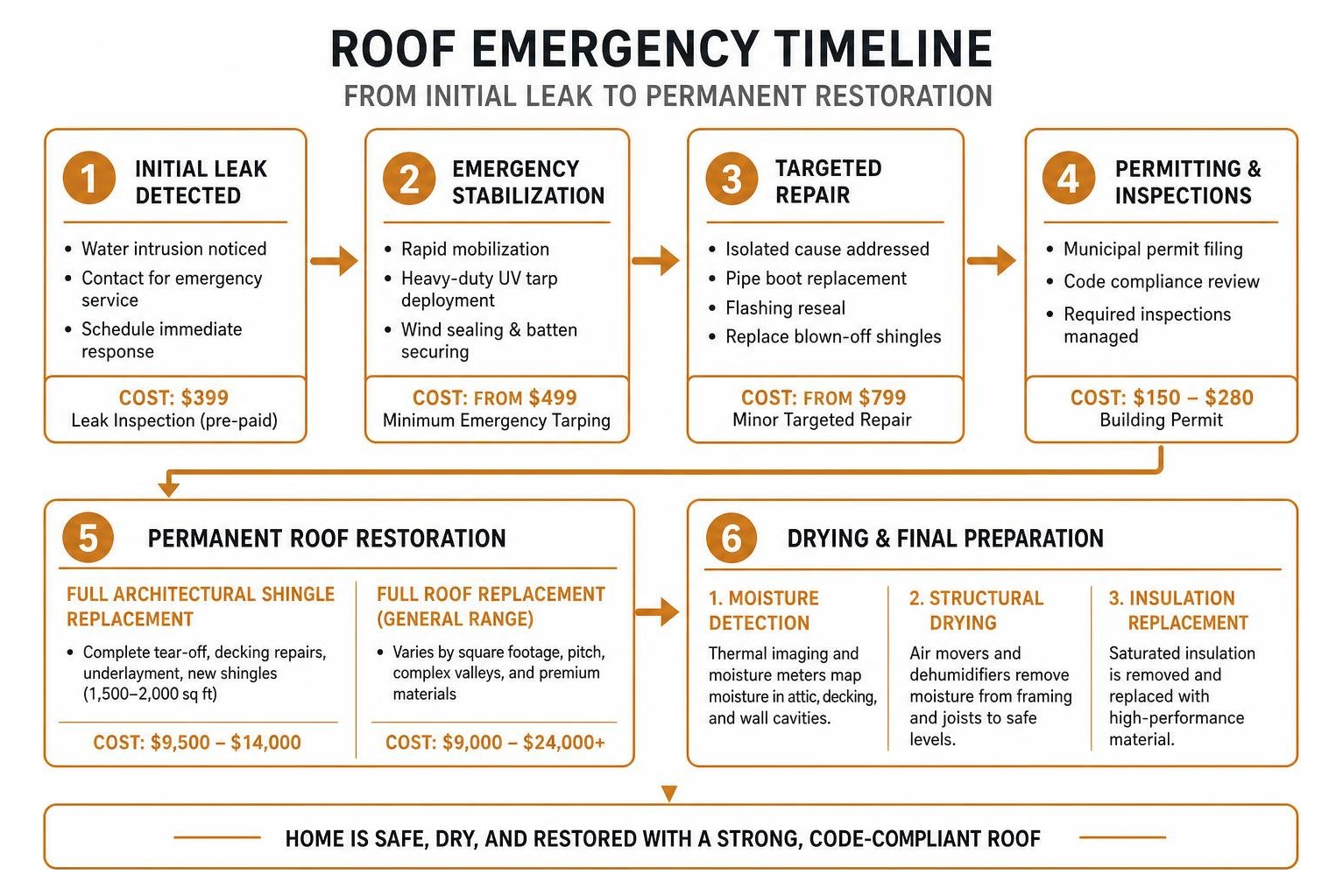
Water trapped in enclosed spaces can lead to active mold growth within 24 to 48 hours. Our restoration process coordinates drying with structural assessment:
- Moisture Detection: We utilize thermal imaging cameras and non-invasive moisture meters to map moisture movement through attic framing, plywood decking, and wall cavities.
- Attic and Structural Drying: Industrial air movers and commercial dehumidifiers are deployed to extract moisture from rafters, trusses, and ceiling joists, returning wood framing to safe moisture levels before permanent materials are installed.
- Insulation Replacement: Any saturated attic insulation that has permanently lost its rated R-value is removed and replaced with fresh, high-performance material.
To explore the entire replacement process from start to finish, consult The Ultimate Guide To Replacing Your Roof In Clay County.
When to Schedule Permanent Versus Emergency Roof Repair Clay County Solutions
A temporary tarp is an effective short-term fix, but it is not a permanent roofing system. Most temporary covers are designed to protect your home for days to a few weeks while insurance claims are adjusted, materials are delivered, and city permits are approved.
If your roof is over 15 to 20 years old, has widespread granule loss, or has suffered impact damage across multiple slopes, a full replacement is often more cost-effective than patching separate areas. A standard residential replacement takes our crew 2 to 3 days:
- Day 1: Complete tear-off down to the roof decking, replacement of damaged or rotted plywood sheathing, and installation of synthetic underlayment and ice-and-water shield.
- Midpoint: Required municipal underlayment and dry-in inspection approval.
- Day 2–3: Installation of new architectural shingles or metal panels, ridge ventilation, flashing integration, and thorough magnetic ground cleanup.
If you live in nearby communities, our team also provides dedicated Roof Repair Liberty Mo services, ensuring rapid, high-quality restoration across the Northland.
Commercial and Residential System Considerations
Every building requires a tailored approach during an emergency:
- Residential Asphalt and Metal Systems: For steep-slope residential homes, we match asphalt shingle profiles and wind ratings to local standards or install durable standing seam metal panels for long-term weather resistance.
- Commercial Flat Roofing: Commercial buildings utilizing single-ply membranes like TPO, EPDM, or PVC require specialized hot-air welding, adhesive patches, and drain clearing to stop ponding water from causing ceiling collapses over valuable inventory.
Business owners dealing with active facility leaks can learn more about our commercial capabilities by reading Dont Let Leaks Ruin Your Business Clay County Commercial Roofing Solutions.
Frequently Asked Questions About Clay County Roof Leaks
How quickly should I act after discovering a roof leak in Clay County?
You should act immediately. The first 24 to 48 hours are critical for stopping active water intrusion, containing interior damage, and beginning structural drying. Delaying action allows moisture to saturate attic insulation, degrade thermal R-values, rot structural roof trusses, and foster active mold colonization within interior wall cavities.
Will homeowner’s insurance cover emergency tarping and repairs?
Yes, standard homeowners insurance policies typically cover the cost of reasonable emergency mitigation measures—such as professional tarping and boarding—to prevent secondary water damage following a covered peril (such as hail, windstorms, or fallen tree limbs). Coverage is subject to your policy deductible. We provide time-stamped photos and itemized Xactimate estimates to streamline the claims process with your adjuster.
Does Clay County require a permit for roof repairs or replacement?
Yes, local municipal building departments in Clay County require permits for full roof replacements and major structural or weatherproofing repairs. Permit fees generally range from $150 to $280. Licensed roofing contractors manage the permit applications, coordinate the required dry-in and underlayment inspections, and ensure all installations adhere to local building and energy codes.
Conclusion
A sudden roof leak during a Missouri storm is stressful, but taking prompt, structured action protects your home, your family, and your investment. By prioritizing electrical safety, capturing indoor water, documenting damage thoroughly, and trusting professional stabilization rather than dangerous DIY fixes, you set the stage for a smooth, complete recovery.
At GNAK Roofing Services, we bring decades of hands-on roofing experience, local building code knowledge, and insurance claims expertise to every emergency call. Whether you need rapid storm dispatch, heavy-duty tarping, targeted leak repairs, or a full code-compliant roof replacement, our team is ready to help.
When severe weather compromises your home, connect with trusted expert roofers near me or contact our Kearney office today for prompt emergency roof repair across Clay County.