

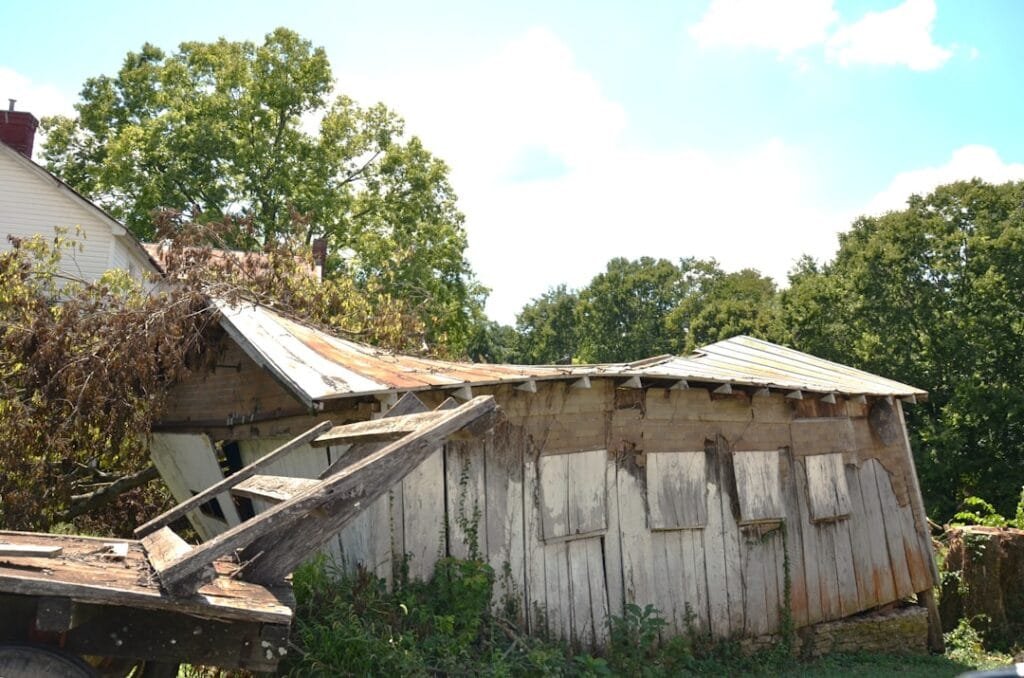
How to Assess Kearney Roof Wind Damage After a Storm
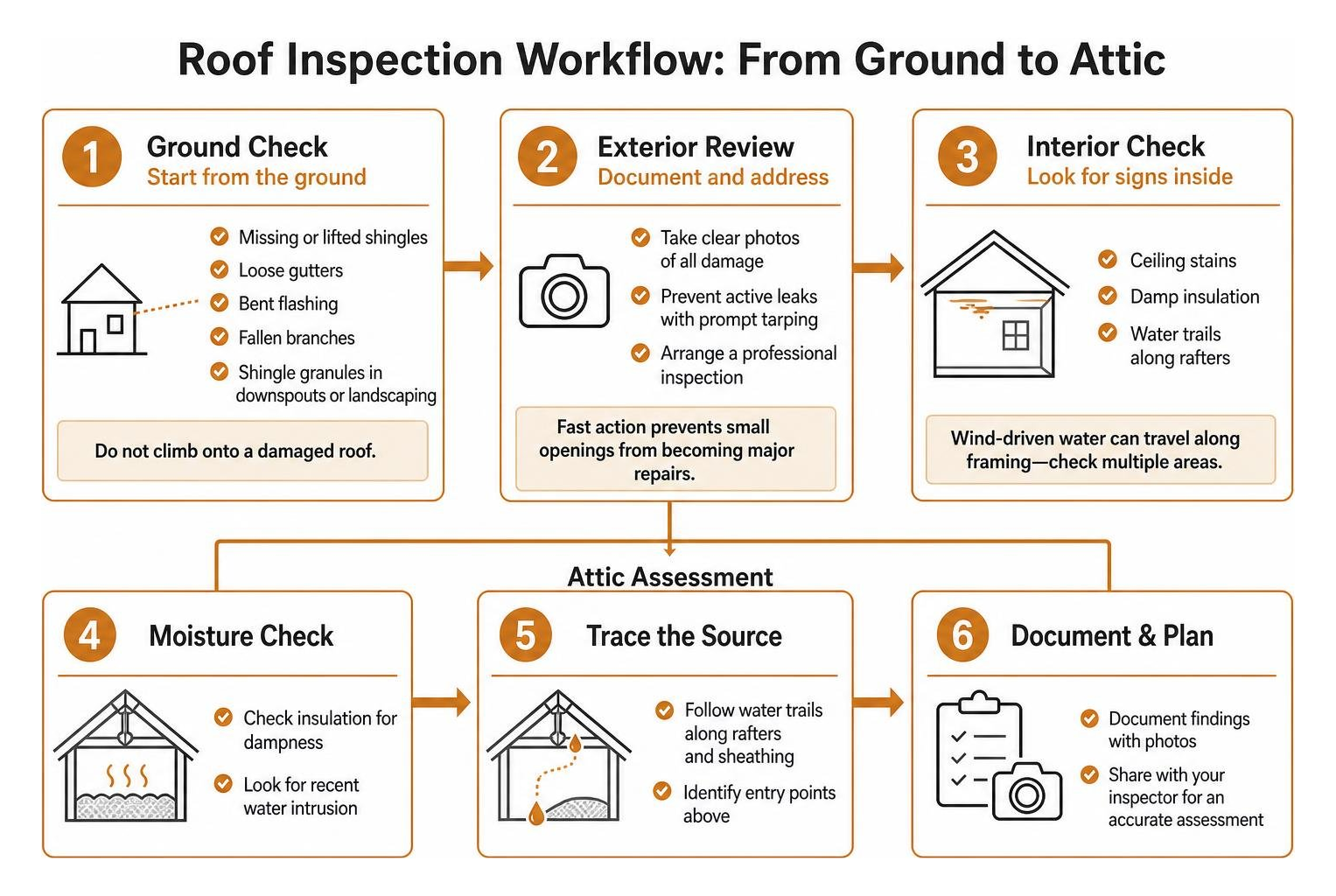
After a windstorm, assess your roof from the ground first: look for missing or lifted shingles, loose gutters, bent flashing, fallen branches, and shingle granules in downspouts or landscaping. Then check ceilings and the attic for fresh stains, damp insulation, or water trails along rafters. Do not climb onto a damaged roof; take photos, prevent active leaks with prompt tarping, and arrange a professional inspection when damage is suspected.
Wind damage is not always obvious. Strong gusts can break shingle adhesive seals or crease tabs without blowing them away, leaving openings for wind-driven rain during the next storm. Fast action matters because a small opening can turn into wet decking, mold, and interior repairs.
I am Greg Nakata, owner of GNAK Roofing Services, with experience in roofing, property evaluation, insurance documentation, and storm restoration. That background helps me assess Kearney roof wind damage with an underwriter’s eye: separating urgent storm-related repairs from ordinary roof wear.
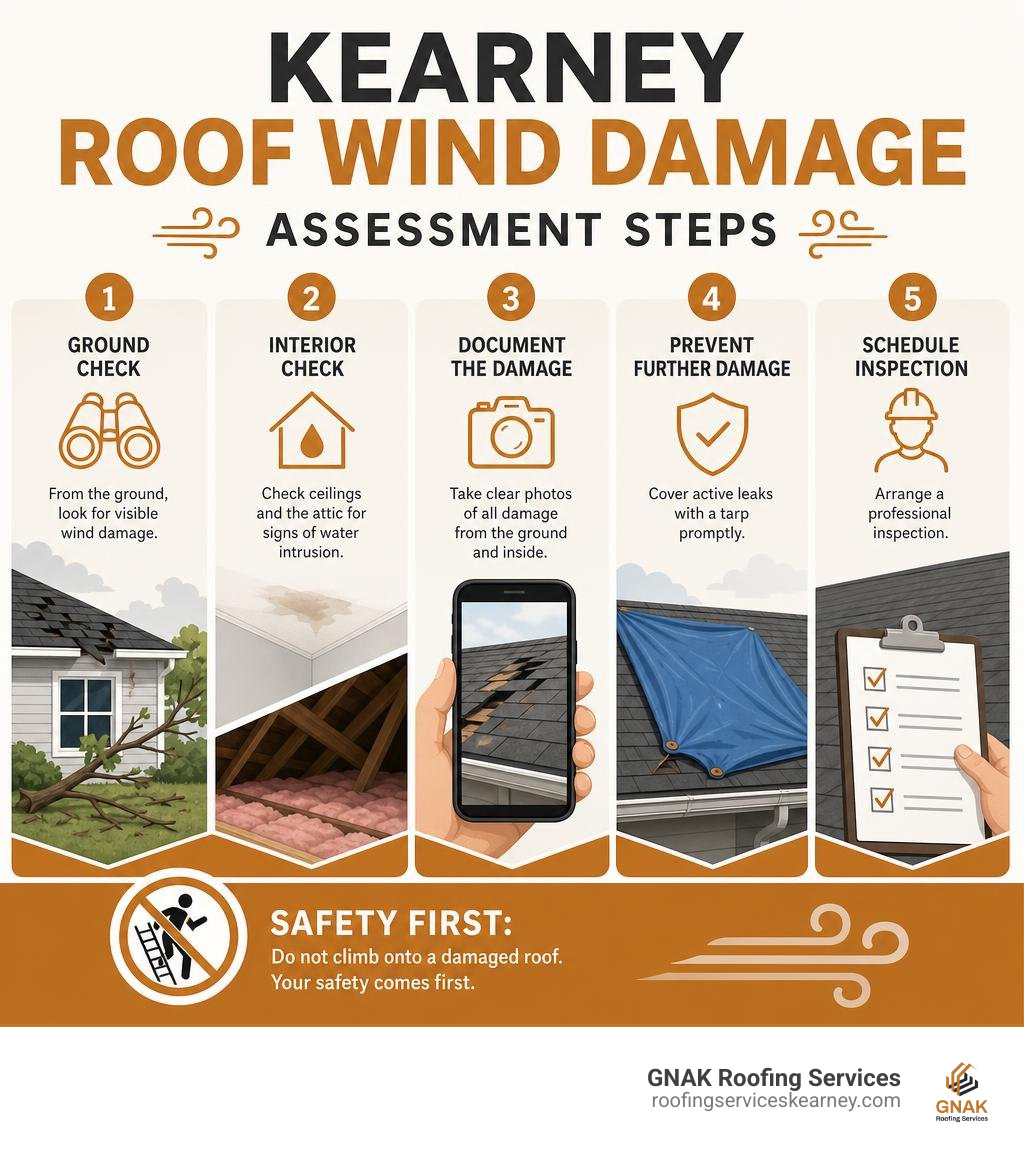
Kearney roof wind damage terms to learn:
How to Identify and Evaluate Kearney Roof Wind Damage
When severe convective storms roll through Clay County and western Missouri, they rarely deliver gentle breezes. Instead, straight-line winds push against the exterior envelope of your home, creating aerodynamic uplift pressure. As high-velocity air travels over the peak of your roof, it acts like an airplane wing, creating low pressure above the shingles while positive pressure pushes up from under the eaves.
This dynamic generates intense upward force that targets the most vulnerable components of your roofing system:
- Missing Shingle Tabs: The most obvious visual sign occurs when wind tears entire shingles or tabs clean off the roof deck, exposing the dark underlayment or raw wood sheathing beneath.
- Perimeter Flashing Displacement: Edge metals, drip edges, and rake flashing take the brunt of initial wind gusts. When wind catches an unsealed edge, it can peel metal flashing backward like a tin can.
- Torn Sealants and Chimney Collars: High winds cause subtle structural shifting and vibration. This movement splits dried mastic around vent pipes, chimney step flashing, and skylight curbs, creating direct entry points for water.
- Gutter and Fascia Detachment: Strong gusts catch wide gutter troughs, prying fasteners out of saturated fascia boards and leaving drainage systems sagging or completely ripped away.
Spotting Hidden Kearney Roof Wind Damage Beyond Ground-Level Checks
Not all storm impacts leave obvious debris scattered across your lawn. In fact, some of the most destructive wind damage remains completely invisible from the driveway.
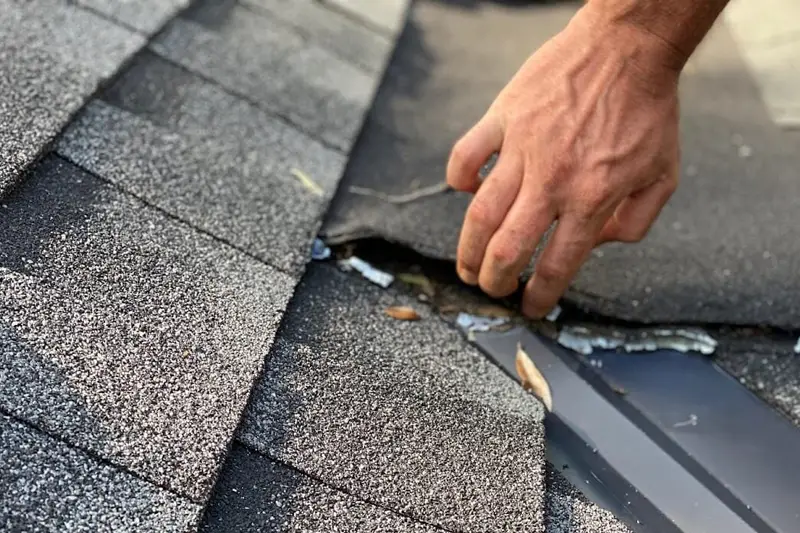
When wind speeds exceed 50 to 60 mph, they often break the factory-applied adhesive sealant strip binding overlapping shingles together. Once this bond breaks, the shingle lifts during the gust and settles back down into place when the wind calms. From the curb, the roof looks completely intact. Underneath, however, the shingle is unsealed, allowing subsequent wind-driven rains to push moisture upward beneath the asphalt layer.
Furthermore, when lifted shingles bend backward in the wind, the internal fiberglass matting fractures. This creates a horizontal crease across the top of the tab. While the shingle hasn’t blown away, its structural waterproofing capability is permanently compromised. Granules along that crease quickly loosen, exposing the asphalt core to accelerated UV degradation.
Inside the home, wind-driven moisture rarely travels in a straight vertical line. Water often penetrates an unsealed ridge cap or lifted valley shingle, drips onto an underlying rafter, and travels dozens of feet down the framing before dropping onto your ceiling drywall. To catch these hidden pathways before mold takes hold, scheduling roof inspection services with infrared moisture scanning allows technicians to detect thermal differences in damp insulation and trace hidden rafter trails without invasive demolition.
Differentiating Cosmetic Storm Marks from Structural Roof Damage
During an insurance assessment, adjusters strictly separate superficial blemishes from functional structural impairment. Understanding this distinction helps set realistic expectations for your restoration scope.
| Damage Type | Visual Characteristics | Impact on Roof Integrity | Insurance Coverage Status |
|---|---|---|---|
| Cosmetic Shingle Wear | Minor granule loss in gutters, superficial hail spatter marks on asphalt surface, uniform weathering. | Waterproofing intact; fiberglass mat remains fully sealed and uncompromised. | Often excluded or subjected to cosmetic waivers depending on policy endorsements. |
| Creased / Broken Shingle Tabs | Distinct horizontal fracture line across shingle tab; broken adhesive bond beneath the shingle. | Seal failed; wind uplift resistance lost; water can migrate under tabs during future rains. | Covered under standard wind peril provisions as functional loss. |
| Exposed Fiberglass Matting | Deep divots or tears where the top asphalt coating has separated entirely from the internal scrim. | Direct UV exposure quickly rots the core, leading to active leaks within weeks. | Covered; represents permanent functional failure of the protective material. |
| Fractured Roof Decking | Sagging roof planes, cracked OSB/plywood visible from inside the attic, displaced structural fasteners. | Total loss of load-bearing capacity and fastener retention strength. | Covered; requires immediate structural remediation to meet local building codes. |
Local building codes across Missouri mandate that repaired sections maintain structural integrity and water-shedding performance. If your roof suffers functional loss—such as fractured mats or lifted perimeters—patching over the issue with mastic is not an acceptable long-term repair.
Immediate Post-Storm Response and Emergency Water Mitigation Steps
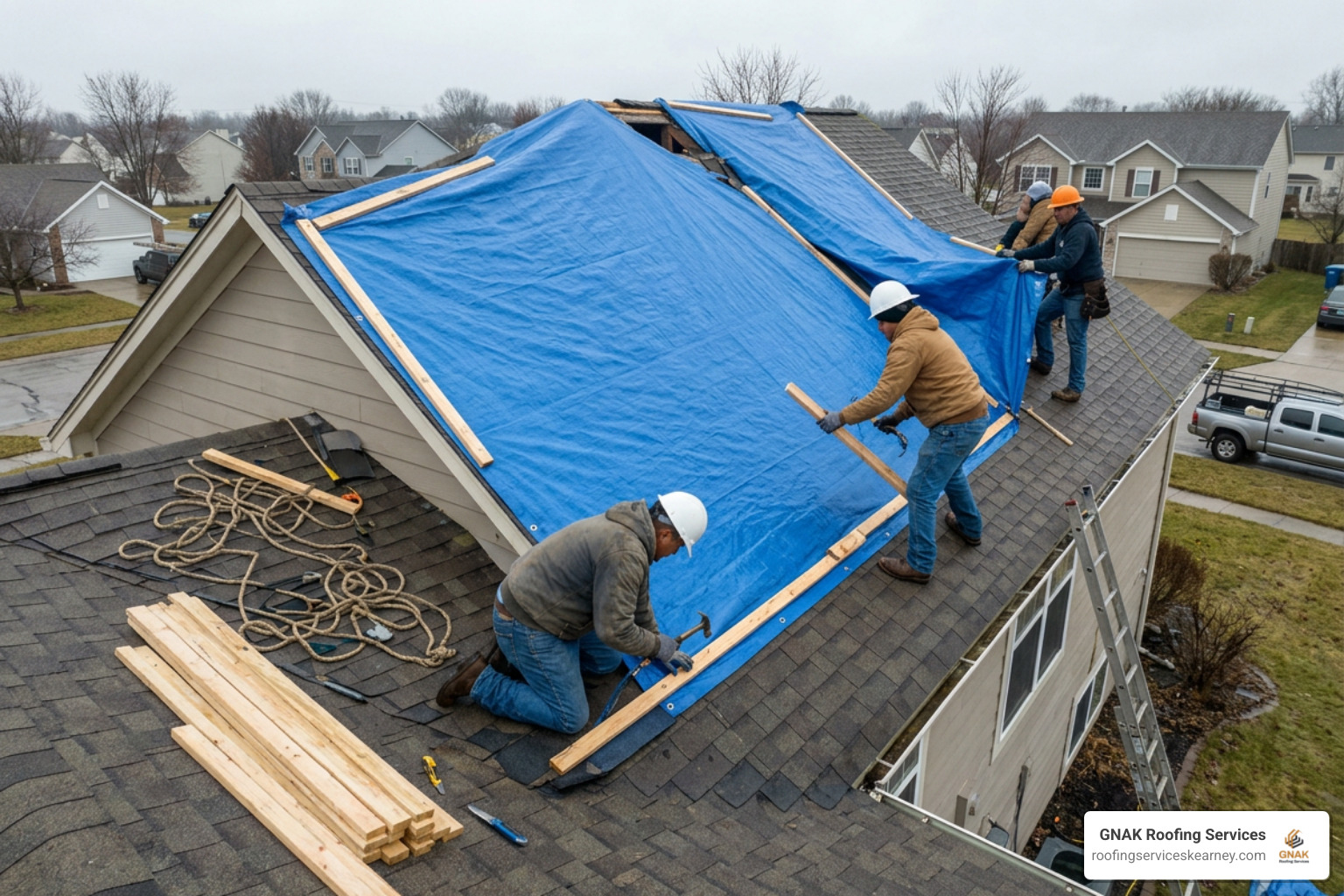
When a severe storm damages your roof, the clock starts ticking immediately. Secondary water intrusion can cause thousands of dollars in sheetrock, insulation, and framing damage within hours of the initial roof breach.
Before taking action, follow strict safety protocols:
- Watch for Electrical Hazards: Never step into standing water in your basement or attic, and stay clear of downed power lines in your yard.
- Avoid Walking the Roof: Saturated shingles, broken fiberglass, and loose granules turn a sloped roof into an extreme slip hazard. Let professionals with proper fall-arrest systems handle elevated work.
- Contain Interior Leaks: Place buckets under active ceiling drips. If your ceiling drywall is sagging or bubbling with trapped water, carefully puncture the center of the bulge with a screwdriver to relieve pressure and prevent a catastrophic ceiling collapse.
- Install Emergency Tarping: Cover exposed decking using heavy-duty, UV-resistant tarps secured with 2×4 wooden batten strips nailed through the perimeter of the tarp into structural rafters. Never secure a tarp with loose bricks or sandbags, as high winds will dislodge them into lethal falling hazards.
Following a practical guide to reliable roof repair ensures that your short-term stabilization measures dry in the property without causing unnecessary additional damage to surrounding, intact shingles.
Context from the June 2026 Severe Wind and Hail Storms
The vulnerability of regional roofing systems was starkly demonstrated during the severe storm complexes of June 10–11, 2026. A fast-moving line of intense convective storms swept across the region, packing destructive straight-line winds that rivaled tornado-strength forces. Peak gusts were measured up to 98 mph near Heartwell, with widespread reports of 80 to 92 mph winds battering neighborhoods from Axtell through Minden and surrounding communities.
These extreme winds were accompanied by baseball-sized hail (up to 2.75 inches), creating severe compound storm stress. In events like the June 2026 storms, wind first lifts and breaks the adhesive seals of asphalt shingles; baseball- and golf-ball-sized hail then directly batters the exposed, unsupported shingle mats. This double-impact dynamic accelerates structural failures, turning minor shingle creasing into shattered decking and immediate interior leaks across hundreds of residential properties.
Navigating Insurance Claims and Documentation Requirements
Filing an insurance claim after a wind event does not have to be an overwhelming ordeal if you follow a methodical process. Most property insurance policies in Missouri require homeowners to file storm damage claims within one year of the date of loss.
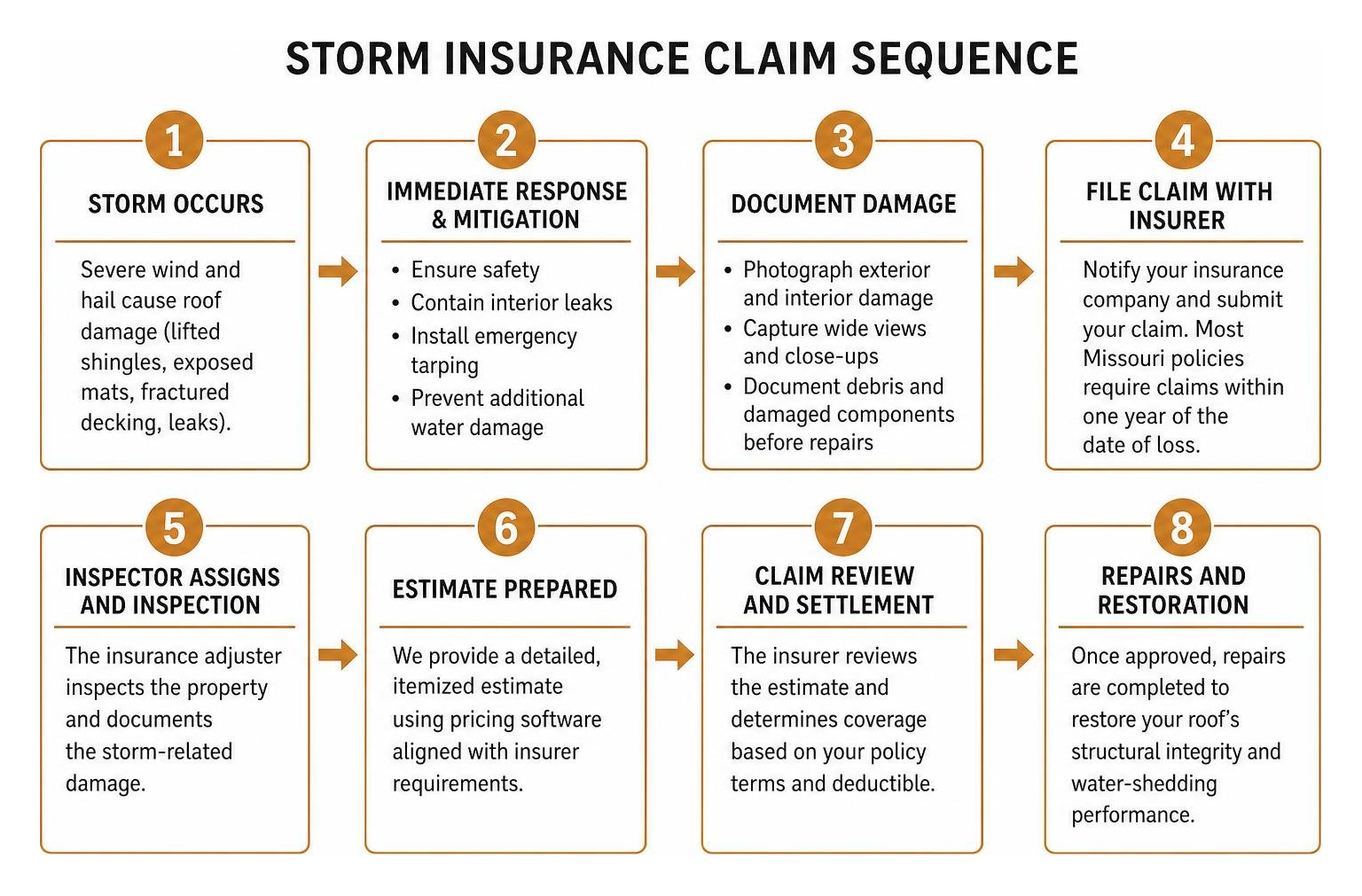
To protect your claim and ensure a fair settlement:
- Capture Comprehensive Photographic Proof: Take wide-angle photos of the entire home, ground-level debris, dented air conditioner condenser fins, and close-ups of displaced flashing or missing shingles before emergency crews install tarps.
- Compile a Professional Estimate: Insurers utilize pricing software like Xactimate to calculate replacement costs. We provide detailed, itemized damage scopes that mirror the line-item requirements insurance adjusters expect.
- Understand Policy Types: Determine whether your policy provides Replacement Cost Value (RCV)—which pays to restore your roof to brand-new condition minus your deductible—or Actual Cash Value (ACV), which deducts depreciation based on the age of your roof.
Reviewing an A-Z guide to the roof claim process and consulting our residential storm damage and roof repair guide helps you navigate adjuster meetings with confidence and avoid out-of-pocket shortfalls.
Upgrading and Restoring Wind-Resistant Roofing Assemblies
When recovering from severe wind damage, simply replacing old shingles with the same basic materials leaves your home vulnerable to the next storm system. Upgrading to modern, wind-engineered roofing assemblies ensures long-term protection.
Key components of an impact- and wind-resistant roof include:
- Class F and Class H Wind-Rated Shingles: Modern architectural and dimensional shingles carry strict ASTM International wind ratings. Class F shingles are tested to withstand 110 mph winds, while Class H shingles are rated to resist gusts up to 130 mph or higher.
- Synthetic Underlayment: Traditional 15-pound asphalt felt paper tears easily when shingles blow off, exposing the deck to rain. High-performance synthetic underlayments offer superior tear resistance and can remain exposed to weather for weeks without leaking.
- Enhanced Starter Strip Adhesion: High-wind failures almost always originate at the eaves and rakes. Installing dedicated starter shingles with aggressive, factory-applied sealants locks down the roof perimeter where wind uplift forces are highest.
- Enhanced Fastener Patterns: While standard installations utilize four nails per shingle, high-wind specifications require a six-nail pattern placed precisely along the manufacturer’s designated nail line. Proper nail placement prevents the fastener head from slicing through the shingle mat during uplift events.
Whether your property requires targeted residential roof repair or extensive commercial roof repair, following a complete guide to storm damage roof repair guarantees that every layer of your roof deck is restored in full compliance with manufacturer warranty specifications.
Calculating Kearney Roof Wind Damage Repair vs Replacement Costs
When evaluating wind damage, property owners must determine whether a localized patch or a comprehensive tear-off is the most financially sensible decision.
Several critical factors dictate whether repair or replacement is appropriate:
- The 30% Threshold: If wind damage affects more than 25% to 30% of a roof slope, spot repairs become inefficient. Blending new shingles with weathered materials creates aesthetic mismatches and uneven sealant lines, making full replacement more cost-effective.
- Roof Age: Asphalt shingle roofs reach critical material fatigue between 15 and 20 years of age in Missouri’s volatile climate. If an older roof suffers moderate wind damage, the surrounding shingles are often too brittle to lift and nail without breaking adjacent tabs, necessitating a complete replacement.
- Permitting and Code Mandates: The Kearney Building Division requires building permits for major re-roofing projects and structural decking replacements. Professional contractors pull all mandatory permits to ensure work passes municipal safety inspections.
Frequently Asked Questions About Storm and Wind Roof Damage
How quickly should emergency roof tarping be installed after a windstorm?
Emergency tarping should be completed within 24 to 48 hours of the storm passing. Standard homeowners insurance policies include a “duty to mitigate loss” clause, which requires the policyholder to take reasonable steps to prevent secondary interior damage. Installing tarps over exposed decking halts water intrusion, protects structural framing from rot, and prevents disputes with insurance adjusters regarding subsequent water stains.
Can high winds damage a roof without blowing off shingles?
Yes. High-velocity winds create aerodynamic suction that lifts the free tabs of shingles, breaking the thermal adhesive bond underneath. While the shingle may settle back down into position, it remains unsealed. Furthermore, the bending motion often fractures the internal fiberglass matting, leaving invisible weak spots that allow wind-driven rain to penetrate beneath the shingle during subsequent storms while accelerating asphalt granule loss.
Does standard homeowners insurance cover wind damage and resulting ceiling leaks?
Most standard residential policies (such as HO-3 and HO-5 forms) cover sudden and accidental damage caused by windstorms, including structural shingle loss and resulting interior ceiling or drywall damage. However, coverage is subject to your policy deductible and timely claim submission. Insurers will evaluate whether leaks resulted from an acute storm event or neglected long-term maintenance, making thorough photographic documentation and prompt professional inspection essential.
Conclusion
High winds, convective summer squalls, and severe regional storms present an ongoing challenge to properties throughout Kearney and the wider Clay County area. When wind tears shingles, displaces flashing, or fractures structural decking, prompt evaluation prevents minor moisture penetration from escalating into extensive structural rot and interior restoration expenses.
At GNAK Roofing Services, we bring decades of hands-on property evaluation, certified installation expertise, and insurance documentation support to every project. We inspect every layer of your roofing system—from attic framing to ridge ventilation—ensuring your home receives the durable, code-compliant protection it deserves. If recent high winds have left you questioning the condition of your roof, schedule residential roof repair with our certified team today for a comprehensive, insurance-ready property inspection.