

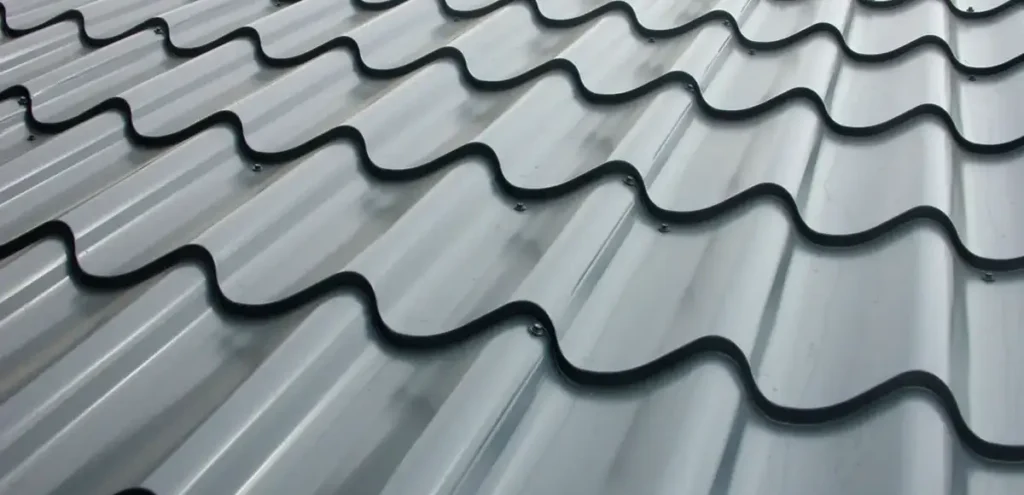
Does Your Roof Actually Have Hail Damage? Here’s How to Tell
Minor hail damage on a roof is easy to miss — and that’s exactly what makes it dangerous.
After a storm, most homeowners look for obvious signs: missing shingles, visible holes, or active leaks. But the most common type of hail damage is far more subtle, and it can quietly shorten your roof’s lifespan by years before a single drop of water appears inside your home.
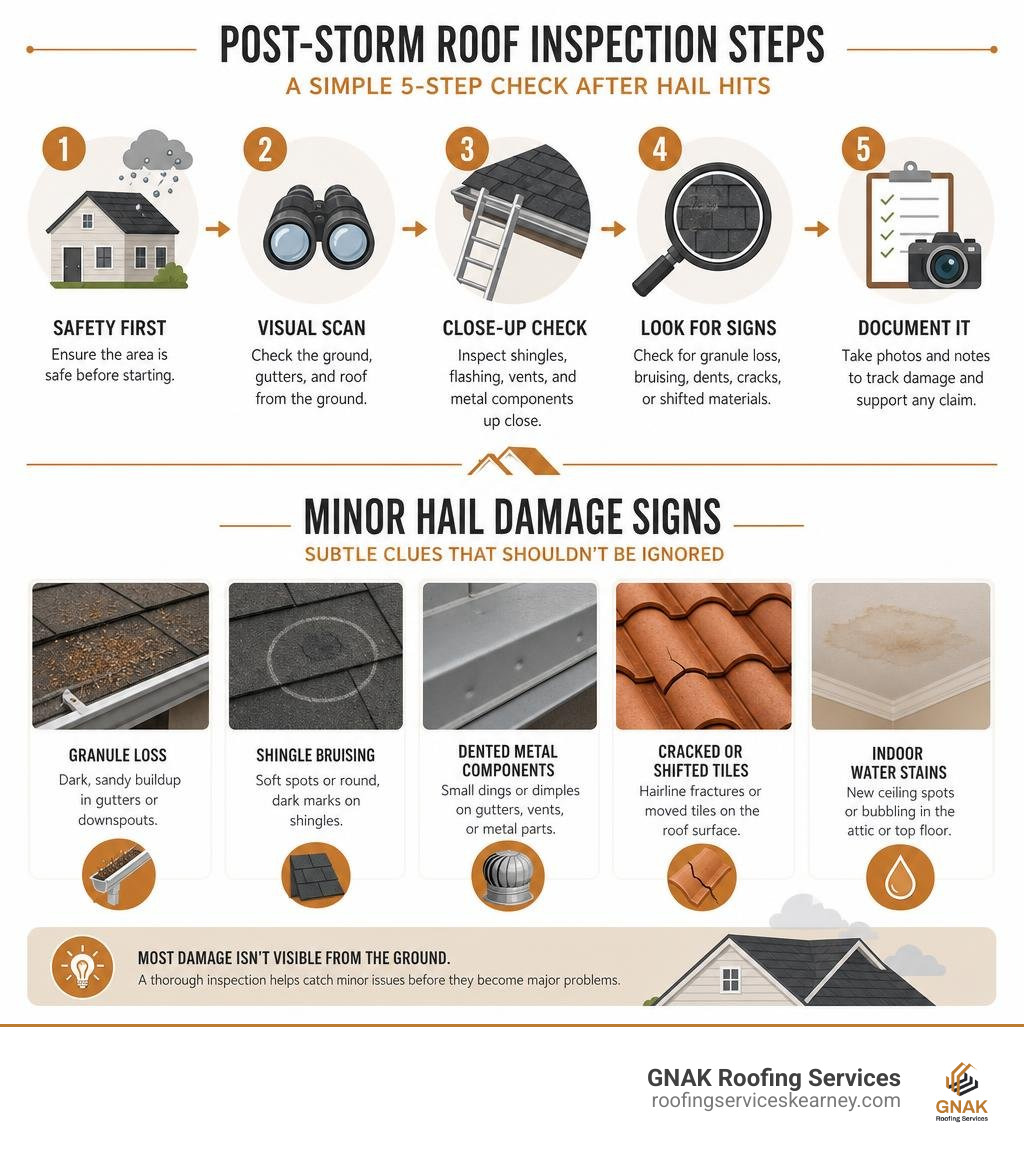
Here’s a quick summary of what minor hail damage looks like:
| Sign | What to Look For | Where to Check |
|---|---|---|
| Granule loss | Dark, sandy buildup | Gutters and downspouts |
| Shingle bruising | Soft spots, round dark marks | Roof surface (pro inspection) |
| Dented metal components | Small dings or dimples | Gutters, vents, A/C unit fins |
| Cracked or shifted tiles | Hairline fractures | Tile roof surface |
| Indoor water stains | New ceiling spots or bubbling | Attic and top-floor ceilings |
The tricky part? Most of these signs are invisible from the driveway. Hail can crack the fiberglass mat beneath your shingles without removing a single granule on top — leaving you with hidden damage that worsens over time, especially through Missouri’s freeze-thaw winters.
This guide walks you through exactly what to look for, when to worry, and what your options are — whether you’re filing an insurance claim or just trying to protect your investment before the next storm hits.
I’m Greg Nakata, owner of GNAK Roofing Services in Kearney, MO. My background in commercial real estate, asset underwriting, and collateral evaluation since 1999 gives me an underwriter’s perspective on minor hail damage roof assessments that most contractors simply don’t bring to the table. That experience shapes how we document and evaluate every storm damage claim for homeowners and business owners across Clay County.
Minor hail damage roof terms to remember:
Assessing a Minor Hail Damage Roof: Cosmetic vs. Functional Damage
When a storm rolls through Clay County, it leaves behind a wide spectrum of impact marks. Identifying where your roof lies on this spectrum is the first step toward deciding whether to call your insurance company or simply keep an eye on things before they turn into a hail damage roof repair in St. Joseph, Kearney, and Clay County. To make the right call, you must understand the distinction between cosmetic and functional damage.
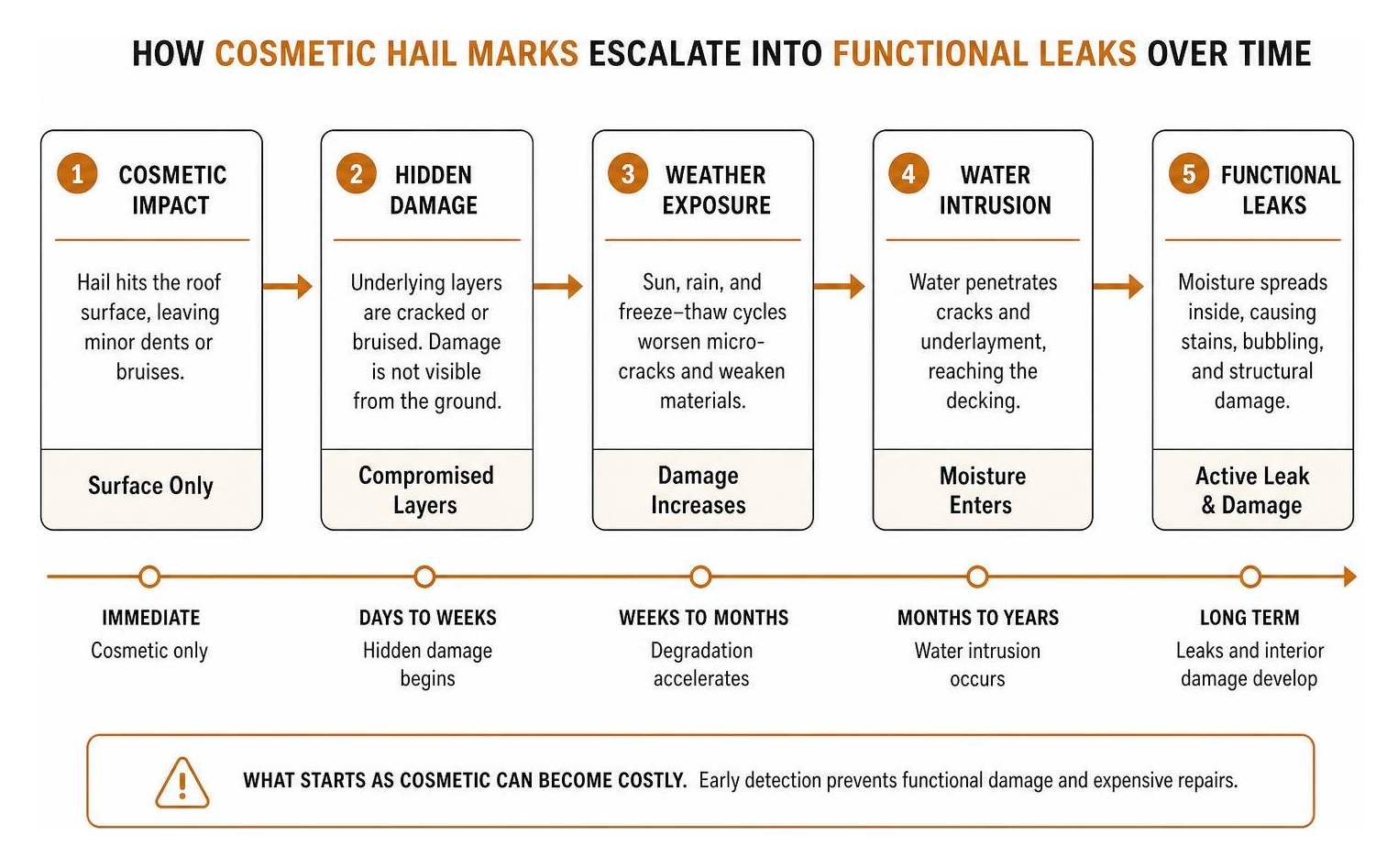
- Cosmetic Damage: This refers to superficial blemishes that alter the appearance of your roof but do not impair its water-shedding ability or reduce its expected service life. Examples include small dings on metal vents, paint loss on flashing, or minor surface scuffs on thick materials.
- Functional Damage: This is the real troublemaker. Functional damage occurs when the impact of a hailstone physically compromises the roof’s structural integrity, diminishes its water-shedding ability, or directly shortens its service life. This includes fractured shingle mats, punctured membranes, cracked tiles, or split wood shakes.
Insurance companies often leverage the strict dictionary definition of “damage” (requiring an actual impairment of value or usefulness) to exclude minor, cosmetic hail dents from coverage. However, what looks like a minor cosmetic issue today can quickly compromise your roof’s service life if left unaddressed.
What is Considered Minor Hail Damage?
In the roofing world, “minor” hail damage typically refers to early-stage physical impacts that have not yet resulted in active indoor leaks but have compromised the outer protective layer of your roofing system.
On standard asphalt shingles, minor damage is characterized by localized granule loss, minor bruising, and the formation of small soft spots. While these spots might look harmless from the ground, they represent areas where the protective outer layer has been compromised. Over time, UV exposure degrades the exposed asphalt beneath, leading to premature aging and eventual leaks.
If you suspect your roof has been affected, reading The Complete Guide To Storm Damage Roof Repair will help you understand how these minor blemishes fit into the broader picture of storm restoration.
How Hail Size Affects the Severity of Roof Damage
Not all hail is created equal. The physical consistency of hailstones — whether they are hard and dense or soft and crumbly — combined with wind speed plays a massive role in how much damage they inflict.
According to the National Weather Service and industry impact testing, we can break down hail size and its typical effects using a straightforward chart:
- Pea to Marble (1/4″ to 1/2″): These micro-projectiles rarely cause functional damage. They may accelerate granule loss on older, worn roofs, but generally require monitoring rather than immediate repair.
- Dime to Quarter (3/4″ to 1″): This is the critical transition zone. One inch is the standard baseline threshold most insurance carriers use for a valid claim. At this size, older or brittle asphalt shingles can easily suffer fractured mats or deep bruising.
- Half-Dollar to Ping Pong Ball (1.25″ to 1.5″): The probability of functional damage rises sharply here. Hail generally needs to reach about 1.25 to 1.5 inches in diameter before it consistently punctures standard 3-tab and architectural shingles, leaving behind clear, soft bruises.
- Golf Ball and Larger (1.75″+): At this size, severe damage is almost guaranteed. Standard asphalt roofs will experience fractured mats, broken seal lines, and immediate structural compromise.
How to Identify Minor Hail Damage Across Different Roofing Materials
Different roofing materials react uniquely to hail strikes. While one material might dent, another might shatter like pottery.
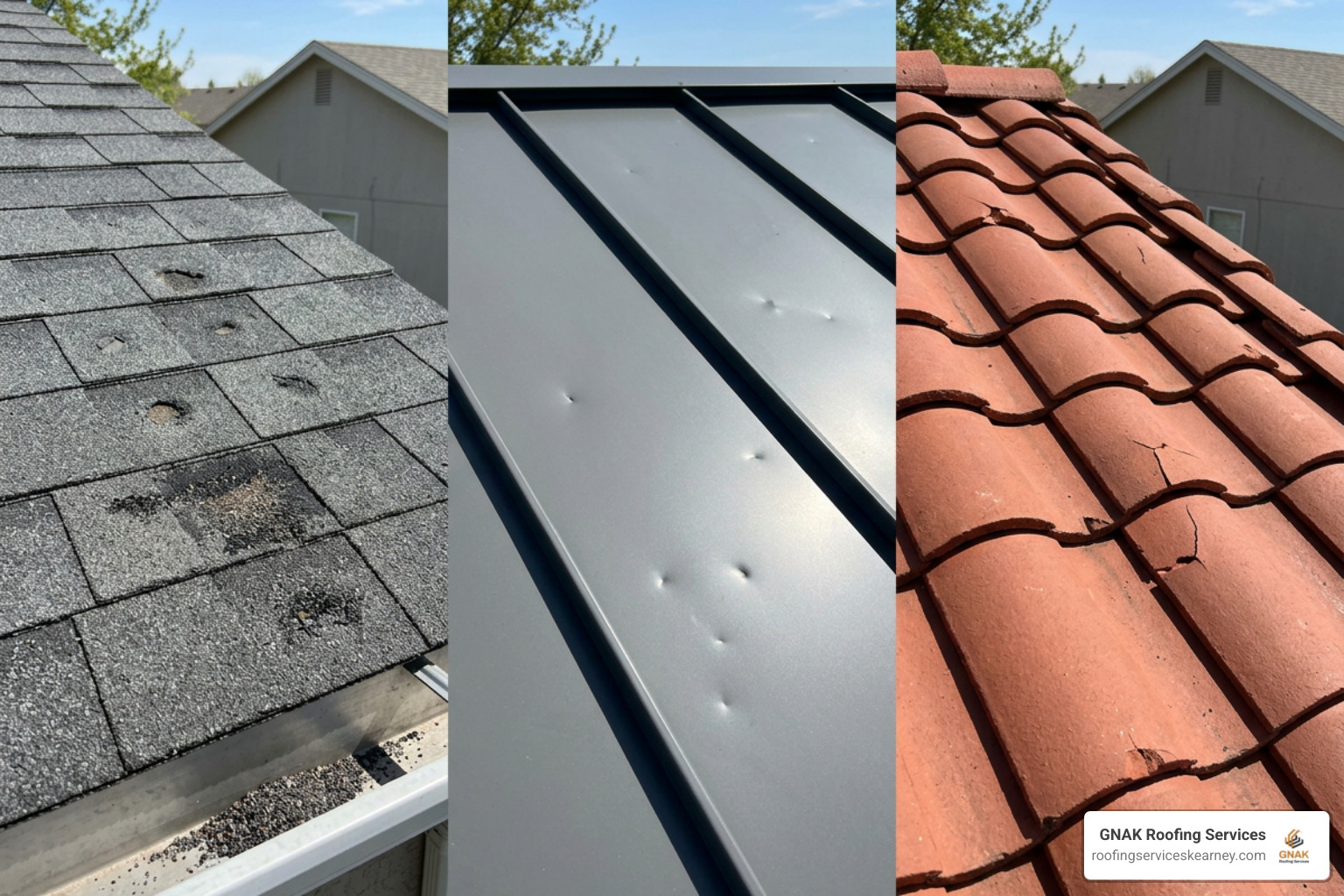
Understanding these material-specific vulnerabilities is crucial before performing a visual check or scheduling professional Roof Inspection Services.
Identifying Minor Hail Damage Roof Signs on Asphalt Shingles
Asphalt shingles cover approximately 75% of homes in the United States, making them the most common victim of Midwestern hailstorms. When hail strikes an asphalt shingle, it creates a “bruise” that mimics a bruised apple — a soft, spongy spot where the underlying fiberglass mat has fractured.
The most common signs of a minor hail damage roof on asphalt shingles include:
- Granule Loss: Dark spots where the protective ceramic granules have been knocked away, exposing the black asphalt substrate.
- Mat Fractures: Hairline cracks in the fiberglass backing, which are often invisible from the ground but compromise the shingle’s water-shedding integrity.
- Loosened Seal Strips: The physical uplift from wind-driven hail can break the adhesive bond between shingle courses.
It is worth noting that a long-term materials study found no loss of life or water-shedding ability even with 70% granule removal on glass-fiber mat shingles. However, 35% of granule loss claims in high-density hail storms are tied to shingle aging combined with minor hail, rather than total structural failure. Understanding these nuances is key to determining whether your shingles require localized repairs or a full replacement.
Signs of Minor Hail Damage on Metal Roofs
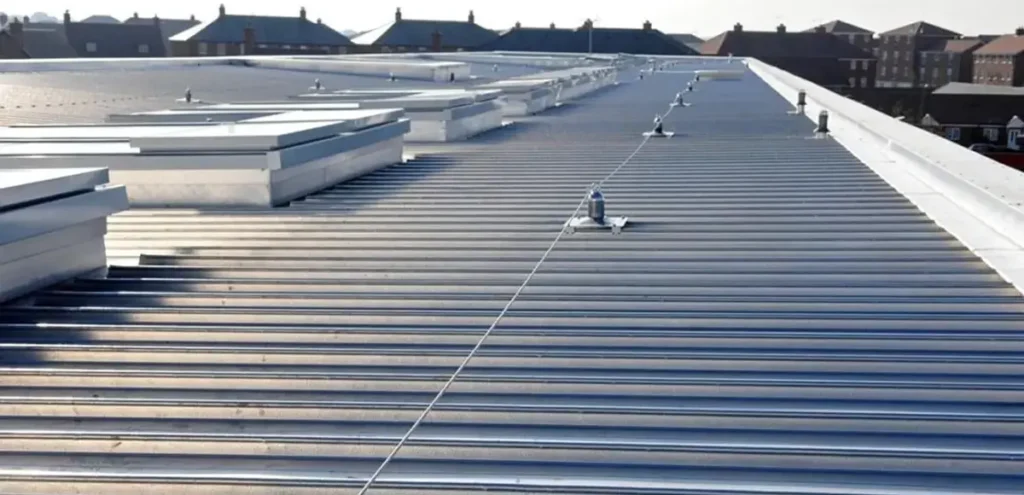
Metal roofing is highly celebrated for its durability and wind resistance, but it is not entirely immune to hail. When hail strikes a metal roof, the damage is almost always cosmetic rather than functional, manifesting as shallow dimples or dents.
However, repeated minor hail impacts can chip away the protective paint or galvanized coating of a metal roof. Once this barrier is compromised, the underlying steel is exposed to moisture, leading to corrosion and eventual rust-through.
Engineering reports show that minor indentations do not reduce the lifespan or water-shedding capacity of a metal roof, provided the roof pitch is greater than 5 degrees (most residential homes have a pitch greater than 10 degrees). If you are assessing a metal roof, review our guide on Residential Roofing to understand how different metal profiles perform under storm conditions.
Signs of Minor Hail Damage on Concrete and Clay Tiles
Concrete and clay tiles behave very differently under the stress of a hailstorm. Clay tiles are relatively fragile and behave like pottery under impact; they can chip, crack, or shatter completely, leaving the underlying underlayment exposed to the elements.
Concrete tiles, on the other hand, are incredibly resilient. In controlled testing, concrete roof tiles experienced zero damage from the repeated impact of hailstones up to 3.5 cm (about 1.37 inches) in diameter at various velocity speeds. Only hailstones 6 cm (approx. 2.36 inches) and larger caused noticeable damage.
When inspecting tile roofs, look for:
- Hairline Fractures: Subtle cracks radiating from an impact point.
- Chipped Corners: Small pieces of tile that have broken off and slid into the valleys or gutters.
- Star Cracks: Sub-surface fractures that weaken the tile’s overall structural strength.
Keeping up with regular maintenance is key to preserving these premium systems; learn more in our resource on Roofing Tips Maintenance.
The Financial Impact: Repair Costs, Insurance, and ACV vs. RCV
Dealing with storm damage is as much a financial puzzle as it is a construction project. Understanding your insurance policy and the average costs of repair can prevent you from facing unexpected out-of-pocket expenses.
Average Cost to Repair Minor Hail Damage
The cost to address hail damage varies widely depending on the scale of the impact and the roofing material involved. Nationally, homeowners spend anywhere from $375 to $7,500 on minor hail damage repairs. The average cost for general hail repairs sits at $4,250, while a full roof replacement can range from $1,000 to $32,500 depending on your home’s square footage.
For minor localized repairs, roofing contractors typically charge by the “square” (a 10×10 foot area) or use square-foot pricing:
- Repair Cost per Square Foot: Typically ranges from $6 to $12.50.
- Spot Repairs: Replacing a few damaged shingles or patching a minor metal leak can cost between $150 and $400.
If you are trying to budget for localized fixes, exploring our Residential Roof Repair services will give you a clearer picture of regional pricing and options.
Understanding ACV vs. RCV for Hail Claims
When you file an insurance claim for storm damage, the payout structure is determined by whether your policy is written as Actual Cash Value (ACV) or Replacement Cost Value (RCV).
| Policy Type | How It Payouts | Out-of-Pocket Impact |
|---|---|---|
| Actual Cash Value (ACV) | Pays the depreciated value of the roof based on its age and condition at the time of the storm. | High. You must cover the difference between the depreciated payout and the actual cost of a new roof. |
| Replacement Cost Value (RCV) | Covers the full cost of replacing the damaged roof with materials of similar kind and quality today. | Low. You are only responsible for paying your policy’s deductible. |
Understanding this distinction is vital to avoiding “sticker shock” during a claim. For a detailed breakdown of how to navigate these policies without getting overwhelmed, refer to The Ultimate Guide To Roof Damage Insurance Claims And Contractors.
How to Document Minor Hail Damage for an Insurance Claim
A successful insurance claim relies entirely on clear, undeniable documentation. Adjusters use a “test square” methodology — marking out a 10×10 foot area on at least two roof slopes — and typically require 8 to 10 verified hail impacts within that square to approve a full replacement.
To build an airtight claim:
- Document the Date and Time: Save local weather reports or radar screenshots of the hail event in your ZIP code.
- Photograph Collateral Damage: Take clear photos of dented gutters, damaged window screens, and chipped paint on your siding. Dents on thin metal A/C condenser fins are highly persuasive, as a dent’s width on these fins is approximately 80% of the hailstone’s actual diameter.
- Use a Scale Reference: When photographing hailstones or shingle bruises, place a coin (like a quarter) next to the damage for scale.
- Inspect the Attic: Take photos of any fresh water stains or damp insulation.
For step-by-step guidance on managing this stress-free, check out How To Handle Residential Storm Damage And Roof Repair Without Losing Your Mind to ensure you are fully prepared before the insurance adjuster arrives.
DIY Fixes vs. Professional Storm Damage Repair
It can be tempting to grab a ladder and a bucket of roofing cement to patch up minor dings yourself. However, roofing is inherently hazardous, and improper DIY work can easily void your manufacturer warranties or lead to denied insurance claims.
Can I Repair Minor Hail Damage Myself?
For handy homeowners, executing quick fixes like sealing a minor crack with roofing cement or swapping out a single damaged shingle is a satisfying weekend project.
If you do attempt a DIY repair, always perform a gentle “leak test” afterward by hosing down the repaired area to simulate rain while a partner checks the attic for water penetration.
However, common DIY mistakes include using the wrong shingles, over-applying sealant (which creates water-trapping dams), and neglecting basic ladder safety. Before climbing up, read A Practical Guide To Reliable Roof Repair to understand what a professional-grade repair requires.
When to Call a Professional for a Minor Hail Damage Roof
While small, isolated fixes can occasionally be handled at home, a professional roof inspection is non-negotiable if the damage is widespread, if you suspect structural mat fractures, or if you plan to file an insurance claim.
A certified local roofer provides:
- Manufacturer-Compliant Workmanship: Ensuring your material warranties remain fully intact.
- Insurance-Ready Documentation: Providing the photographic evidence and damage maps that adjusters need to approve claims.
- Safety and Peace of Mind: Keeping you safely on the ground while trained experts handle the heights.
If you are located in Clay County, scheduling a professional assessment through our Roof Repair Liberty Mo page ensures you get a detailed, honest evaluation of your roof’s condition.
Frequently Asked Questions About Minor Hail Damage
Can minor hail damage lead to bigger problems if left unrepaired?
Yes, absolutely. What starts as a minor loss of shingles’ protective granules exposes the underlying asphalt to harsh UV rays. Over time, the sun bakes and cracks this layer.
During Missouri’s cold winters, water seeps into these micro-fractures, freezes, and expands. This freeze-thaw cycle rapidly tears the shingle apart, turning a minor cosmetic bruise into an active leak, causing wood rot, ruined insulation, and toxic mold growth inside your attic.
What are the most hail-resistant roofing materials?
If you want ultimate peace of mind, look for materials with a Class 4 impact rating (tested under the UL 2218 standard, which involves dropping a 2-inch steel ball from a height of 20 feet).
The most hail-resistant options include:
- Class 4 Composite/Synthetic Shingles: Engineered to mimic wood or slate while absorbing massive impacts.
- Stone-Coated Metal Roofing: Combines the structural strength of steel with the aesthetic appeal of traditional shingles.
- Concrete Roof Tiles: Highly durable and structurally impervious to typical Midwestern hail.
Upgrading to Class 4 materials can also secure you an annual homeowner’s insurance premium discount of 15% to 30% in states like Missouri.
How often should I inspect my roof for hail damage?
We recommend scheduling a professional roof inspection at least once a year as part of your preventative maintenance, as well as immediately following any severe storm where hail exceeds 1 inch in diameter. Catching minor issues early is the single best way to avoid a costly full replacement down the road. For more answers to common maintenance questions, visit our faq page.
Conclusion
At GNAK Roofing Services, we know that a storm doesn’t have to tear your roof off to cause serious, long-term damage. Minor hail damage is a quiet threat, but with the right documentation and proactive care, you can protect your home’s value and keep your family dry for decades to come.
Whether you need a quick repair, a comprehensive storm inspection, or support navigating a complex insurance claim, we are here to help. If you suspect your home or business in the Kansas City metro has taken a hit, visit our Roof Repair Independence Mo page today to schedule your professional, insurance-ready roof evaluation. Let’s get your roof storm-ready before the next front rolls through!