

When a Hailstorm Hits, Choosing the Right Roofer Makes All the Difference
Finding trustworthy hail damage roofers after a storm is one of the most important decisions you’ll make as a homeowner — and one of the easiest to get wrong.
Here’s a quick answer to what you need to know:
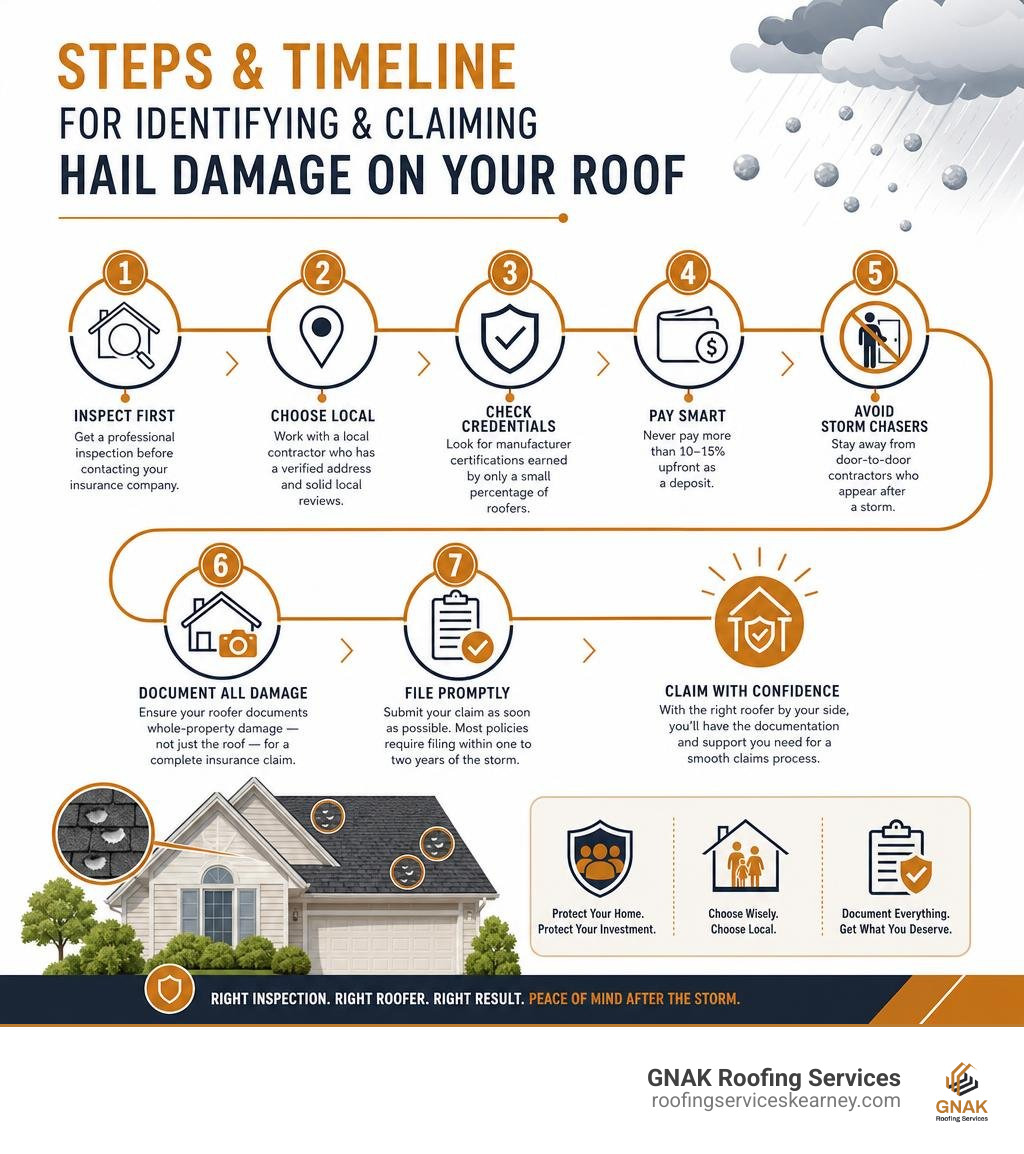
How to hire reliable hail damage roofers:
- Get a professional inspection first — before calling your insurance company
- Choose a local contractor with a verified physical address and established local reviews
- Check for manufacturer certifications (such as GAF Master Elite status, earned by only 2% of roofers nationwide)
- Never pay more than 10–15% upfront as a deposit
- Avoid door-to-door contractors who appear only after a storm
- Make sure your roofer documents whole-property damage — not just the roof — for a complete insurance claim
- File your claim promptly — most policies require filing within one to two years of the storm event
After a hailstorm, it’s tempting to hire the first contractor who knocks on your door. But storm chasers — out-of-town crews who flood neighborhoods after major weather events — often cut corners, disappear before warranty issues arise, and may leave you fighting your insurance company alone.
The difference between a smooth claim and a costly dispute almost always comes down to who you hire first.
I’m Greg Nakata, owner of GNAK Roofing Services in Kearney, Missouri. My background in commercial real estate finance, asset underwriting, and insurance documentation since 1999 gives me an unusual lens on what it takes to properly document and advocate for hail damage roofers’ clients through the full inspection and claims process. In this guide, I’ll walk you through exactly how to identify real hail damage, navigate your insurance claim, and find a contractor you can actually trust.
Hail damage roofers definitions:
Understanding Hail Damage: Sizes, Materials, and Warning Signs
When a severe storm rolls through Clay County, MO, or the wider Kansas City area, the damage left behind isn’t always obvious from your driveway. Hailstones are rarely perfectly smooth, uniform spheres; instead, they often have jagged, irregular edges that strike your roof with incredible velocity.
Understanding how hail interacts with your roofing system is the first step toward protecting your home. If you suspect your home has taken a hit, you should refer to A Practical Guide to Reliable Roof Repair to understand the baseline steps of restoring your home’s envelope.
The size of the hail is the primary driver of the severity of the damage:
- Hail under 1 inch in diameter: Only deteriorated or aged composite shingles generally show damage from hail less than 1 inch. Typically, the stones must be more than 3/4 inch (dime-sized) to leave a mark on older materials.
- 1-inch hail (quarter-sized): Lightweight composite shingles may begin to show structural damage, including granule displacement and bruising, after being struck by 1-inch hail.
- 1 1/4-inch hail (half-dollar-sized): Hail must reach at least 1 1/4 inches in diameter before causing functional damage to heavy composite shingles or wood shake shingles.
- 2-inch hail (hen-egg-sized) and larger: Standard roofing materials will suffer severe fracturing, while impact-resistant materials (Class 4) are rated to withstand hailstones up to 2 inches without taking structural damage.
How Different Roofing Materials React to Hail
Every material has its own physical threshold and responds uniquely to impact:
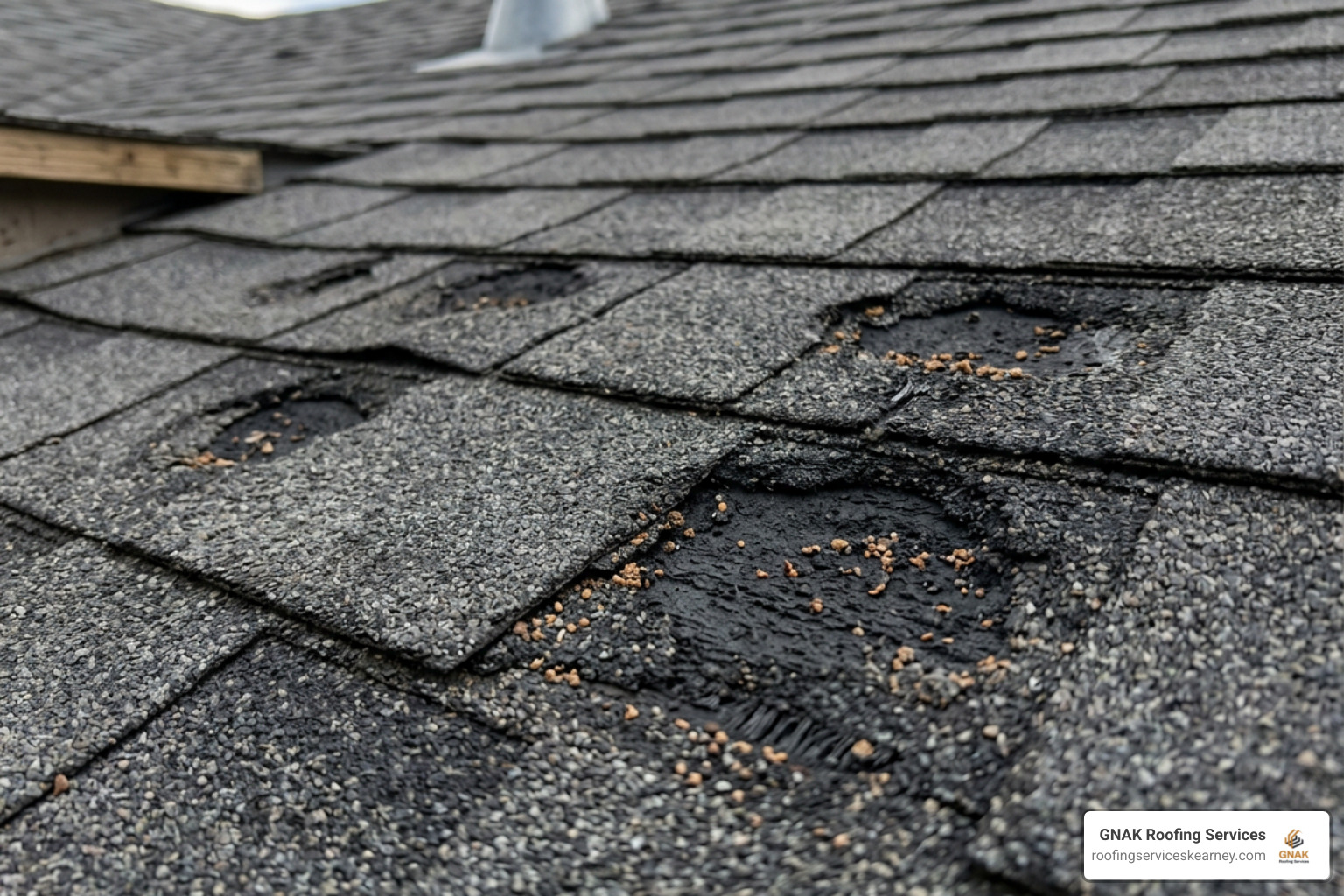
- Asphalt and Composition Shingles: Hail impacts cause a loss of the protective ceramic granule layer, exposing the dark asphalt mat beneath. Over time, the sun’s UV rays degrade this exposed mat, making it brittle and prone to leaks.
- Wood Shingles and Wood Shakes: When hail hits wood, it creates random, fresh splits that run parallel to the grain. These splits will look bright orange or light brown underneath because the inner wood hasn’t yet weathered.
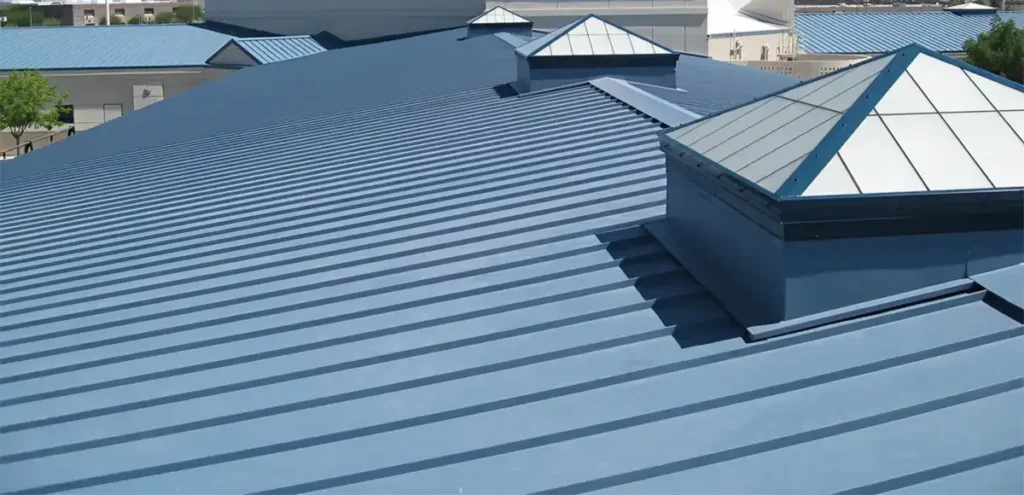
- Metal Roofing: While metal rarely leaks immediately after a storm, hail leaves highly visible circular dings and dents. These dents can ruin your home’s curb appeal and, in some cases, compromise the seams or fasteners.
- Clay and Slate Tiles: These rigid materials can crack or shatter completely upon impact, leaving large gaps in your roof’s defense.
Why You Must Act Quickly After a Storm
It is a common mistake to wait for a ceiling leak before calling hail damage roofers. Hail damage is often latent; the impact fractures the underlying fiberglass mat of your shingles without creating an immediate hole.
Over the following months, the expansion and contraction of your roof during temperature swings will cause those micro-fractures to widen. Water will eventually seep through, leading to trapped attic moisture, mold growth, ruined insulation, and structural wood rot. Addressing these issues early through timely Residential Roof Repair keeps a simple repair from turning into an expensive, full-scale emergency.
Hail Damage vs. Normal Wear and Tear: Spotting the Difference
Insurance adjusters are trained to look for any reason to deny or minimize a claim. One of their most common tactics is attributing your roof’s condition to natural weathering, manufacturing defects, or mechanical damage rather than the recent storm. To protect yourself, you need to understand how to tell the difference.
The Physical Characteristics of a Hail Strike
True hail damage has distinct physical markers. On asphalt shingles, a hail hit is random, showing no repeating pattern across the roof. It creates a dark, circular depression where the granules have been crushed into the asphalt.
If you press your finger into this dark spot, it will feel soft and yielding — very much like the soft spot on a bruised apple. This tactile “bruise” in the underlying fiberglass mat is the definitive proof of a hail strike. For a deeper dive into these physical markers, check out The Complete Guide to Storm Damage Roof Repair.
Conversely, normal wear and tear and non-storm anomalies look very different:
| Feature | True Hail Damage | Normal Wear & Tear / Defects |
|---|---|---|
| Pattern | Completely random, localized impacts | Uniform across the slope or repeating diagonal patterns |
| Tactile Feel | Soft, yielding, and bruised to the touch | Hard, firm, and brittle |
| Blistering | No loss of mat integrity; granules pressed in | Popped gas bubbles leaving hard, steep-walled craters |
| Cracking | Fractures radiating directly from the impact point | Horizontal or vertical “craze cracks” from age and shrinkage |
| Algae/Lichens | No biological growth inside fresh impacts | Green, black, or brown streaks across large sections |
Manufacturing defects, such as blistering caused by gas escaping during the curing process, leave pockmarks that look like hail dents from a distance. However, popped blisters have hard, steep edges and completely lack the soft, bruised mat underneath. Furthermore, installation mistakes — like a roofer striking a shingle with a hammer — leave distinct crescent or horseshoe-shaped marks near the ridges, which are easily identified as mechanical damage rather than natural storm impacts.
Why You Need Professional Hail Damage Roofers for Inspections
Climbing onto a steep, high-slope roof after a storm is incredibly dangerous for homeowners. Beyond the physical safety hazards, a untrained eye will miss the subtle, critical signs of damage that insurance adjusters look for.
Professional hail damage roofers bring specialized safety equipment, years of training, and advanced diagnostic tools to ensure a safe and thorough assessment. When you hire GNAK Roofing Services for Roof Inspection Services, we conduct a comprehensive evaluation that protects both your physical safety and your financial investment.
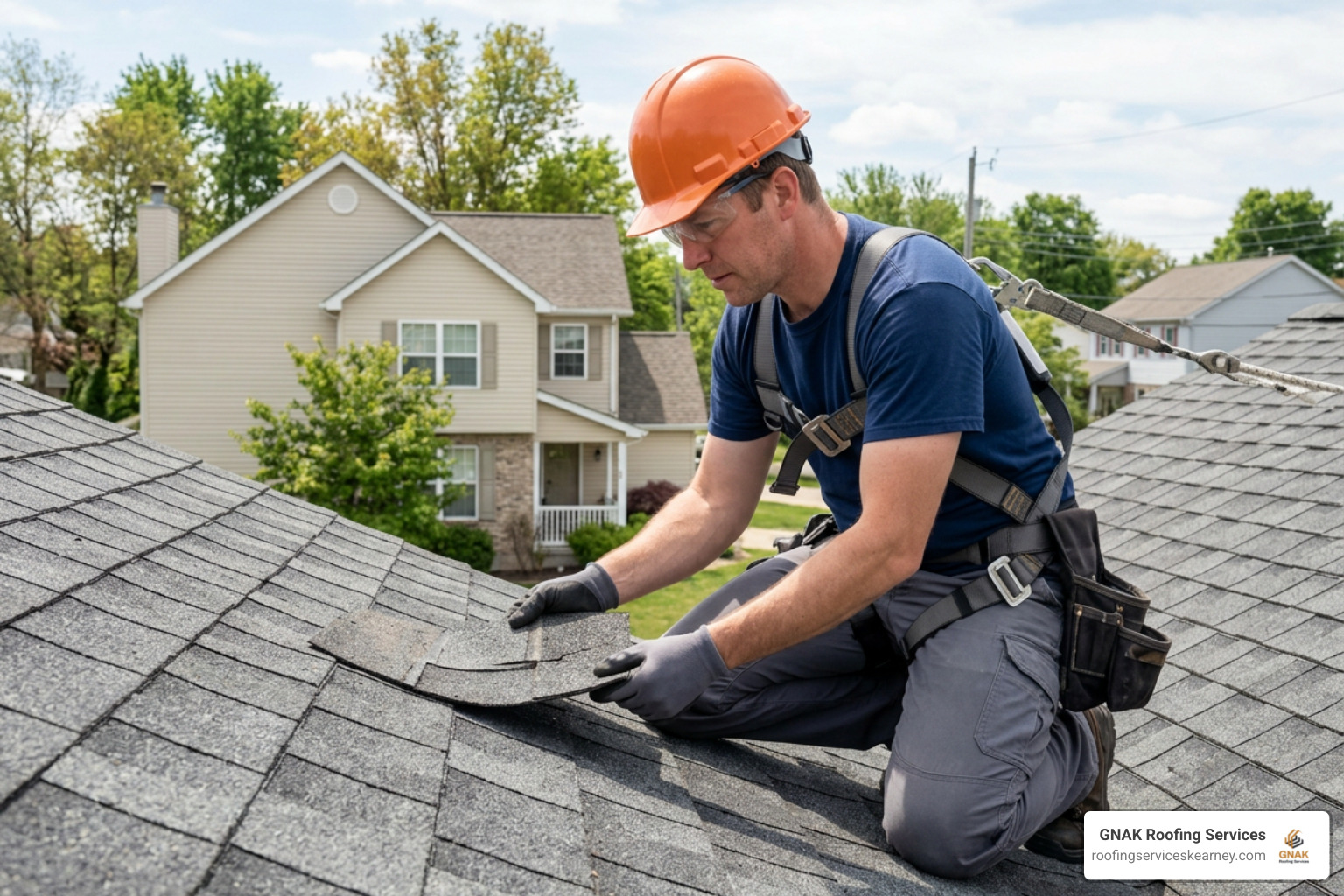
During a professional inspection, we look at several areas that are frequently missed by inexperienced inspectors:
- The Roofing Drip Edge: The metal flashing installed along the edges of your roof is highly susceptible to hail dents, yet it is often overlooked during basic inspections.
- Flashing and Valley Liners: We inspect the metal valleys, chimney flashing, and vent pipes for impact marks that indicate the direction and severity of the storm.
- Collateral Indicators: We examine soft metals on the roof, such as aluminum attic vents, ridge caps, and plumbing boots, which preserve clear, dented evidence of the hail’s size.
Documenting Whole-Property Storm Damage
A hailstorm doesn’t stop at your shingles. To secure a fair settlement from your insurance carrier, your storm damage claim must look at your property holistically. When we inspect a home in Kearney, St. Joseph, or Liberty, MO, we document all collateral damage across your entire exterior:
- Gutters and Downspouts: Aluminum and steel gutters will show clear, circular dings that help verify the size of the hailstones.
- Siding and Trim: Vinyl siding will crack or chip, while wood and fiber cement siding will show paint abrasion and impact marks.
- Windows and Screens: We check for torn window screens, dented metal casings, and micro-cracks in the glass panes.
- Fences and Decks: Wood privacy fences and decks will show fresh, unweathered pits where the hail blasted away the outer layer of stained or weathered wood.
Documenting these surrounding elements provides undeniable proof of the storm’s severity, making it much harder for an insurance company to claim that your roof’s damage is simply pre-existing wear and tear.
Navigating the Insurance Claims Process for Hail Damage
The insurance claims process can feel like a maze, but it is manageable when you follow a structured sequence. To understand the relationship between your policy, your contractor, and your payout, you can read The Ultimate Guide to Roof Damage Insurance Claims and Contractors.

Here is the step-by-step process we recommend to our clients in the Kansas City metro area:
- Document the Storm Details: Write down the exact date and time of the hailstorm, and take photos of the hail on the ground if possible.
- Get a Professional Roofing Inspection: Before filing a claim, have GNAK Roofing Services inspect the roof to confirm that the damage exceeds your deductible.
- File the Claim: Contact your insurance agent with your policy number, the storm date, and our detailed inspection report.
- The Adjuster Meeting: Your insurance company will schedule an adjuster to visit your home. Crucial Step: Ensure your roofing contractor is present during this meeting to walk the roof with the adjuster and point out all documented damage.
- Review the Scope of Work: Once the adjuster approves the claim, they will issue a Loss Statement outlining what they will pay to repair or replace.
- Complete the Work: Your roofer completes the repairs according to manufacturer specifications and building codes.
- Submit Proof of Completion: We submit the final invoice and photos to your insurance company to release any withheld depreciation funds.
It is vital to understand how your policy handles payouts. If you have an Actual Cash Value (ACV) policy, your insurance company will deduct depreciation based on the age of your roof, leaving you to pay the difference out of pocket. If you have a Replacement Cost Value (RCV) policy, they will cover the actual cost of installing a new, comparable roof today.
Typically, the insurer will send two checks for RCV claims: an initial check for the ACV amount upfront, and a second check for the “recoverable depreciation” once we submit proof that the work is fully completed.
What to Do When Adjusters and Hail Damage Roofers Disagree
It is not uncommon for an insurance adjuster’s estimate to be significantly lower than your roofing contractor’s quote. This usually happens because the adjuster missed certain areas of damage, used outdated local material costs, or overlooked required local building codes.
If this happens, do not panic. Refer to How to Handle Residential Storm Damage and Roof Repair Without Losing Your Mind for strategic advice.
The best course of action is to ask your contractor and the adjuster to speak directly to resolve the discrepancies. If they reach an impasse, you can request a second inspection from a different adjuster, or your roofer can file an insurance supplement — a detailed request backed by photographic evidence and local code requirements — to secure the necessary funding before work begins.
How to Choose Reputable Hail Damage Roofers and Avoid Scams
The days following a major storm can be chaotic. Suddenly, your neighborhood is flooded with door-knocking sales representatives offering “free roofs” and high-pressure pitches. To protect your home and your wallet, you must know how to separate legitimate local professionals from transient storm chasers.
When looking for a contractor in Kearney, Independence, or Clay County, MO, look for these vital credentials:
- Local Roots: Choose a contractor with a physical office, a local phone number, and deep ties to the community. Check the Better Business Bureau directory for Independence, MO to verify their standing.
- Manufacturer Certifications: Look for elite designations like GAF Master Elite® status. This distinction is earned by only 2% of roofing companies nationwide and allows contractors to offer the strongest manufacturer-backed warranties.
- Proper Insurance: Always ask for active copies of their general liability insurance and workers’ compensation coverage to protect yourself from liability.
For a comprehensive guide on vetting local professionals, read our article on How to Choose the Best Kearney Residential Roof Repair Experts.
Upgrading to Impact-Resistant Class 4 Shingles
If you are replacing your roof after a hailstorm, you should strongly consider upgrading to Class 4 impact-resistant shingles. These shingles are engineered with SBS-modified asphalt (rubberized asphalt) that absorbs the energy of hail impacts without fracturing.
Class 4 shingles are tested to withstand hailstones up to 2 inches in diameter. Beyond the incredible peace of mind they offer during our volatile Midwestern springs, many insurance carriers in Missouri offer substantial premium discounts — sometimes up to 20% or 30% annually — for homes protected by Class 4 roofing materials.
Red Flags When Hiring Hail Damage Roofers
To avoid falling victim to common post-storm scams, watch out for these major red flags:
- Deductible Waivers: If a roofer offers to “waive,” “absorb,” or “free” your deductible, walk away. In Missouri and most other states, it is illegal for a contractor to cover a homeowner’s deductible, and doing so constitutes insurance fraud.
- High Upfront Deposits: Reputable contractors will never ask for the full payment or a massive deposit upfront. A standard deposit should be no more than 10% to 15% of the total project cost to secure materials and scheduling.
- Out-of-State Plates: Check the vehicles of the representatives. If they are driving trucks with out-of-state license plates, they are likely storm chasers who will be hundreds of miles away when your roof develops a leak next winter.
If you are currently searching for verified, local help, always start with a trusted search for Roofers Near Me to find contractors who are active, licensed, and accountable to your local community.
Frequently Asked Questions About Storm Damage
How big does hail have to be to damage a roof?
Generally, hail must be at least 1 inch in diameter (the size of a quarter) to damage lightweight composite shingles, and 1 1/4 inches (half-dollar sized) to damage heavy composite or wood shake shingles. However, if your shingles are already aged, brittle, or deteriorated, hailstones as small as 3/4 inch (dime-sized) can knock away protective granules and compromise the roof.
How long do I have to file a hail damage insurance claim?
Claim filing deadlines vary by insurance provider and policy, but most standard homeowner policies require you to file your storm damage claim within one year of the storm event. Some policies allow up to two years. It is always best to file as quickly as possible; waiting can lead to your claim being denied due to “deferred maintenance” if subsequent rainstorms cause interior water damage.
Can I inspect my own roof for hail damage?
We strongly advise against inspecting your own roof. Walking on a damaged roof is highly dangerous, and you can easily slip on loose granules. Additionally, without professional training, it is easy to mistake normal shingle blistering or manufacturing defects for hail damage, which can lead to a denied insurance claim. A professional roofer has the safety gear and expertise to identify and document every trace of storm damage safely.
Conclusion
When a hailstorm strikes your Missouri home, the path to a fully restored, leak-free roof doesn’t have to be stressful. By understanding the signs of real hail damage, documenting your entire property, and steering clear of out-of-town storm chasers, you can protect your home’s value and ensure your insurance claim is handled fairly.
At GNAK Roofing Services, we combine deep local expertise in Kearney, Clay County, and the Kansas City metro area with rigorous, insurance-ready documentation and manufacturer-compliant workmanship. We don’t just repair your roof; we stand by your side from the initial inspection until the final nail is swept from your yard.
If your home was recently hit by a storm, don’t wait for a leak to show up on your ceiling. Schedule a professional inspection today with GNAK Roofing Services, and let our family protect yours.